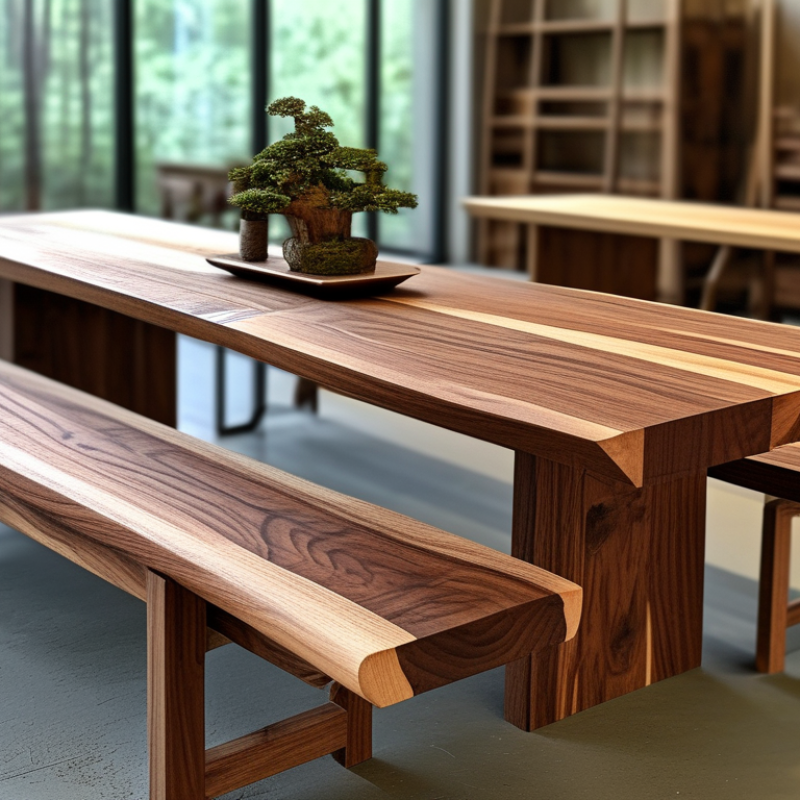
| Furniture Type | Solid Wood Furniture | Made primarily from natural wood pieces rather than wood fibers or veneers. | Dining tables, beds, wardrobes, chairs, and storage cabinets. | Strong, repairable, long-lasting, and visually distinctive because of its natural grain. |
| Furniture Type | Engineered Wood Furniture | Manufactured from wood fibers, particles, strands, or layers bonded into panels. | Shelving, desks, modular cabinets, wardrobes, and flat-pack furniture. | Consistent dimensions, efficient material use, and generally lower cost than many solid-wood options. |
| Furniture Type | Veneer Furniture | A thin layer of natural wood is applied over a stable core such as plywood or fiberboard. | Tables, doors, cabinets, sideboards, and office furniture. | Provides a natural wood appearance while reducing movement, weight, and material consumption. |
| Wood Material | Oak | A dense hardwood with a prominent grain and good resistance to everyday wear. | Dining furniture, flooring-style tabletops, chairs, and storage pieces. | Durable, widely used, and suitable for traditional or contemporary designs. |
| Wood Material | Maple | A hard, close-grained wood with a relatively light and uniform appearance. | Cabinet doors, worktops, chairs, drawers, and high-use surfaces. | Good abrasion resistance and a clean appearance that accepts many finishes. |
| Wood Material | Pine | A lightweight softwood with visible knots and a comparatively soft surface. | Shelves, bed frames, tables, stools, and casual furniture. | Easy to machine, relatively affordable, and suitable for painted or stained finishes. |
| Wood Material | Walnut | A hardwood commonly recognized for darker brown tones and varied grain patterns. | Premium tables, desks, cabinets, beds, and decorative accents. | Distinctive appearance, good workability, and strong appeal for feature furniture. |
| Panel Material | Plywood | Several thin wood layers are bonded with their grain directions arranged in alternating directions. | Cabinet carcasses, tabletops, chairs, drawers, and structural panels. | Good dimensional stability, strength-to-weight performance, and resistance to splitting compared with many solid boards. |
| Panel Material | MDF | Fine wood fibers are combined with resin and compressed into a smooth, uniform panel. | Painted doors, shelving, moldings, desks, and cabinet components. | Smooth surface, consistent thickness, and easy routing or painting; it should be protected from prolonged moisture. |
| Panel Material | Particleboard | Wood particles are bonded under pressure to create a relatively economical panel. | Shelving, cabinet cores, drawer components, and budget furniture. | Cost-efficient and suitable for laminated or veneered surfaces when kept dry and properly supported. |
| Manufacturing Stage | Design and Material Selection | The product dimensions, load requirements, joinery, wood species, and panel construction are determined. | All wooden furniture categories. | Helps match the material to the intended strength, appearance, cost, and indoor environment. |
| Manufacturing Stage | Drying and Conditioning | Wood is dried to reduce excess moisture before machining and assembly. | Most solid-wood furniture components. | Reduces the risk of excessive shrinkage, swelling, warping, and joint movement after manufacture. |
| Manufacturing Stage | Cutting and Machining | Boards or panels are cut, shaped, drilled, routed, and prepared for joinery. | Frames, legs, doors, shelves, drawers, and tabletops. | Creates accurate components and functional details such as holes, grooves, and profiles. |
| Manufacturing Stage | Joinery and Assembly | Parts are connected with methods such as screws, dowels, biscuits, mortise-and-tenon joints, or adhesives. | Tables, chairs, cabinets, beds, and shelving units. | Provides structural stability and determines how easily the furniture can be repaired or disassembled. |
| Manufacturing Stage | Sanding and Surface Preparation | Surfaces and edges are smoothed to remove machining marks and prepare them for finishing. | Visible wood surfaces and touch points. | Improves tactile quality, appearance, and finish adhesion. |
| Manufacturing Stage | Finishing and Quality Inspection | Stain, paint, oil, wax, or clear protective coatings may be applied, followed by checks for defects and stability. | Completed wooden furniture. | Enhances color and appearance while helping protect surfaces from dirt, moisture, and routine wear. |