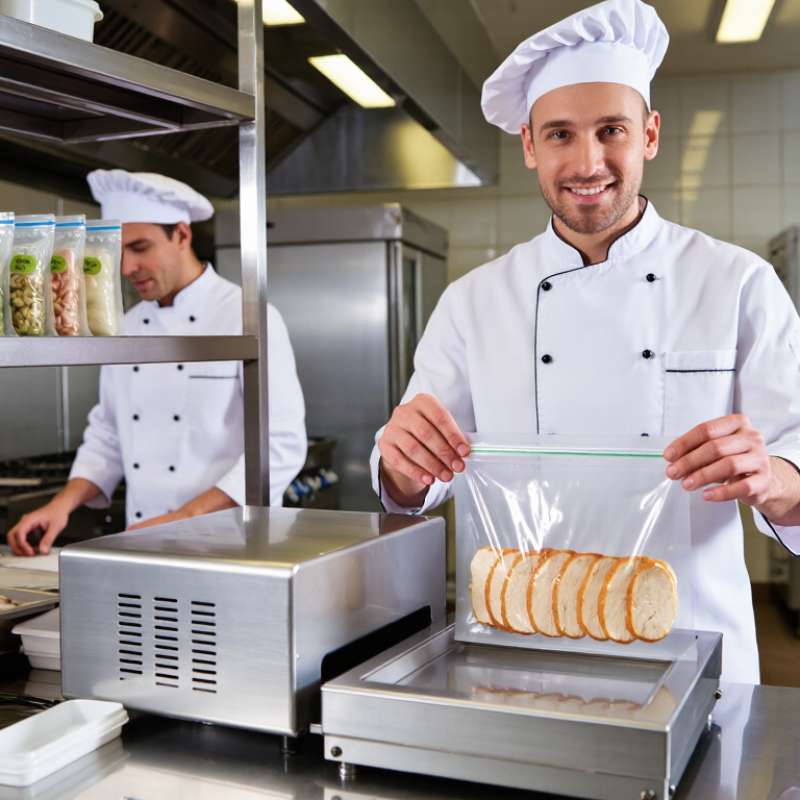
Why Buy a Food Sealer Machine for Your Business?

A Food Sealer Machine can change how a business protects, presents, and moves food. It removes air, creates a tighter seal, and helps reduce exposure to moisture, dust, and handling. In a busy kitchen, that may mean fewer leaking pouches, cleaner storage shelves, and less product discarded at closing time. Small details matter.

Dr. Martin Wiedmann, a Cornell University food-safety expert, emphasizes, “Food safety is a shared responsibility.” A sealing machine supports that responsibility, but it does not replace safe preparation, temperature control, sanitation, or employee training. Operators still need to select suitable bags, check seal strength, and record routine inspections. A weak seal can look acceptable while failing during transport. That uncomfortable possibility deserves attention.

The business case also reaches beyond food protection. Consistent seals can improve portion control, simplify labeling, and create a more professional customer experience. Restaurants may prepare meals earlier. But speed alone is not success. Poorly adjusted heat, pressure, or sealing time can damage packaging and waste valuable stock. Every product behaves differently.

A reliable Food Sealer Machine should match the business’s volume, packaging materials, and workflow. Buyers should examine sealing width, pump performance, cleaning access, warranty support, and operator safety features. They should also test real products before making a final decision. A machine can appear impressive in a showroom. Daily production is less forgiving.

This guide explores why businesses invest in sealing equipment, where the benefits are strongest, and which limitations deserve honest consideration. Because the best purchase is not always the most powerful one. It is the one that performs consistently when the kitchen is busy.

Why Buy a Food Sealer Machine for Your Business?

What Is a Food Sealer Machine and How Does It Work?

A food sealer machine removes air from a pouch, then closes it with a heated seal. Some models use vacuum pressure, while others simply press and seal the package. The process slows oxidation, reduces freezer burn, and limits exposure to moisture and airborne contaminants. It does not sterilize food. That distinction matters. The USDA Food Safety and Inspection Service warns that vacuum-packed foods still require strict temperature control, because low-oxygen conditions can create serious safety risks. A reliable machine should offer adjustable vacuum time, sealing temperature, pouch compatibility, and easy-to-clean contact surfaces.

For a business, better sealing can protect portioned meat, prepared meals, coffee, and sliced produce during storage and transport. The UNEP Food Waste Index Report 2024 estimated 1.05 billion tonnes of food waste in 2022. Packaging cannot solve waste alone, but it can help reduce avoidable spoilage when paired with correct refrigeration and stock rotation. In practice, a weak seal can leak overnight. A strong seal can still fail if the pouch edge is wet. Small details matter.

Tips: Keep the sealing area dry and flat. Test one package before a large production run. Record temperature, seal time, and storage conditions. Do not assume a vacuum seal makes food shelf-stable. Review the USDA guidance and local food-safety requirements before changing your process. Even experienced operators occasionally overestimate the machine’s protection.

Why Buy a Food Sealer Machine for Your Business? — What Is a Food Sealer Machine and How Does It Work?

Machine Type How It Works Typical Packaging Format Common Operating Range Typical Cycle or Throughput Business Applications Main Benefits Important Considerations
External Suction Vacuum Sealer A nozzle or suction channel removes air from a specially textured bag. A heated sealing bar then fuses the bag layers together. Pre-made vacuum bags and rolls with an embossed or textured surface. Often reaches approximately 0.6–0.8 bar of vacuum, depending on pump capacity, bag type, product shape, and moisture level. Generally one bag at a time; a complete cycle commonly takes about 20–60 seconds. Small restaurants, butcher shops, cafés, farm shops, catering operations, and low-volume food preparation. Compact footprint, relatively low entry cost, easy bag-size changes, and useful for portion control. Liquid-rich foods can be difficult to seal without a liquid trap or suitable operating technique. Only compatible textured bags should be used.
Chamber Vacuum Sealer The filled bag is placed inside a chamber. The chamber and bag are evacuated together, after which the bag is heat-sealed before the chamber returns to normal pressure. Smooth vacuum pouches, shrink bags, cook-in bags, and other heat-sealable barrier bags. Many commercial units operate around 0.8–0.95 bar below atmospheric pressure, subject to machine design and local atmospheric conditions. Usually one or more bags per cycle; cycles commonly range from about 20–60 seconds. Meat and seafood processors, meal-preparation businesses, restaurants, delis, and food manufacturers. Handles liquids and marinades better than external suction units, creates consistent seals, and supports smooth commercial vacuum bags. Requires more counter or floor space. Chamber dimensions limit the maximum bag or product size, and the pump requires regular maintenance.
Continuous Band Sealer A motorized conveyor carries filled thermoplastic bags through heated sealing blocks. The machine forms a continuous top seal while the product remains at atmospheric pressure. Polyethylene, polypropylene, laminated, and other compatible thermoplastic bags. Sealing temperature is commonly adjustable within roughly 100–200°C, depending on film structure and machine configuration. Continuous operation; practical speed may range from approximately 8–20 meters of sealed packaging per minute. Dry goods, snacks, powders, grains, bakery products, and food-processing lines requiring repeatable bag closure. High repeatability, fast production, date or batch coding options, and reduced manual sealing effort. It seals bags but does not normally remove air. Product level, film thickness, temperature, pressure, and conveyor speed must be balanced.
Tray Sealer A tray is positioned in a tooling set. The machine applies a lidding film and heat-seals it around the tray rim; optional systems can add vacuum or modified-atmosphere packaging. Rigid or semi-rigid trays made from materials such as PP, PET, CPET, or compatible barrier structures. Sealing temperature commonly falls within approximately 120–200°C, depending on tray and lidding-film materials. Often several trays per cycle; cycle time may be about 10–30 seconds for small and medium commercial systems. Prepared meals, fresh proteins, ready-to-eat foods, produce, bakery items, and portion-controlled retail packs. Professional appearance, strong product presentation, tamper evidence, and compatibility with portioned food formats. Requires matched trays, film, and tooling. Film waste, tooling changes, and optional gas equipment affect operating cost.
Impulse Heat Sealer Two heated or heat-activated sealing jaws clamp the open edge of a thermoplastic bag for a controlled dwell time. Polyethylene, polypropylene, laminated, and other heat-sealable plastic bags. Sealing temperatures commonly range from approximately 100–180°C, depending on material thickness and composition. Manual models typically seal one bag in about 1–3 seconds, excluding filling and handling time. Small food businesses, bakeries, market vendors, sample packing, and backup or secondary sealing stations. Simple operation, low maintenance, small footprint, and low energy use compared with many automated systems. It does not vacuum the package. Seal quality depends on clean film, correct temperature, sufficient pressure, and suitable dwell time.
Modified-Atmosphere Packaging Sealer The package atmosphere is partially removed or displaced with a controlled gas mixture before sealing to slow selected quality changes. Trays, pouches, and other barrier packages designed for gas retention. Gas composition, residual oxygen, and pressure are set according to the product, package, and food-safety process. Typically automated or semi-automated; throughput depends on the number of cavities, gas system, and sealing cycle. Fresh meat, seafood, prepared foods, cut produce, and other products requiring extended quality retention. Can help preserve appearance and product quality when correctly validated and combined with temperature control. It is not a substitute for refrigeration or hygienic processing. Gas selection, residual-oxygen testing, package integrity, and regulatory compliance are essential.
Data note: Operating ranges are typical industry ranges rather than universal specifications. Actual performance depends on product temperature, moisture, package material, seal width, pump capacity, machine settings, operator technique, and applicable food-safety requirements.

Which Business Packaging Needs Can a Food Sealer Machine Address?

A food sealer machine addresses several packaging needs in busy commercial kitchens, processors, and prepared-food operations. It can close pouches, trays, and bags with consistent pressure and heat. Vacuum sealing also removes much of the air surrounding food. This helps reduce oxidation, freezer burn, and liquid leakage during storage or delivery. The FAO estimated that 14% of food is lost between harvest and retail. Better sealing cannot solve every loss, but it can protect more saleable product.

Portion control is another practical advantage. Staff can seal individual meals, sliced ingredients, or measured production batches. Clear, tight packs are easier to stack, label, and inspect. They also support cleaner handling when orders move from a prep room to a refrigerated vehicle. UNEP’s Food Waste Index Report 2024 found that 1.05 billion tonnes of food were wasted in 2022. A reliable seal may help businesses reduce avoidable damage, especially from spills and poor storage.

A sealer is not magic. It cannot replace refrigeration, hygienic procedures, or validated shelf-life testing. Low-acid foods in reduced-oxygen packaging require careful controls because dangerous microorganisms may grow without obvious spoilage. The FDA Food Code emphasizes time, temperature, sanitation, and process control. In practice, operators should test seal strength, monitor temperatures, and inspect wrinkled seams. Small defects matter. A faster machine may still create more waste if workers rush loading or ignore uneven package surfaces.

Why Buy a Food Sealer Machine for Your Business?

Food sealer machines can help businesses protect prepared food, control portions, reduce exposure to air and moisture, and organize products for storage or transport.

Packaging opportunity: Global food waste reached an estimated 1.05 billion tonnes in 2022. Sealed packaging can support better product protection and inventory handling, although its effectiveness depends on the food type, sealing method, temperature control, and storage time.

Source: United Nations Environment Programme, Food Waste Index Report 2024. Estimates for 2022.

How Does Sealing Improve Food Freshness, Safety, and Shelf Life?

Why Buy a Food Sealer Machine for Your Business?

A food sealer machine helps protect freshness by limiting air exposure. Less oxygen can slow oxidation, moisture loss, and flavor changes. This matters for prepared meals, sliced produce, meat, and dry ingredients. A tight seal also reduces leaks during storage and delivery. However, sealing does not replace refrigeration or safe handling. Perishable food still needs correct temperatures and clean preparation areas.

A reliable seal can extend practical shelf life and reduce unnecessary waste. Food stays firmer, colors remain brighter, and portions become easier to organize. Clear packaging also supports date labeling and stock rotation. In daily operations, consistent sealing saves time and creates fewer messy containers. Yet results depend on food type, packaging material, and storage conditions. A seal may look perfect but fail after pressure or freezing. This is an easy detail to overlook.

Tips: Keep the sealing area dry and free from crumbs. Leave enough space above the food. Check the seal edge after cooling. Store sealed products at suitable temperatures. Record sealing dates. Test a few packages regularly, because one weak seal can affect customer trust. Some foods release moisture over time, so the best setting may require adjustment. There is no universal sealing time. Small trials are wiser than assumptions.

What Operating and Cost Benefits Can Businesses Gain?

Why Buy a Food Sealer Machine for Your Business?

A food sealer can reduce waste, labor, and product damage in daily operations. According to the UNEP Food Waste Index Report 2024, households, food services, and retailers wasted 1.05 billion tonnes of food in 2022. Better protection may help businesses avoid part of this loss. However, sealing does not make unsafe food safe. Temperature control still matters.

Vacuum sealing removes much of the air around meat, cheese, prepared meals, and dry ingredients. This can slow oxidation, moisture loss, and freezer burn. The USDA Food Safety and Inspection Service warns that vacuum-packed foods still require strict refrigeration and handling controls. In practice, staff can seal pre-portioned products faster than wrapping them manually. Clear portions also support stock rotation and more accurate purchasing. Less mess helps.

Small gains add up.

A sealed portion may use less film, occupy less cold-storage space, and reduce repacking time. Yet results depend on product shape, seal quality, cleaning routines, and operator training. A wet sauce can weaken the seal. A sharp bone can puncture the pouch. These are easy costs to overlook. Businesses should test one product line for four weeks and record packaging use, labor minutes, spoilage, and customer complaints.

Tips: Use date labels, batch records, and a daily seal check. Keep chilled products within approved temperature limits. Do not assume longer shelf life without documented testing and professional food-safety guidance.

How Should a Business Choose the Right Food Sealer Machine?

Choosing a food sealer machine should begin with the product, not the price tag. A wet sauce, fresh meat, and dry snacks require different sealing conditions. Film type, pouch thickness, seal width, and temperature stability all affect leakage and shelf life. The FAO’s The State of Food and Agriculture 2019 estimated that 14% of food is lost between harvest and retail. Poor packaging can increase that risk.

Measure real production needs first. Record hourly output, pouch dimensions, product temperature, and cleaning frequency. A small café may need a compact impulse sealer, while a processor may require continuous sealing, vacuum control, or gas flushing. The UNEP Food Waste Index Report 2024 reported 1.05 billion tonnes of food waste in 2022. Better sealing cannot solve every waste problem, but it can reduce damage during storage and transport.

Ask suppliers for test samples using your actual film and product. Check seal strength after refrigeration, handling, and light compression. Review calibration records, operator safety, spare-part access, and cleaning design. A machine that reaches high speed but creates weak seals is not productive. It is expensive rework. Total cost includes electricity, film waste, maintenance, and rejected packs. I would also challenge impressive laboratory figures; factory humidity, rushed operators, and uneven filling often tell a different story. Test under ordinary conditions. That is where the machine must perform.

Find the Right Repair Product for Your Project

Need to find the most appropriate product for the needs of your project? We can help because we have over 70 years of experience servicing the industry with every kind of project, from Do-it-yourself projects to large skyscrapers. Package Pavement has the experience, the knowledge and the products to help every project succeed.

Quikrete Repair Products
Legend
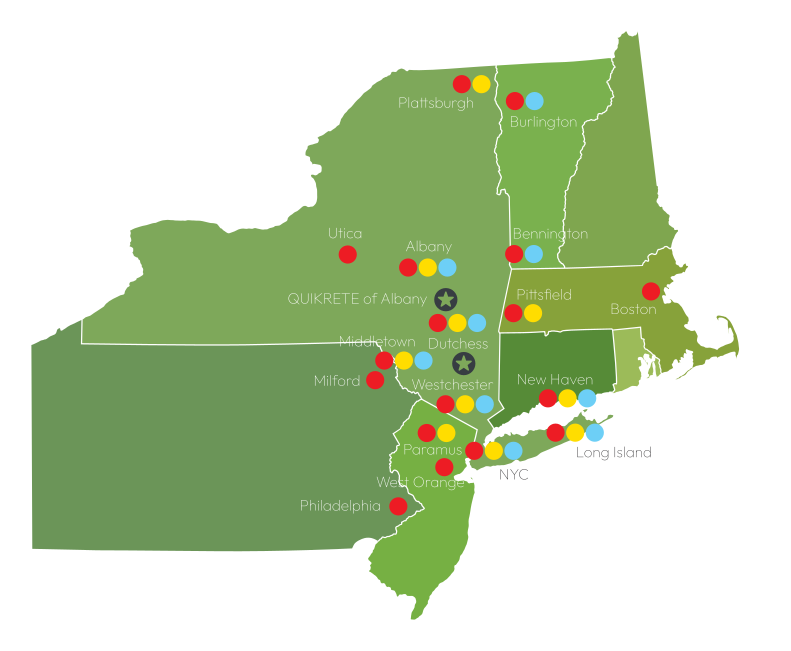
Package Pavement has two convenient locations in Stormville, NY (Dutchess County) and Ravena, NY (Greene County) to serve the Northeastern Region with bagged concrete, blacktop, mortar, and repair products. This map gives a general idea of where we service and the product lines we offer.
Package Pavement Products
Quikrete Products
Spec Mix Products
map

Our Brands Websites