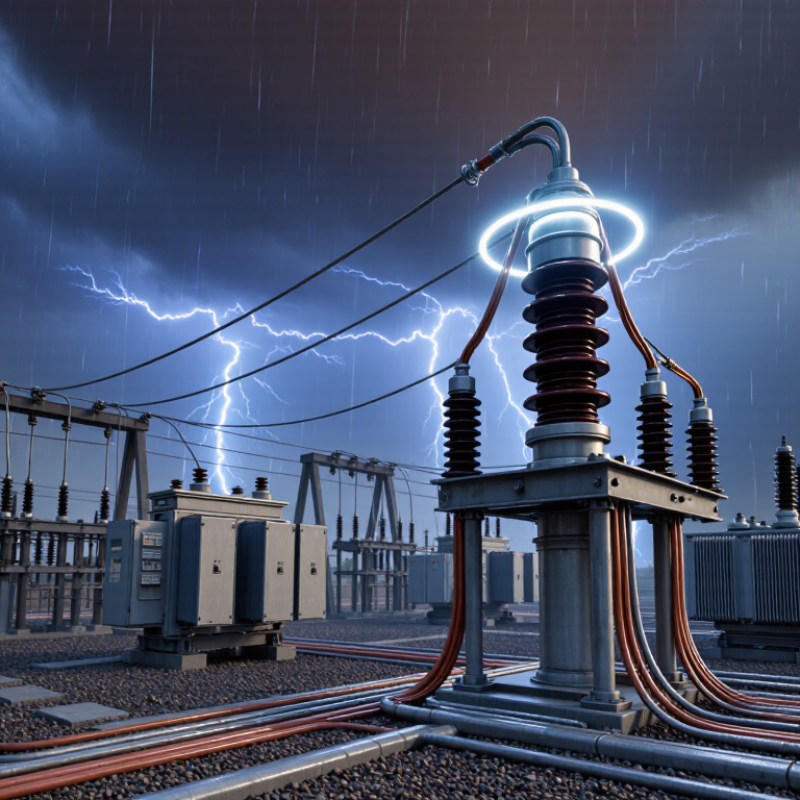
| Overhead distribution lines | Line-mounted surge arrester | Conductors, insulators, crossarms, and connected distribution equipment | Lightning-related flashover and temporary overvoltage stress | Connect the arrester between the energized conductor and a low-impedance ground path. |
| Utility service entrance | Service-entrance surge arrester | Main switchgear, service conductors, and building electrical systems | Surges entering from the utility network or nearby lightning strikes | Install as close as practical to the service entrance, with short and straight connecting conductors. |
| Medium-voltage switchgear | Metal-oxide surge arrester | Switchgear, busbars, circuit breakers, and protection relays | Insulation damage caused by steep-front switching or lightning surges | Select the continuous operating voltage and energy rating for the system grounding arrangement. |
| Transformer high-voltage terminals | Transformer surge arrester | Power-transformer windings, bushings, and insulation system | Impulse voltage reaching transformer insulation | Place the arrester near the transformer terminal to reduce lead inductance and residual voltage. |
| Substation incoming lines | Station-class surge arrester | Incoming line insulation, transformers, buswork, and substation apparatus | High-energy lightning currents and traveling-wave overvoltages | Coordinate arrester protective levels with the insulation withstand ratings of connected equipment. |
| Low-voltage distribution panels | Type 1 or Type 2 surge protective device | Panelboards, branch circuits, control systems, and connected loads | Residual surges and internally generated switching transients | Verify compatibility with the system voltage, earthing method, short-circuit rating, and backup protection. |
| Industrial motor control centers | Industrial surge protection device | Variable-speed drives, motor controllers, PLCs, and control power supplies | Switching transients from motors, contactors, and power-electronic equipment | Use coordinated protection and separate sensitive control wiring from high-current conductors where possible. |
| Photovoltaic array and inverter circuits | DC-side and AC-side surge protection | Solar modules, DC cabling, inverters, and AC distribution equipment | Induced lightning surges on long outdoor conductors | Protect both DC and AC circuits when required, and coordinate bonding with the site lightning-protection system. |
| Telecommunications and data lines | Signal-line surge protector | Modems, network equipment, communication interfaces, and signaling devices | Common-mode and differential-mode surges on metallic communication conductors | Match the protector to the signal type, operating bandwidth, nominal voltage, and grounding arrangement. |
| Building automation and instrumentation circuits | Control and instrumentation surge protector | Sensors, controllers, fire-alarm interfaces, and monitoring equipment | Transient voltages transferred through long field wiring | Install protection at cable entry points and maintain an equipotential bonding network. |