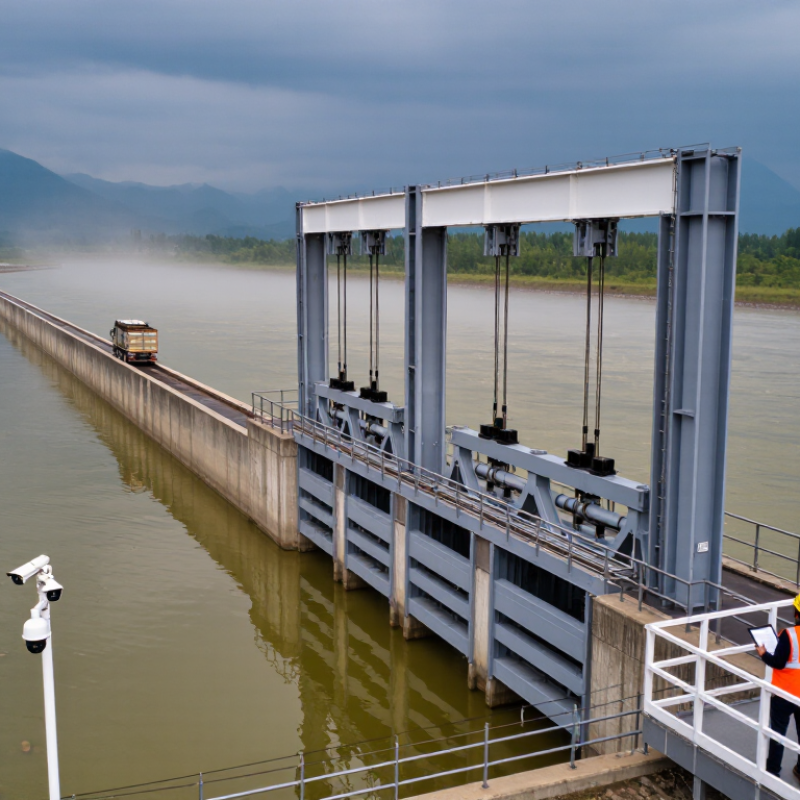
Water infrastructure is facing a sharper test. Climate volatility, urban growth, and aging assets are changing how projects manage water. The United Nations World Water Development Report 2024 links water insecurity with rising social and economic pressure. It also shows that agriculture still accounts for roughly 70% of global freshwater withdrawals. These figures make controlled movement essential, not optional. A reliable water control gate can regulate canals, reservoirs, flood channels, and treatment facilities with measurable precision. It can also isolate damaged sections during maintenance, protecting workers and reducing service disruption.
Global projects need equipment that performs beyond ideal drawings. Gates may operate beside muddy embankments, in freezing air, or under sudden storm flows. The World Meteorological Organization’s State of the Global Water Resources reports highlight increasing hydrological variability in many regions. This supports stronger attention to operating range, corrosion resistance, sealing performance, and remote monitoring. A correctly specified water control gate gives engineers practical control at critical interfaces. Stainless steel components, replaceable seals, and accessible lifting systems can simplify long-term maintenance. Small details matter.
However, selection cannot rely on product brochures alone. Site surveys, hydraulic modelling, sediment analysis, and local maintenance skills must guide the decision. No gate suits every project. That is the uncomfortable truth. The World Bank and international dam-safety guidance repeatedly emphasize lifecycle planning, risk assessment, and accountable operation. Project owners should compare total cost, not only purchase price. They should also test emergency procedures before commissioning. A strong gate is valuable, but disciplined management makes it dependable. This balanced approach helps global developers build safer, more adaptable water systems.
A water control gate is a movable barrier that regulates water elevation, discharge, and direction. It operates across dams, irrigation canals, and floodways. Common designs include slide gates, radial gates, and flap gates. Each responds differently to pressure, debris, and changing flow conditions.
In dams, gates release stored water through controlled openings. Operators adjust them gradually to protect downstream channels and nearby communities. In canals, gates distribute water between branches and maintain dependable levels for irrigation. In floodways, they redirect peak flows away from dense areas.
The need is substantial. The UN World Water Development Report 2023 states that agriculture accounts for about 70% of global freshwater withdrawals. Accurate flow control therefore supports both food production and water conservation.
Professional design goes beyond selecting a strong steel panel. Engineers assess hydraulic loading, sediment, corrosion, ice, and emergency access. Field teams inspect seals, hoists, guides, and embedded concrete before commissioning. A few millimeters of leakage can become a serious maintenance issue.
Small errors matter. The World Meteorological Organization’s State of Global Water Resources 2023 reported widespread abnormal river flows, reinforcing the value of adaptable control systems. Sensors can track upstream levels, gate position, and downstream discharge, but automation is not infallible. Manual inspection still matters, especially after storms. A reliable gate combines calculated capacity with practical maintenance, clear operating procedures, and room for unexpected conditions.