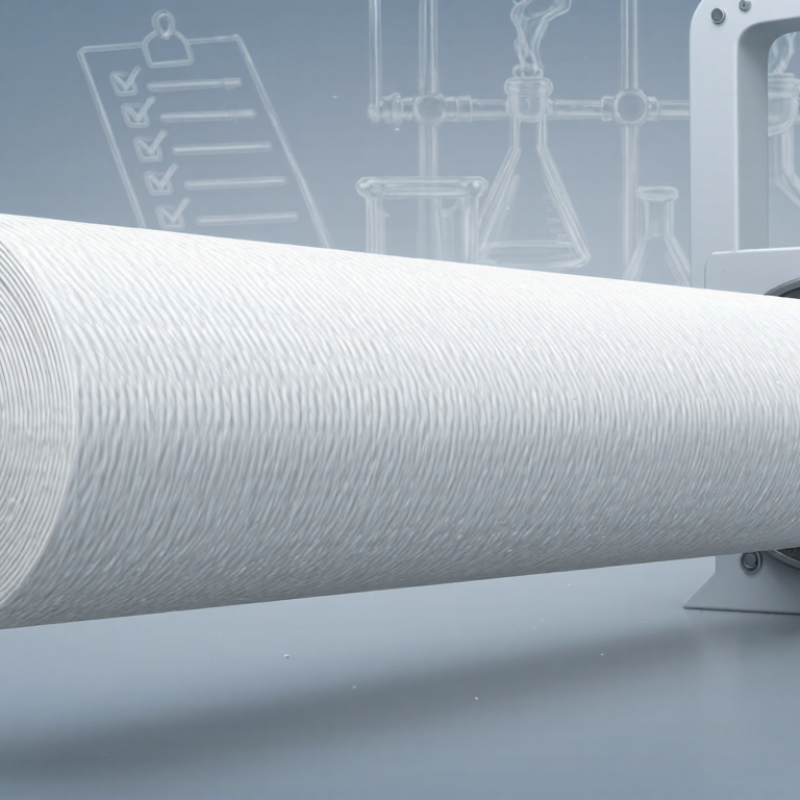
| Basic Definition | A nonwoven fabric made by entangling fibers with high-pressure water jets rather than by weaving or knitting. | The process creates a textile-like sheet without yarn preparation, loom setup, or knitting operations. |
| Typical Fiber Inputs | Viscose or rayon, polyester, polypropylene, cotton, wood pulp, and blends of these fibers. | Fiber selection can be matched to absorbency, softness, strength, cost, compostability goals, and end-use requirements. |
| Manufacturing Stage 1: Fiber Preparation | Staple fibers are opened, blended, and carded. Pulp-based materials may be added through an airlaid or wetlaid forming process. | Consistent blending supports uniform color, basis weight, absorbency, and performance across production lots. |
| Manufacturing Stage 2: Web Formation | Fibers are arranged into a web, commonly by carding and cross-lapping. The web is held together temporarily before hydroentanglement. | Web formation affects thickness, tear behavior, tensile balance, and the final fabric’s uniformity. |
| Manufacturing Stage 3: Hydroentanglement | Fine water jets pass through the fiber web from one or both sides, causing the fibers to intertwine mechanically. Industrial systems commonly operate across a broad pressure range, approximately 30–200 bar, depending on the product. | Jet pressure, nozzle design, line speed, and number of passes influence softness, strength, aperturing, and surface texture. |
| Manufacturing Stage 4: Water Removal and Drying | The entangled web is dewatered, dried, and sometimes thermally treated or finished before winding. | Efficient water recovery and drying help control energy use, production speed, fabric moisture, and dimensional stability. |
| Common Basis-Weight Range | Approximately 20–250 g/m² is commonly encountered across wipes, hygiene materials, medical products, filtration media, and industrial applications. | Basis weight should be selected according to required absorbency, coverage, strength, drape, and shipping cost. |
| Bonding Method | Mechanical fiber entanglement; no adhesive binder is inherently required for the basic spunlace structure. | The absence of a mandatory chemical binder can support a soft hand feel and reduce binder-related formulation constraints. |
| Hand Feel and Drape | Generally soft, flexible, and textile-like; performance varies with fiber type, web structure, embossing, and finishing. | Suitable for products that contact skin or require conformability, including wipes, personal-care materials, and medical disposables. |
| Absorbency | High absorbency can be achieved with hydrophilic fibers such as viscose, rayon, cotton, or pulp. Polyester and polypropylene are naturally hydrophobic unless modified. | Fiber composition and surface treatment should be specified when liquid uptake, retention, or rapid wetting is critical. |
| Strength and Tear Behavior | Strength depends on fiber type, fiber length, basis weight, web orientation, jet energy, and finishing. Cross-lapped webs can provide balanced machine-direction and cross-direction performance. | Request machine-direction and cross-direction test results rather than relying only on an average tensile value. |
| Wet Strength | Can be good when synthetic fibers or suitable fiber blends are used. Cellulosic fibers may lose strength when wet unless the structure or finish is engineered for wet use. | Wet tensile and wet tear testing are essential for wipes, cleaning cloths, filtration products, and medical applications. |
| Surface Options | Smooth, embossed, perforated, apertured, printed, laminated, or chemically finished surfaces are available depending on the production line. | Surface design can improve cleaning efficiency, liquid distribution, appearance, grip, or filtration performance. |
| Sewing and Converting | Can be slit, laminated, perforated, die-cut, folded, or converted into rolls, sheets, pads, and shaped components. | A wide converting range helps reduce the need for additional textile processing steps in different markets. |
| Typical Applications | Wet wipes, dry wipes, cosmetic pads, medical gowns and drapes, wound-care materials, filtration media, hygiene components, automotive materials, and household cleaning products. | One material platform can serve multiple product categories when the fiber blend, basis weight, finish, and packaging format are adjusted. |
| Sustainability Considerations | The fabric itself is not automatically biodegradable or flushable. End-of-life behavior depends on fiber composition, additives, product construction, and local waste systems. | Specify recycled content, renewable fibers, biodegradability claims, wastewater management, and disposal instructions separately and verify each claim with testing. |
| Quality-Control Parameters | Basis weight, thickness, moisture content, tensile strength, elongation, tear strength, absorbency, lint, color, odor, roll width, and defect rate. | A clear specification sheet makes samples, production lots, and shipments easier to compare across regions. |
| Relevant Test Standards | Commonly used methods include ISO 9073 series and ASTM nonwoven-textile methods for mass per unit area, thickness, tensile properties, tear, absorbency, and related characteristics. | Using recognized methods improves comparability between laboratories, suppliers, and destination markets. |
| Global Sourcing Advantage | Spunlace can be engineered across a broad range of fiber blends, weights, textures, widths, and finishing options. | Buyers can source a product configured for local regulations, climate, application performance, packaging, and target cost without changing the basic bonding technology. |