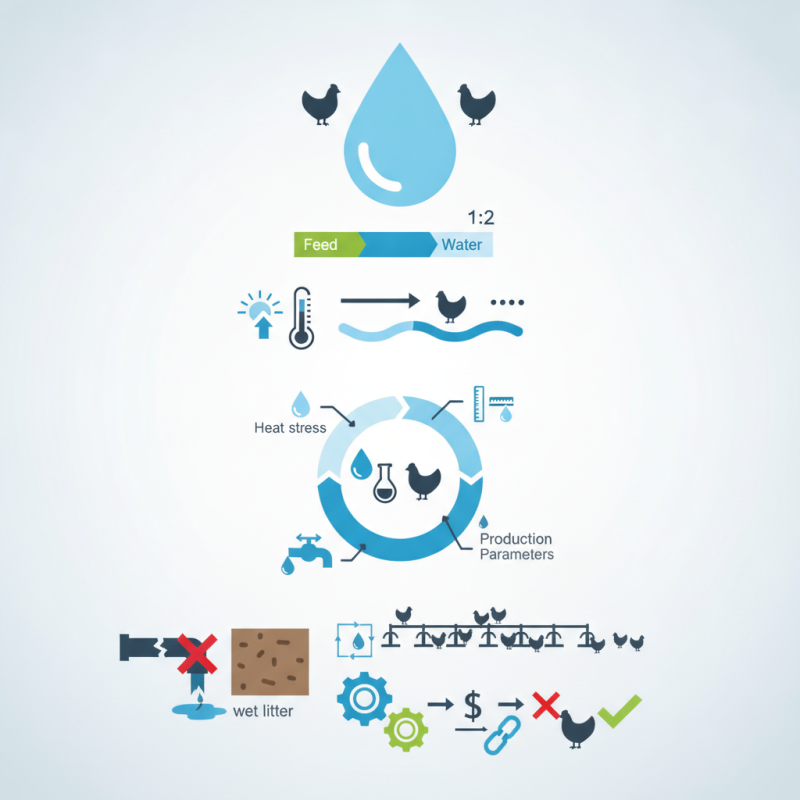
| Water as a Nutrient | Water is essential for digestion, circulation, temperature regulation, and waste removal. Birds generally cannot remain healthy for long without continuous access to clean water. | Restricted or contaminated water can quickly reduce feed intake, growth, egg production, and overall flock performance. | Provide fresh water throughout the day and inspect the drinking system at least daily. |
| Typical Water-to-Feed Relationship | Chickens often consume approximately 1.6–2.0 parts of water for each part of feed by weight under comfortable conditions. | A sudden change in the water-to-feed ratio may indicate heat stress, illness, poor water quality, or a feeding problem. | Monitor flock water and feed intake together rather than evaluating either measurement alone. |
| Effect of Ambient Temperature | Water consumption usually increases as house temperature rises. Heat-stressed birds may drink substantially more than they do under moderate conditions. | Insufficient flow or empty drinkers can intensify heat stress and increase mortality risk. | Check flow rates, tank levels, and water temperature during hot weather; provide shade or insulation for exposed water lines. |
| Drinker Type: Nipple System | Delivers water when a bird activates a valve. It can reduce open-surface exposure and usually produces less spillage than open drinkers when correctly adjusted. | Lower spillage helps keep litter drier and can reduce ammonia-related air-quality problems. | Set the height and pressure for the bird age, verify that each nipple works, and flush the lines regularly. |
| Drinker Type: Bell or Pan System | Uses an open water surface that is easy for young birds to recognize, but it can collect litter, feed, and feathers. | Accessible water supports early drinking, while contamination can increase cleaning requirements and microbial risk. | Maintain the recommended water depth, clean frequently, and keep the drinker level to limit tipping and spillage. |
| Water Hygiene | Drinking water should be free from visible sediment and managed to limit bacterial contamination. Microbial quality should be confirmed through testing rather than appearance alone. | Poor-quality water may contribute to enteric disease, biofilm formation, and reduced flock performance. | Test source water periodically, clean storage tanks, and follow veterinary or local water-treatment guidance. |
| Water Line Maintenance | Biofilm, mineral deposits, and sediment can restrict flow and interfere with valves or nipples. | Blocked or inconsistent drinkers create uneven access, especially in large houses or multi-level systems. | Flush lines according to the equipment and treatment program, and inspect filters, regulators, and end points. |
| Drinker Height | Drinkers should be adjusted as birds grow so that birds can drink comfortably without excessive splashing or crouching. | Incorrect height can increase water waste, wet litter, and competition at the drinker. | Raise or adjust drinkers regularly and confirm that both smaller and larger birds can reach them. |
| Water Availability | Every bird should have convenient access to an adequate number of functioning drinkers, with extra capacity for hot weather and peak demand. | Limited access can cause crowding, uneven growth, dehydration, and reduced production. | Use equipment capacity recommendations for the flock size and keep backup drinkers or repair parts available. |
| Litter Condition | Excessive drinker leakage can create wet areas beneath or around the drinking line. | Wet litter is associated with higher ammonia levels, footpad damage, and poorer house conditions. | Repair leaks promptly, maintain correct pressure, and remove heavily wet litter when necessary. |
| Water Temperature | Birds generally prefer clean, palatable water; water that becomes excessively warm may reduce drinking, particularly during hot weather. | Reduced intake during heat stress can worsen dehydration and production losses. | Protect tanks and exposed lines from direct sunlight and renew stagnant water where practical. |
| Operational Benefit | A properly selected and maintained drinker system provides measurable, continuous access to water with less manual filling than basic containers. | Automated or semi-automated systems can improve labor efficiency and support more consistent flock management. | Choose equipment based on flock size, bird age, house layout, water pressure, cleaning needs, and local climate. |
| Note: Water-consumption ranges and equipment requirements vary with bird type, age, feed composition, temperature, humidity, health status, and housing conditions. Farm-specific recommendations should be confirmed with a poultry veterinarian or qualified poultry adviser. |