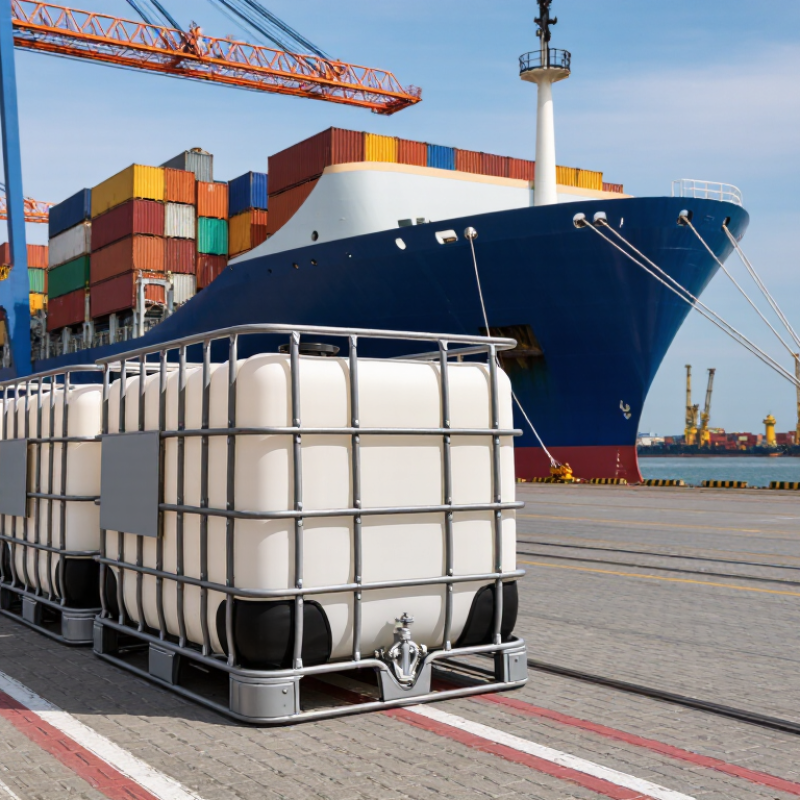
| Common nominal capacity | Approximately 500–1,000 litres for standard industrial IBC configurations; the exact working capacity depends on the approved design. | A standardized footprint and high volume per unit can improve container utilization and reduce the number of individual packages. | Do not fill beyond the tank’s marked maximum fill level. Allow the expansion space specified for the chemical and the applicable transport rules. |
| Typical construction | A rigid inner container, commonly made from high-density polyethylene, enclosed by a protective steel grid or frame and mounted on a pallet base. | The composite structure combines chemical compatibility with protection during lifting, handling, and multimodal transport. | Check the inner bottle, frame, pallet, valves, caps, gaskets, and labels before every use. Remove damaged units from service. |
| Chemical compatibility | Compatibility depends on the chemical, concentration, temperature, exposure time, stress conditions, and the materials of the tank and fittings. | A tank suitable for one product may be unsuitable for another, even when both products are classified as liquids. | Obtain a compatibility confirmation from the tank supplier and chemical safety documentation before filling. Never mix residues from incompatible chemicals. |
| Dangerous-goods approval | Dangerous chemicals may require a certified UN-marked IBC that meets the applicable transport regulations and packing-group requirements. | Road, rail, sea, and air transport can apply different rules. The approval marking must match the intended substance and transport mode. | Verify the UN marking, inspection status, product classification, shipping documents, labels, and emergency information before dispatch. |
| Handling equipment | Forklift pockets and a pallet base are common features; lifting points and equipment limits vary by design. | Standard handling features support transfer between trucks, warehouses, ports, and production areas. | Use a trained operator and equipment with sufficient rated capacity. Keep forks fully inserted and centered; do not drag, roll, drop, or lift from unauthorized points. |
| Load securing | IBC tanks should remain upright on a level pallet and be secured against movement during transport. | Proper restraint reduces the risk of tipping, valve impact, leakage, and damage caused by vibration or sudden braking. | Follow the carrier’s cargo-securing procedure and the applicable modal rules. Protect valves and fittings from impact and do not stack unless the tank is specifically approved for stacking. |
| Storage location | A clean, dry, well-ventilated area away from ignition sources, incompatible chemicals, drains, and direct physical hazards is generally preferred. | Controlled storage helps protect the container and reduces the consequences of a leak or chemical reaction. | Use suitable secondary containment where required. Protect plastic components from prolonged heat, ultraviolet exposure, and temperatures outside the tank’s specified range. |
| Pre-use inspection | Inspect for cracks, deformation, discoloration, brittleness, bulging, corrosion, missing parts, leaks, illegible markings, and damaged closures. | Early detection prevents unsafe loading, contamination, and shipment interruption. | Record inspection results. Do not use a tank with visible damage or an uncertain service history until it has been assessed by a competent person. |
| Filling and discharge | Filling and emptying should use compatible hoses, pumps, valves, seals, grounding or bonding controls where required, and procedures suited to the chemical. | Controlled transfer reduces spills, static-related hazards, overpressure, and exposure to personnel. | Follow the safety data sheet and site procedure. Close and cap all openings after transfer, and relieve pressure only according to the approved process. |
| Cleaning between uses | Cleaning method depends on the previous chemical, residue properties, tank material, wastewater controls, and the next intended product. | Inadequate cleaning can cause cross-contamination, dangerous reactions, odor transfer, or product-quality failures. | Use a documented cleaning and verification procedure. Collect, treat, and dispose of rinsate as required by local environmental regulations. |
| Reuse conditions | Reuse is appropriate only when the tank remains structurally sound, chemically compatible, clean, traceable, and within its regulatory inspection period. | Safe reuse can reduce packaging waste, replacement costs, and the environmental impact associated with single-use containers. | Assign a reuse status after inspection and cleaning. Keep records of contents, cleaning, repairs, inspections, and the number of service cycles where required. |
| Periodic inspection | Regulated IBCs are subject to periodic inspection and testing intervals specified by the applicable dangerous-goods regulations and approval. | Current inspection status is essential for legal acceptance and safe international movement. | Check the date and marking on the tank before shipment. Use an authorized inspection facility when testing or repair is required. |
| Emergency response | The response plan should identify the chemical hazards, personal protective equipment, spill controls, fire response, first aid, and reporting contacts. | A consistent emergency plan supports rapid action across suppliers, carriers, warehouses, and receiving sites in different countries. | Keep the current safety data sheet and transport information accessible. Isolate the area and involve trained responders; do not handle an unknown leak without proper protection. |
| End-of-life management | A tank that cannot be safely cleaned, inspected, repaired, or matched to a compatible chemical should be withdrawn from service. | Responsible disposal reduces the risk of residual chemical exposure, unauthorized reuse, and environmental release. | Decontaminate through an approved process, render the container unusable when required, and send materials to authorized waste or recycling channels. |