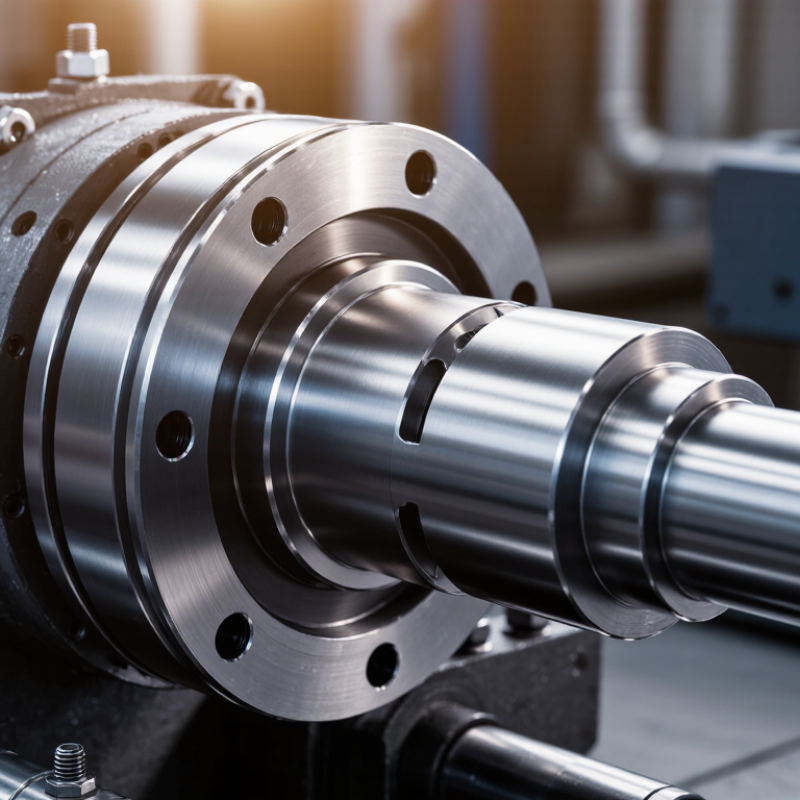
| Definition | A stationary wear component manufactured from cemented carbide, commonly based on tungsten carbide particles bonded with a metallic binder. | Provides a hard, dimensionally stable surface in equipment exposed to abrasive particles, sliding contact, or high mechanical loading. |
| Common Material Structure | Hard carbide grains embedded in a tougher metallic binder; exact composition depends on the required wear, corrosion, and toughness balance. | Allows the stator to combine much higher hardness than conventional steels with useful resistance to impact and fracture. |
| Typical Hardness | Approximately 1,200–2,000 HV30, depending on carbide grain size, binder content, and grade. | High hardness helps resist scratching, cutting, and three-body abrasion caused by sand, minerals, scale, and other solid contaminants. |
| Compressive Strength | Commonly about 3.0–6.5 GPa for cemented carbide grades. | Supports high contact loads and helps maintain the stator profile under pressure and repeated mechanical loading. |
| Elastic Modulus | Typically approximately 450–650 GPa. | High stiffness reduces elastic deformation and helps preserve running clearances and component geometry. |
| Density | Approximately 13.5–15.2 g/cm³ for many tungsten-carbide-based grades. | The material is heavier than steel, so housing design, support, and installation handling should account for the increased mass. |
| Thermal Conductivity | Often approximately 50–110 W/m·K, depending on composition and binder content. | Can help spread frictional heat, although cooling, lubrication, speed, and contact pressure remain critical design factors. |
| Wear Resistance | Very high against abrasive wear when the carbide grade, surface finish, and operating conditions are properly matched. | Can extend service intervals and reduce dimensional changes in pumps, mixers, seals, valves, and other rotating or sliding equipment. |
| Corrosion Performance | Depends strongly on the binder and process fluid; carbide itself is not automatically resistant to every chemical environment. | Grade selection must consider pH, chlorides, oxidizing agents, temperature, and the possibility of binder corrosion. |
| Temperature Capability | Performance is application-specific; binder behavior, oxidation, thermal gradients, lubrication, and joint design determine the practical limit. | A temperature rating should be confirmed from the material grade and complete assembly design rather than selected from hardness alone. |
| Typical Applications | Abrasive slurry pumps, mechanical seals, high-wear valve components, mixers, flow-control equipment, and drilling or mineral-processing machinery. | Suitable where conventional steel or softer alloys experience rapid wear, loss of clearance, or frequent replacement. |
| Surface Finish Requirement | Fine grinding or lapping is often required for sealing or close-clearance applications; the specified finish depends on the mating component and fluid film. | Proper finish reduces friction, leakage, heat generation, and damage to the mating surface. |
| Main Design Limitation | Lower fracture toughness than many steels and greater sensitivity to tensile stress, sharp corners, misalignment, and impact loading. | Use suitable edge radii, secure support, accurate alignment, controlled assembly loads, and protection from shock during installation. |
| Selection Priorities | Carbide grain size, binder type and percentage, corrosion exposure, particle size, sliding speed, contact pressure, temperature, lubrication, and required surface finish. | A correctly selected grade can improve reliability, while an unsuitable grade may suffer from corrosion, chipping, thermal damage, or premature failure. |