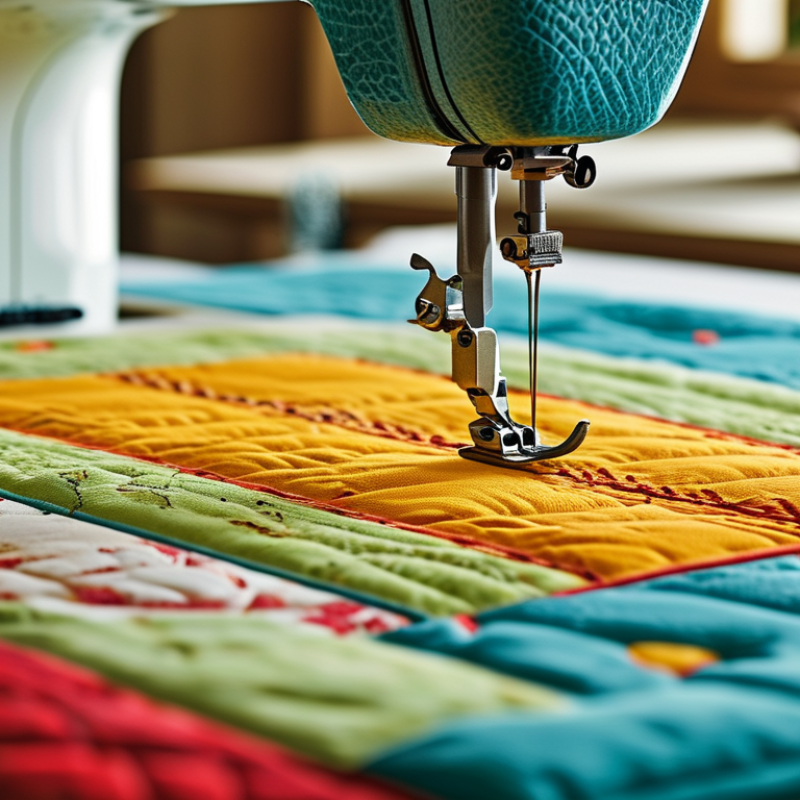
| Personalized Quilt Sizes | Quilts can be made for a specific bed, sofa, room, or recipient instead of being limited to standard retail dimensions. | Common finished sizes: 36 × 52 in, 50 × 65 in, 68 × 88 in, 90 × 90 in, and 108 × 108 in | Home quilting makes it easier to adapt the length, width, border, and design to individual requirements. |
| Flexible Project Scale | A home machine can be used for both small decorative projects and larger bed quilts, depending on the machine’s workspace and user technique. | Approximate quilt-top areas: 13, 23, 42, 56, and 81 sq ft for the sizes listed above | Users can begin with manageable projects such as table runners, cushions, or baby quilts before progressing to larger quilts. |
| Control Over Stitch Quality | Adjustable stitch settings allow the user to select an appropriate stitch length for piecing, outline quilting, and general construction. | A straight stitch length of approximately 2.5–3.0 mm is commonly used for general sewing | Consistent settings help create secure seams and an even appearance while allowing adjustments for different fabrics and techniques. |
| More Convenient Scheduling | Quilting can be completed in short sessions without travel, appointment coordination, or sending the project away. | Suitable for sessions ranging from 15 minutes to several hours | Flexible working time is useful for beginners, hobbyists, and people who prefer to work gradually around family or household responsibilities. |
| Material and Color Freedom | Users select their own fabric types, colors, patterns, batting, thread, and backing materials. | A quilt commonly consists of 3 primary layers: quilt top, batting, and backing | Personal material choices support custom themes, seasonal designs, coordinated home décor, and meaningful handmade gifts. |
| Reduced Outsourcing Dependence | Quilting at home reduces the need to ship projects or wait for an external quilting service. | One less external production and delivery stage | Keeping the process at home can make revisions easier and allows the maker to inspect each stage before moving forward. |
| Skill Development | Repeated use helps users improve fabric handling, seam accuracy, tension control, pressing, and quilting consistency. | Core workflow: cutting, piecing, pressing, layering, quilting, and binding | A home machine provides a practical way to build skills progressively through repeated, low-pressure practice. |
| Better Project Oversight | The maker can review seams, tension, fabric alignment, and quilting density throughout the process. | Quality checks can be performed after every major construction stage | Early inspection helps identify puckering, skipped stitches, uneven seams, or alignment problems before the quilt is finished. |
| Efficient Use of Fabric Scraps | Small fabric pieces can be incorporated into patchwork blocks, appliqué, borders, and small household projects. | Common scrap-based projects include coasters, placemats, cushions, and table runners | Using remnants can support creative experimentation and reduce the amount of usable fabric left unused. |
| Long-Term Hobby Value | A home quilting machine can support a range of sewing and textile projects beyond one finished quilt. | Usable for piecing, decorative stitching, quilt finishing, repairs, and small textile items | The equipment can remain useful as the user’s techniques, project sizes, and design interests develop. |