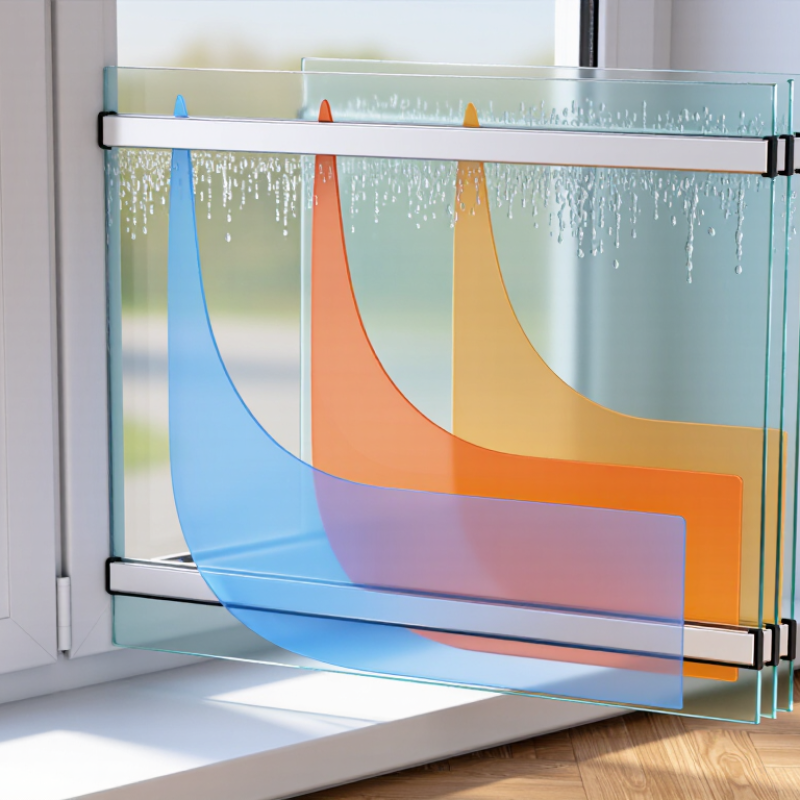
| Basic construction | Two panes of glass set in one window unit, with a sealed space between them. | The panes and the space between them create a more resistant path for heat transfer than a single pane alone. | Can reduce heat loss and improve indoor comfort compared with single glazing. |
| Sealed cavity | A narrow gap between the inner and outer panes, commonly filled with air or an inert gas such as argon. | The relatively still gas slows heat transfer by conduction and convection. | The insulating effect depends on cavity width, gas fill, seals, and the overall window design. |
| Low-emissivity coating | A thin, transparent coating applied to a glass surface in some insulated glass units. | It reflects some long-wave infrared heat back toward its source while allowing much visible light through. | Can improve thermal performance; the effect varies by coating type and placement. |
| Spacer | A strip around the edge of the unit that separates the panes and helps maintain the cavity. | It helps keep the glass at a consistent distance apart and contains desiccant in many designs to absorb moisture within the cavity. | Spacer material and edge construction affect heat flow at the perimeter and the unit’s durability. |
| Edge seals | Seals around the glass unit’s perimeter that help keep the cavity closed. | They limit gas leakage and help prevent moisture from entering the space between the panes. | A failed seal can cause fogging or condensation inside the cavity and reduce performance. |
| Window frame | The material and structure that hold the insulated glass unit in the window opening. | Frame design affects heat flow around the glass and how effectively the window closes against air leakage. | Overall performance depends on both the glazing unit and the frame, installation, and weather seals. |
| Sound reduction | Some reduction in sound passing through the window compared with a single pane. | The separated panes can disrupt sound transmission; different pane thicknesses and wider gaps may help with certain noise frequencies. | Results vary with glass thickness, cavity, frame, installation, and the type of noise. |
| Condensation | Water droplets that form when a surface is colder than the surrounding air’s dew point. | The inner pane of a well-performing unit is generally warmer than single glazing, which can reduce condensation on that surface. | Double glazing does not eliminate condensation in every situation; indoor humidity and ventilation also matter. |
| Performance measures | Common ratings include whole-window U-factor or U-value and solar heat gain coefficient. | U-factor describes heat transfer through the window; solar heat gain coefficient describes how much solar heat enters. | Compare ratings for the complete window, not just the glass, and consider the local climate and building needs. |