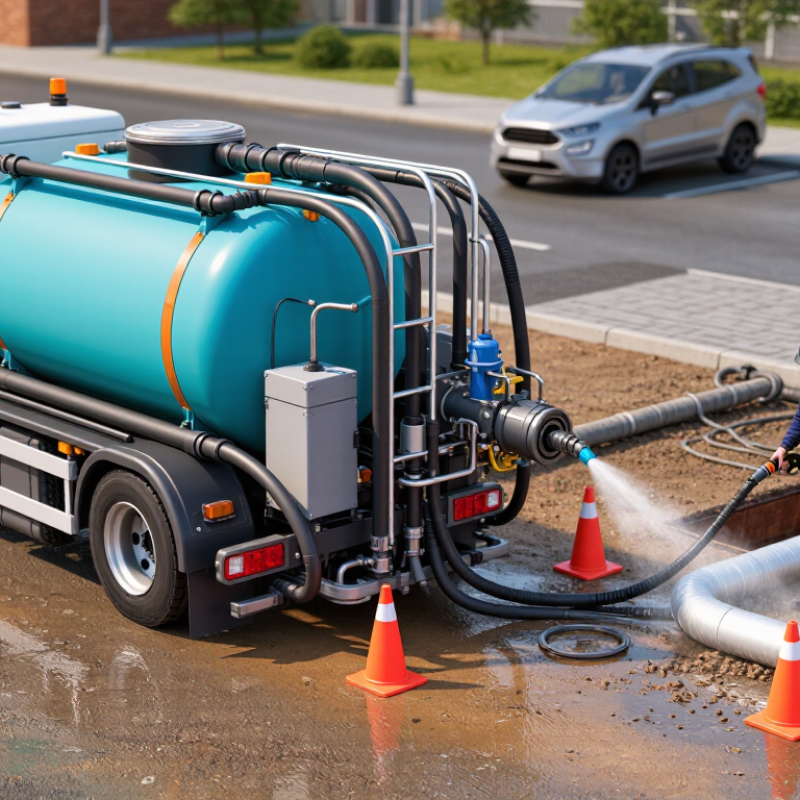
| Operating Pressure | 1,500–4,000 psi | A high-pressure pump forces water through a specialized nozzle. The pressure helps break up deposits and loosen material from the pipe wall. | Routine cleaning of building drains, laterals, storm drains, and municipal sewer lines. |
| Water Flow Rate | Approximately 10–80 gal/min | Flow carries loosened grease, sediment, and debris downstream. The required flow depends on pipe diameter, blockage severity, and equipment size. | Lower flow for small service lines; higher flow for larger commercial and municipal pipes. |
| Cleaning Mechanism | Pressurized water plus nozzle thrust | Rear-facing nozzle jets propel the hose through the pipe while forward or angled jets scour the interior surface. | Removing grease, sludge, scale, sand, roots, and loose deposits. |
| Typical Pipe Diameter | About 2–36 in | The practical range depends on pump capacity, hose size, nozzle design, access conditions, and the amount of debris present. | Household drain lines, service laterals, commercial drains, stormwater pipes, and selected sewer mains. |
| Hose Length | Approximately 100–1,000 ft | Longer hoses allow cleaning from a distant access point, but pressure loss and friction increase with hose length. | Short portable units for buildings; longer reels for streets, industrial sites, and municipal work. |
| Hose Construction | High-pressure reinforced hose | The hose must tolerate the machine's working pressure, repeated bending, abrasion, and contact with wastewater. | Controlled insertion into drains and retrieval after cleaning. |
| Pump Type | Positive-displacement plunger pump | A reciprocating plunger pump converts engine or motor power into a controlled combination of pressure and water flow. | Continuous jetting operations where stable pressure and flow are required. |
| Power Source | Electric motor, gasoline engine, or diesel engine | Electric units are commonly used indoors or where low emissions are important. Engine-driven units provide greater mobility and capacity. | Indoor maintenance, service vehicles, trailers, and heavy-duty field operations. |
| Water Supply | Fresh-water tank or approved site connection | The pump requires a consistent water supply. A tank supports mobile work, while a site connection may be used when local rules and flow conditions allow it. | Remote cleaning, scheduled maintenance, and emergency blockage response. |
| Nozzle Selection | Penetrating, flushing, rotary, root-cutting, or descaling designs | Nozzle geometry controls thrust, spray angle, cutting action, and debris transport. The nozzle should match the pipe condition and diameter. | Different tools are selected for grease, roots, mineral scale, heavy sediment, or general flushing. |
| Cleaning Direction | Usually upstream from an access point | The operator advances the nozzle into the line and then retrieves it while the water jets wash debris toward a suitable collection or downstream point. | Cleaning between manholes, cleanouts, catch basins, and building access points. |
| Typical Productivity | Highly variable; often measured by cleaned pipe length per hour | Output depends on pipe size, blockage type, access spacing, hose handling, water supply, and whether vacuum recovery is required. | Preventive maintenance, blockage removal, and preparation for CCTV inspection. |
| Debris Handling | Downstream flushing or vacuum recovery | Water jetting dislodges material but does not automatically remove it from the system. Heavy debris may require a vacuum unit or manual removal. | Grease removal, sediment control, and cleaning before inspection or repair. |
| Safety Requirements | Trained operator, protective equipment, hose control, and pressure-rated components | Water at 1,500–4,000 psi can cause serious injury. Operators should control access, inspect equipment, and never direct a jet toward people or exposed skin. | All residential, commercial, industrial, and municipal jetting work. |
| Key Performance Factors | Pressure, flow, nozzle design, hose size, and pipe condition | Pressure alone does not determine cleaning performance. Effective results require a balanced combination of pressure and flow for the specific pipe and deposit. | Equipment selection, job planning, and consistent cleaning results. |