What Are the Top Types of Smart Watches?

Smart Watches have moved from novelty accessories to practical tools for health, communication, navigation, and daily routines. A small screen now tracks heart rate during a morning run, displays a boarding pass, and vibrates beside a quiet meeting. Yet not every model serves the same person.

Industry data shows why classification matters. Counterpoint Research reported a 7% year-on-year decline in global smartwatch shipments during 2024, while Huawei recorded notable growth in the same period. IDC’s Worldwide Quarterly Wearable Device Tracker also shows that mature markets increasingly value replacement features, health functions, and ecosystem compatibility. These findings suggest a changing market, not a disappearing one.

“Smartwatches are becoming more than just an accessory,” said Ramon T. Llamas, a longtime wearable technology analyst at IDC. His observation remains useful, although it may oversimplify budget products that still focus mainly on notifications and step counts.

This guide examines the top types of Smart Watches, including basic fitness trackers, advanced health watches, sports-focused models, rugged outdoor devices, and hybrid watches. Each category involves trade-offs. Battery life may conflict with a bright display. Medical-style monitoring may require regional approval and professional interpretation. A luxury design may offer fewer training tools.

The best choice is rarely the most expensive one. It depends on habits, phone compatibility, health goals, and tolerance for charging. Small differences matter. A runner needs different evidence than a casual notification user. Reliable purchasing decisions require specifications, independent testing, and realistic expectations.

What Are the Top Types of Smart Watches?

Smart Watches Grouped by Their Primary Purpose

What are the top types of smart watches? The clearest answer depends on purpose, not appearance. Market reports support this approach. Grand View Research valued the global smart watch market at approximately $33.6 billion in 2023. It also forecast strong growth through 2030. These figures show demand, but they do not explain how people use these devices.

Fitness-focused smart watches track steps, heart rate, sleep patterns, routes, and training sessions. A runner may check pace while crossing a park, then review recovery data at home.

IDC’s Worldwide Quarterly Wearable Device Tracker reported about 537 million wearable-device shipments globally in 2024. However, that figure includes several device categories, so it should not be treated as smart watch sales alone. The boundary is fuzzy.

Health-oriented models emphasize wellness monitoring, reminders, and selected body signals. They can encourage movement during a long office meeting. Still, sensor readings may vary with skin contact, motion, or battery condition. They are not medical diagnoses.

Lifestyle and communication watches focus on calls, messages, calendars, payments, and navigation. A bright screen can be useful during a crowded commute.

Outdoor and adventure models prioritize GPS, weather changes, elevation, and longer battery life. They suit hikers, cyclists, and people working away from charging points.

Counterpoint Research reported a decline in global smart watch shipments during 2024, suggesting that buyers may be becoming more selective. More features do not always mean better value. Purpose matters more.

Fitness and Health Tracking Smart Watches

Fitness and health tracking smart watches turn a small wrist display into a daily measurement tool. They record steps, heart rate, sleep duration, calories, and exercise intensity. Many models also estimate blood oxygen and detect irregular heart rhythms. Useful, but not flawless. A loose strap can distort readings. Sweat, skin tone, movement, and poor contact may affect accuracy.

The International Data Corporation’s Worldwide Quarterly Wearable Device Tracker reported approximately 139.8 million smart watch shipments in 2024. This scale reflects strong consumer interest in personal health data. Grand View Research also estimates that the global smart watch market may grow at a 24.5% compound annual rate from 2024 to 2030. Growth is partly driven by preventive health features and remote monitoring needs.

The best fitness-focused watch should match real routines. A runner may need GPS, pace alerts, and recovery estimates. A sleep-focused user may value comfortable materials and longer battery life. Check whether the device supports your phone and exports readable data. Do not treat a watch alert as a medical diagnosis. Clinical validation differs widely between features, and marketing language can sound more certain than the evidence. That gap deserves attention. Metrics become more meaningful when compared over weeks, not judged after one unusual night. Regular charging can also interrupt sleep tracking, which is an inconvenient weakness.

Outdoor, Sports, and Adventure Smart Watches

Outdoor, sports, and adventure smart watches are built for movement, not office decoration. Their strongest features include GPS tracking, altitude readings, heart-rate monitoring, and weather alerts. During a trail hike, a clear screen matters when sunlight reflects off wet rocks. Physical buttons help when gloves cover your fingers. That small detail matters. Good models also record route distance and elevation, helping athletes review effort after training.

For runners and cyclists, reliable positioning and steady battery life matter more than endless notifications. A watch that lasts several days reduces charging worries before a long ride. Adventure users should check water resistance, temperature limits, map access, and emergency communication features. These specifications need careful reading. Water resistance is not permission for every dive. In my experience, wrist sensors can lose accuracy during cold weather or intense intervals. A snug fit improves readings, but no device replaces medical equipment or practical judgment.

Choose a watch around your real activities. A weekend hiker may value offline maps and a bright flashlight. A swimmer may care more about lap detection and pool-friendly controls. I once trusted an elevation reading too quickly, then noticed the route data had drifted near steep cliffs. That mistake taught me to compare watch data with trail signs and local forecasts. Smart features are useful, but they are not infallible. Comfort also deserves attention: a heavy case can become irritating after six hours. Try the controls before committing.

Luxury and Fashion-Focused Smart Watches

Luxury and Fashion-Focused Smart Watches

Luxury-focused smart watches treat the wrist as part of an outfit, not merely a dashboard. Cases may use polished steel, ceramic, or responsibly sourced precious metals. Leather, woven fabric, and adjustable metal straps can change the watch’s character within minutes. A slim profile usually sits better beneath a shirt cuff. A brighter screen helps during evening events, but it can look too technical in low light.

The useful features remain practical. Discreet vibration can signal a meeting, while sleep and heart-rate tracking support everyday awareness. Wellness readings are estimates, not medical diagnoses. Buyers should check sensor accuracy claims, water resistance ratings, software support, and data controls before paying for fine materials. A beautifully made case cannot repair weak privacy settings. Nor can a premium strap make short battery life disappear.

Fashion appeal sometimes creates compromises. Decorative bezels can reduce screen space, and unusual straps may cost more to replace. Some displays also favor elegance over instant readability outdoors. That matters when checking a train time in hard sunlight. This category feels most convincing when technology stays quiet and materials feel intentional. Still, luxury is subjective. A watch that feels refined in a showroom may feel heavy after eight hours. Try the weight, test the clasp, and examine the interface with your usual clothing.

Connected Smart Watches for Communication and Daily Use

Connected smart watches have become practical communication tools, not just miniature fitness trackers. They pair with a phone through Bluetooth or Wi-Fi. Some models also support cellular connections for calls away from home. In everyday use, a watch can show messages, calendar reminders, and delivery updates on your wrist. A quick vibration is often more useful than checking a bright phone screen during a meeting or commute.

Communication quality depends on hardware and surroundings. A clear microphone helps with short calls, while a strong speaker makes voice replies easier outdoors. Voice-to-text can save time, but noisy streets may produce embarrassing mistakes. Small screens work well for brief messages, not long conversations. Battery life also matters. Frequent calls, location services, and cellular connectivity can reduce a full day’s charge to several hours.

For daily use, consider notification controls, emergency contact settings, water resistance, and compatibility with your phone. Data permissions deserve attention too. A connected watch may collect location, health, and communication information. Review its privacy settings before regular use. I prefer watches that allow alerts to be filtered, because constant buzzing becomes stressful. Still, I sometimes miss important messages after filtering too aggressively. That trade-off is easy to overlook. A reliable connected smartwatch should support communication quietly, remain comfortable during long wear, and provide clear controls when technology behaves imperfectly.

What Are the Top Types of Smart Watches? - Connected Smart Watches for Communication and Daily Use

Smart Watch Type Primary Connection Communication Features Typical Daily Functions Typical Battery Range Best Suited For Main Consideration
Bluetooth-Connected Smart Watches Bluetooth connection to a smartphone Call notifications, message alerts, quick replies, calendar reminders Timekeeping, alarms, music control, weather, activity tracking, app notifications About 1–3 days for many full-featured models Users who usually keep their phone nearby Most communication features depend on the phone and Bluetooth range
Cellular-Connected Smart Watches Mobile network connection, usually with an embedded SIM Calls, messages, emergency communication, mobile data, voice assistance Streaming, navigation, notifications, payments, fitness tracking without a phone nearby About 1–2 days under typical use; cellular use can reduce endurance People who need phone-like connectivity while exercising or traveling Requires carrier support and usually an additional cellular service plan
Fitness and Health Smart Watches Bluetooth; some models also support Wi-Fi or cellular service Workout alerts, call and message notifications, scheduled reminders Heart-rate tracking, step counting, sleep monitoring, exercise modes, recovery insights About 2–7 days, depending on sensors, screen use, and GPS activity Users focused on everyday wellness and regular exercise Health readings are for general information and are not a medical diagnosis
GPS Sports Smart Watches Bluetooth with independent satellite positioning Phone notifications, workout prompts, route guidance on selected models Distance, pace, routes, elevation, training load, cycling and running metrics About 5–14 days in watch mode; GPS use typically shortens battery life Runners, cyclists, hikers, and outdoor fitness users Advanced training functions may create a more specialized user experience
Rugged Outdoor Smart Watches Bluetooth, GPS, and sometimes cellular or satellite communication Alerts, location sharing, emergency tools, navigation, and selected message functions Weather data, compass functions, altitude information, route tracking, activity monitoring About 7–30 days, depending on operating mode and communication features Hikers, campers, travelers, and users working in demanding environments Usually larger and heavier than standard daily-use smart watches
Hybrid Smart Watches Bluetooth connection to a smartphone Basic vibration alerts, incoming-call notifications, and selected activity reminders Analog time display, step tracking, sleep tracking, and simple activity monitoring About 1–4 weeks, depending on display and sensor design Users who prefer a traditional watch appearance and long battery life Usually lacks a large touchscreen and advanced standalone communication
Kids’ Connected Smart Watches Cellular connection, GPS, and companion smartphone application Voice calls, approved contacts, location sharing, and emergency alerts Timekeeping, reminders, activity tracking, safe-zone notifications, and limited messaging About 1–3 days, depending on location and cellular use Families seeking basic communication and location features for children Requires careful privacy settings, parental controls, and compatible network service

Battery estimates vary with screen brightness, GPS activity, cellular use, notifications, sensor settings, and software features. Actual communication availability also depends on device compatibility, network coverage, and regional service support.

Article Source:

Find the Right Repair Product for Your Project

Need to find the most appropriate product for the needs of your project? We can help because we have over 70 years of experience servicing the industry with every kind of project, from Do-it-yourself projects to large skyscrapers. Package Pavement has the experience, the knowledge and the products to help every project succeed.

Quikrete Repair Products
Legend
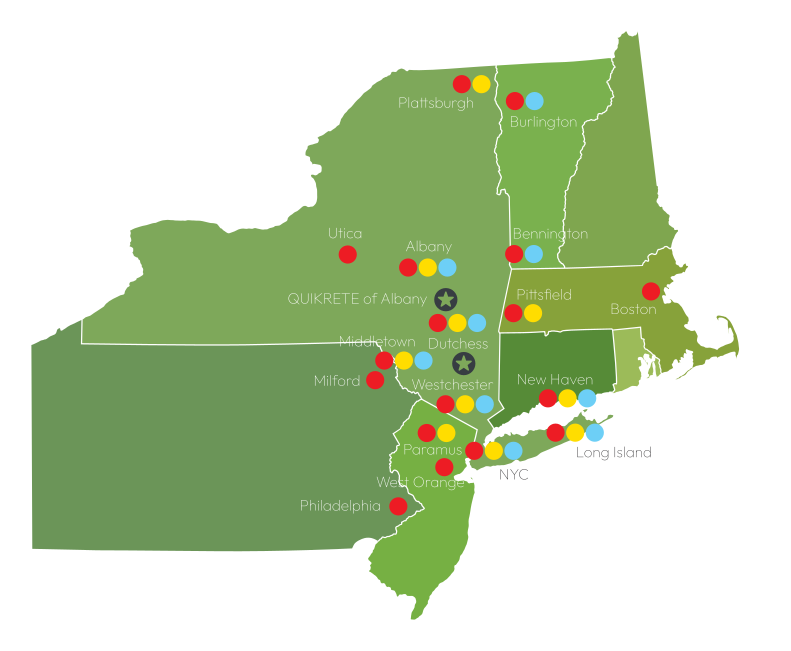
Package Pavement has two convenient locations in Stormville, NY (Dutchess County) and Ravena, NY (Greene County) to serve the Northeastern Region with bagged concrete, blacktop, mortar, and repair products. This map gives a general idea of where we service and the product lines we offer.
Package Pavement Products
Quikrete Products
Spec Mix Products
map

Our Brands Websites