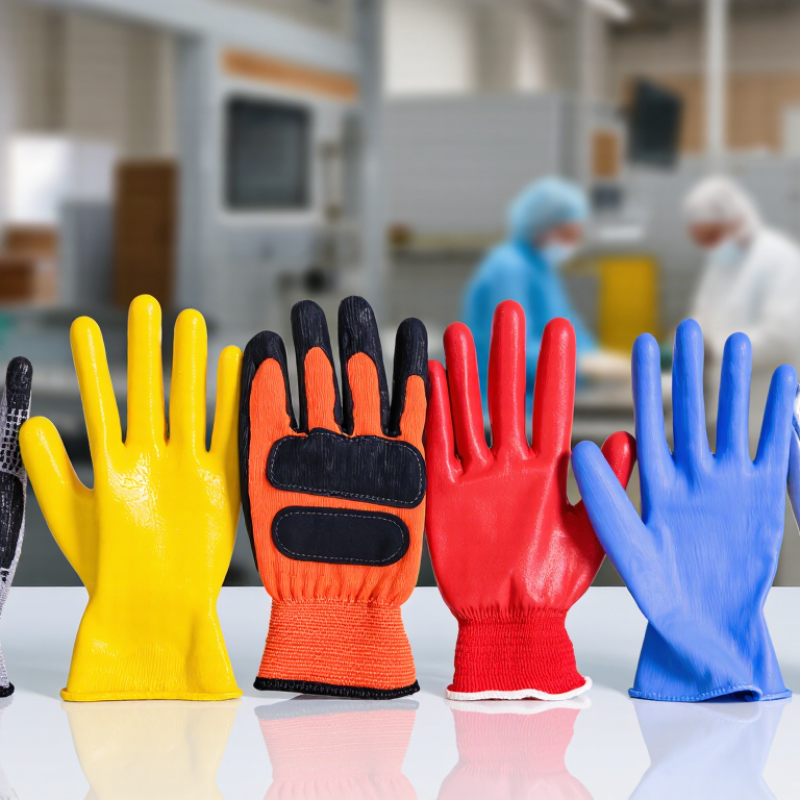
| General-Purpose Work Gloves | Knitted textile, coated fabric, leather, or synthetic blends | Basic protection from dirt, abrasion, minor cuts, and handling friction | Material handling, warehousing, assembly, landscaping, and maintenance | Protection varies widely; they may not protect against chemicals, severe impact, or high heat | Match the glove to the task, required dexterity, grip, fit, and expected exposure |
| Cut-Resistant Gloves | High-performance fibers, engineered yarns, or cut-resistant liners with polymer coatings | Protection from sharp edges, blades, sheet metal, glass, and similar hazards | Metal fabrication, glass handling, food preparation, construction, and automotive work | Cut resistance does not automatically provide puncture, impact, chemical, or heat protection | Review the applicable cut-resistance rating and choose the required level for the hazard |
| Puncture-Resistant Gloves | Dense woven fibers, reinforced liners, or layered protective materials | Resistance to penetration from needles, wires, splinters, and pointed objects | Waste handling, recycling, construction, veterinary work, and industrial inspection | Resistance to pointed objects may differ from resistance to sharp-edged blades | Identify whether the hazard is a needle-like point or a cutting edge, then select the correct rating |
| Impact-Resistant Gloves | Textile or synthetic gloves with thermoplastic rubber or other protective back-of-hand panels | Protection from knocks, crushing forces, and impacts to the fingers and back of the hand | Oil and gas operations, construction, heavy maintenance, and material handling | Impact panels may reduce flexibility; they do not necessarily provide cut or chemical protection | Check coverage of the fingers, knuckles, and back of the hand, as well as grip requirements |
| Chemical-Resistant Gloves | Rubber, nitrile, neoprene, PVC, butyl, or laminated barrier materials | Protection from selected liquids, solvents, acids, alkalis, and other hazardous chemicals | Laboratories, cleaning, chemical processing, agriculture, and industrial maintenance | No single material resists every chemical; permeation and degradation can occur without visible damage | Consult chemical-resistance data for the exact substance, concentration, temperature, and exposure time |
| Disposable Examination Gloves | Thin nitrile, latex, or vinyl | Short-duration protection against contamination and contact with low-risk substances | Healthcare, food handling, cleaning, personal care, and light laboratory tasks | Limited durability and resistance to puncture, abrasion, aggressive chemicals, and prolonged exposure | Use the correct size, replace gloves when damaged or contaminated, and avoid treating them as universal protection |
| Heat-Resistant Gloves | Aramid fibers, leather, aluminized fabrics, treated textiles, or insulated multilayer materials | Protection from contact heat, radiant heat, sparks, and limited thermal exposure | Welding, metalworking, foundries, glasswork, baking, and work near hot equipment | Temperature performance depends on contact time and heat type; they may not resist chemicals or sharp edges | Choose gloves rated for the specific thermal hazard and never use them near heat beyond their stated capability |
| Cold-Insulated Gloves | Layered synthetic insulation, fleece, wool, leather, or waterproof outer materials | Protection from cold environments, chilled materials, wind, and some moisture | Cold storage, winter construction, outdoor work, refrigeration, and logistics | Bulky insulation can reduce dexterity; wet or compressed insulation may lose thermal performance | Consider ambient temperature, moisture, duration, dexterity, and whether the hazard involves cryogenic liquids |
| Electrical-Insulating Rubber Gloves | Tested insulating rubber, often used with protective leather outer gloves | Protection against electric shock when working within the glove’s rated voltage class | Electrical installation, utility maintenance, testing, and energized-work procedures | They require inspection and electrical testing; punctures, cuts, contamination, and aging can compromise protection | Use only gloves with the appropriate voltage rating and follow the applicable electrical safety procedures |
| Welding Gloves | 厚 leather or heat-resistant leather with reinforced seams and extended cuffs | Protection from sparks, spatter, moderate heat, abrasion, and brief contact with hot materials | Arc welding, gas welding, cutting, brazing, and metal fabrication | They may reduce fine dexterity and are not a substitute for chemical-resistant or electrical-insulating gloves | Select the style and insulation for the welding process, heat level, required dexterity, and cuff coverage |
| Anti-Static or ESD Gloves | Conductive or dissipative fibers blended into lightweight textile or coated gloves | Helps control electrostatic discharge and reduces contamination from skin oils | Electronics assembly, clean manufacturing, device handling, and static-sensitive work areas | They do not protect against electric shock and require a properly grounded ESD control system | Verify surface resistance, grounding requirements, cleanliness, and compatibility with the work environment |
| Vibration-Reducing Gloves | Gloves with padded or specialized palm materials designed to reduce transmitted vibration | May reduce some hand-arm vibration exposure during tool operation | Use of grinders, sanders, drills, impact tools, and certain powered equipment | They cannot eliminate vibration risk and may not provide adequate protection for every frequency or tool | Use with equipment controls, exposure-time limits, maintenance, and a complete hand-arm vibration program |