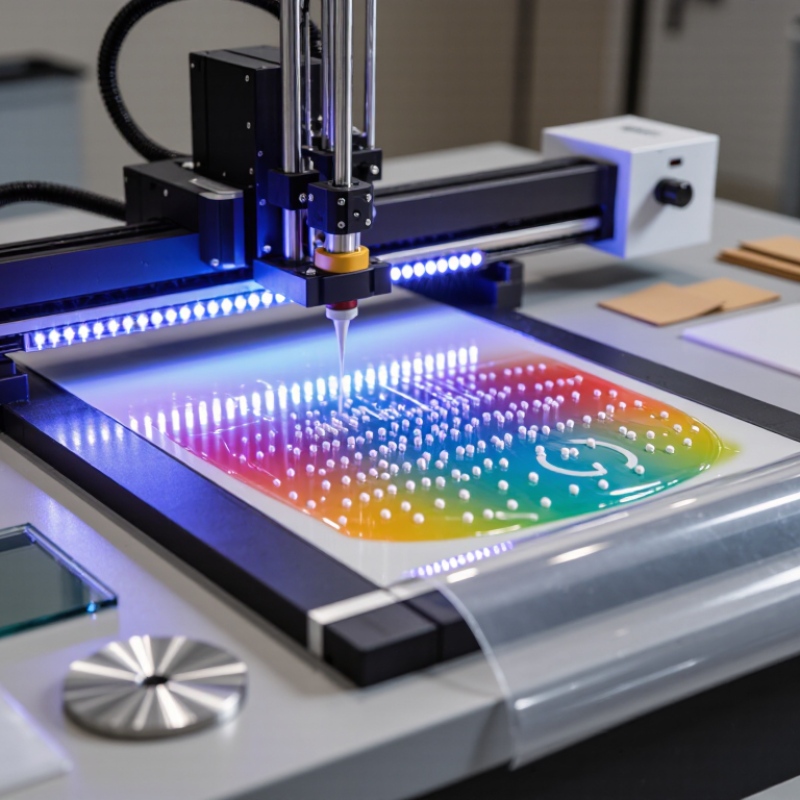
| Definition | Direct-to-film transfer system using ultraviolet-curable ink | The design is printed on a special film and later transferred to a product rather than printed directly onto the final object. |
| Core Printing Method | Inkjet printing with UV curing | Printheads deposit ink onto the film, while integrated UV light cures the ink almost immediately. |
| Main Film Structure | Printing film plus adhesive transfer film | The printing film receives the artwork, while the adhesive film helps lift and apply the cured design to the target surface. |
| Typical Ink Layers | Color ink, optional white ink, and a clear varnish layer | White ink improves opacity on dark surfaces, while clear varnish can add a raised or glossy finish. |
| Curing Technology | LED or lamp-based ultraviolet curing | UV exposure polymerizes the ink during or immediately after printing, producing a dry and transferable graphic. |
| Transfer Process | Print, cure, laminate, position, press, and peel | After printing, the design is laminated with adhesive film, placed on the product, pressed firmly, and released from the carrier film. |
| Compatible Surfaces | Smooth, hard, and relatively clean surfaces | Common examples include coated metal, glass, acrylic, rigid plastics, ceramics, leather-like materials, and selected wood products. |
| Surface Limitations | Rough, dusty, oily, porous, or highly flexible surfaces may reduce adhesion | Cleaning, testing, and selecting a suitable surface finish are important for consistent transfer quality. |
| Typical Visual Effects | Full color, white underbase, gloss, and raised texture | Layered ink control allows detailed graphics and decorative finishes without traditional screen-printing setup. |
| Image Preparation | Raster artwork with transparent background is commonly used | Transparent artwork helps define the exact printed shape and reduces unwanted film or ink around the design. |
| Production Advantage | Suitable for short runs, customization, and varied product shapes | The transfer method avoids the need to place the entire product inside a printer and supports on-demand production. |
| Key Maintenance Tasks | Nozzle checks, printhead cleaning, ink circulation, and film-path inspection | Regular maintenance helps prevent blocked nozzles, uneven color, banding, and inconsistent white-ink output. |
| Important Safety Considerations | UV exposure, ink handling, ventilation, and waste disposal | Operators should follow equipment instructions, avoid direct UV exposure, use suitable personal protection, and handle uncured ink responsibly. |
| Best Use Cases | Product labels, promotional items, decorative panels, packaging accents, and personalized goods | UV DTF is especially useful when a durable, detailed graphic is needed on a rigid item that is difficult to print directly. |