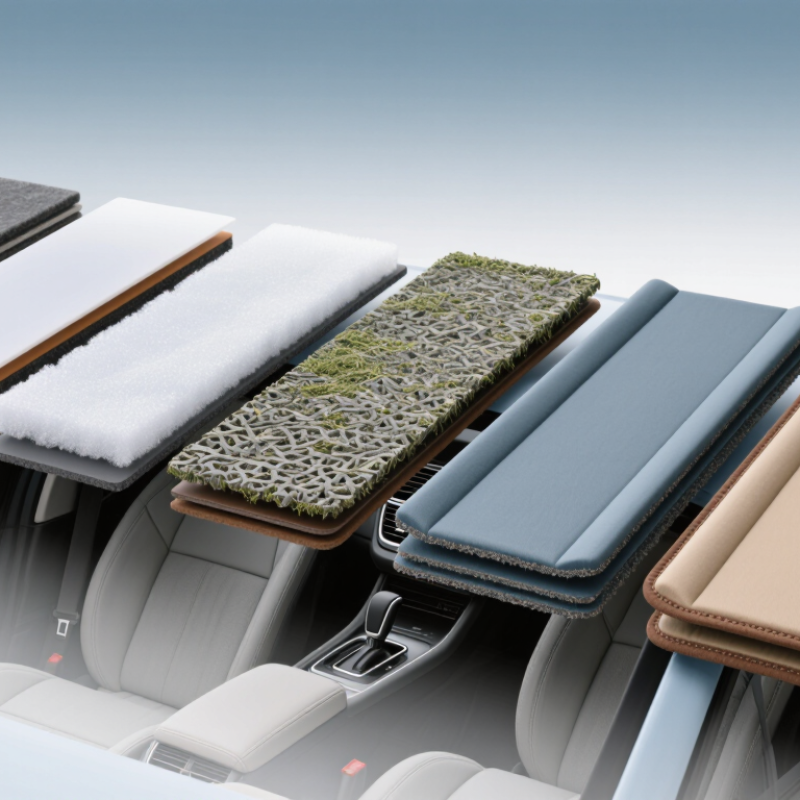
| 1 | Automotive Carpet Headliner | Polyester or polypropylene face fabric with a molded fiberboard, foam, or composite backing | Lightweight, quiet, visually integrated, and suitable for original-style interior restoration | Usually fitted with trim removal, adhesive, clips, or a molded support panel; professional installation is often preferred | Vacuum regularly; remove stains with a low-moisture upholstery cleaner; avoid oversaturation | Suitable for temperate and dry climates; use moisture-resistant backing in humid areas | Approximately 5–10 years under normal use | Confirm vehicle-specific dimensions, backing rigidity, fire-performance documentation, color tolerance, and rolled or flat packing requirements |
| 2 | Nonwoven Polyester Roof Liner | Needle-punched or thermally bonded polyester fibers | Low weight, good acoustic absorption, flexible handling, and comparatively efficient shipping | Cut-to-fit installation using approved automotive adhesive, retaining clips, or a removable support layer | Use a soft brush or vacuum; spot-clean gently and allow complete drying | Performs well across a wide temperature range when the adhesive and backing are automotive grade | Approximately 4–8 years, depending on heat and adhesive quality | Request basis weight, thickness tolerance, roll width, odor information, and adhesive compatibility before ordering |
| 3 | Foam-Backed Fabric Roof Mat | Knitted or woven polyester fabric laminated to polyurethane or polyethylene foam | Soft appearance, improved cushioning, and enhanced noise and thermal insulation | Bonded to the roof substrate after cleaning and surface preparation; installation requires controlled adhesive coverage | Vacuum carefully; avoid steam or excessive moisture because foam can retain water and delaminate | Good for moderate climates; select heat-resistant foam for high solar-load regions | Approximately 4–7 years | Check foam density, delamination resistance, volatile-organic-compound information, and temperature testing data |
| 4 | Molded ABS or Polypropylene Roof Panel | Thermoformed ABS, polypropylene, or a similar automotive thermoplastic | Rigid shape retention, easy wipe-clean surface, and strong resistance to humidity and staining | Installed with clips, screws, brackets, or existing mounting points; accurate vehicle fit is essential | Wipe with a damp microfiber cloth and mild detergent; avoid solvents that can damage plastic surfaces | Well suited to humid, dusty, and high-use environments; UV-stabilized grades are preferable in sunny regions | Approximately 8–15 years | Verify polymer grade, wall thickness, flame performance, dimensional tolerances, mounting hardware, and protection against deformation during transport |
| 5 | PVC Leather Roof Covering | Polyvinyl chloride surface with textile backing and optional foam layer | Water resistance, broad color selection, easy cleaning, and a uniform finished appearance | Typically stretched and bonded over a prepared panel; edge wrapping requires careful tension control | Wipe with diluted neutral soap; keep away from abrasive cleaners and prolonged direct heat | Suitable for humid climates if UV and plasticizer migration resistance are verified | Approximately 5–10 years | Ask for cold-flexibility, heat-aging, odor, surface migration, colorfastness, and local chemical-compliance documentation |
| 6 | Synthetic Suede Roof Liner | Microfiber polyester or polyester-polyurethane suede-like fabric | Premium appearance, soft hand feel, low-glare finish, and good acoustic comfort | Installed over a rigid or semi-rigid substrate with compatible automotive adhesive; alignment is important because nap direction is visible | Vacuum with a soft attachment; treat spills quickly with a slightly damp cloth and avoid aggressive brushing | Best for controlled or moderate climates; high heat may affect adhesive and surface texture | Approximately 5–8 years | Confirm shade consistency, nap direction, abrasion resistance, backing type, roll dimensions, and packaging that prevents permanent creasing |
| 7 | Acoustic PET Fiber Panel | Recycled or virgin polyethylene terephthalate fibers, often formed into a semi-rigid panel | Strong sound absorption, low weight, resistance to moisture, and potential recycled-content benefits | Mounted with clips, hook-and-loop fasteners, or automotive adhesive depending on panel design | Vacuum or use compressed air at low pressure; replace heavily contaminated sections rather than soaking them | Suitable for humid environments when the panel and adhesive system are moisture resistant | Approximately 7–12 years | Review recycled content, fiber shedding, acoustic test method, fire behavior, panel density, and customs classification |
| 8 | Woven Polyester Roof Fabric | Solution-dyed or piece-dyed polyester yarn with optional laminated backing | Good dimensional stability, abrasion resistance, and consistent appearance over large surfaces | Applied by bonding, stretching, or attaching to a preformed roof panel; seams must be positioned carefully | Vacuum routinely and spot-clean with a pH-neutral upholstery product; test cleaners on hidden areas first | Good all-purpose option; solution-dyed construction is advantageous in strong sunlight | Approximately 6–10 years | Compare fabric width, grammage, colorfastness rating, abrasion results, backing adhesion, and minimum order quantity |
| 9 | Reflective Thermal Roof Mat | Aluminized film or foil-faced polymer combined with foam, felt, or fiber insulation | Helps reduce radiant heat transfer and can improve cabin comfort in hot, sunny conditions | Placed beneath a headliner or attached to the roof structure; ventilation gaps and clearance around wiring must be preserved | Inspect for detached edges and damaged reflective layers; keep dry and avoid puncturing the surface | Particularly useful in hot climates; performance depends on an air gap and correct installation orientation | Approximately 6–12 years | Check thermal-resistance data, reflective-surface orientation, thickness, flexibility, fire performance, and compatibility with roof-mounted electronics |
| 10 | Removable Quilted Roof Insulation Mat | Quilted polyester, polypropylene, or blended fiber with a stitched or bonded insulating fill | Removable for inspection, useful for custom conversions, and effective for moderate sound and heat control | Attached with fasteners, straps, hook-and-loop sections, or existing trim points; avoid interference with airbags and wiring | Remove and air-dry when necessary; vacuum both surfaces and inspect fasteners periodically | Suitable for seasonal, recreational, and conversion vehicles when moisture is controlled | Approximately 5–10 years | Confirm compression recovery, moisture resistance, fastener strength, packed volume, material declarations, and airbag-clearance instructions |