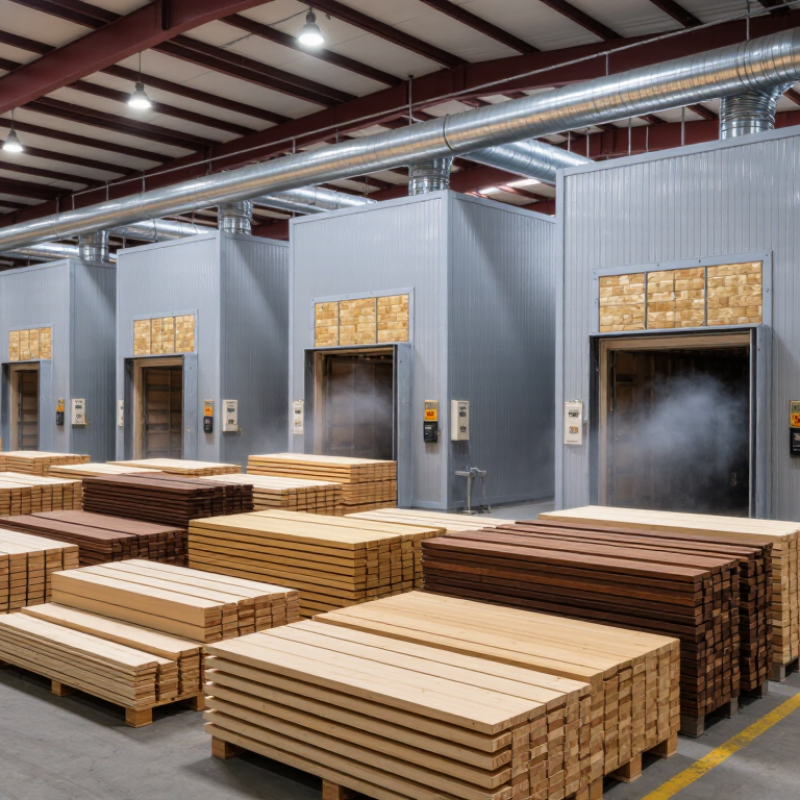
| Conventional kiln specialist | Batch lumber kilns using controlled heat, airflow, and humidity to reduce moisture content. | Boards, dimensional lumber, and other sawn timber products. | Programmable drying schedules; fans circulate heated air through stacked lumber; temperature and humidity are adjusted during the cycle. | Steam, hot-water, or other compatible heat sources; side or end loading; optional heat recovery and automated controls. | Confirm usable stack dimensions, local electrical and pressure-equipment requirements, insulation performance, and the availability of commissioning and spare parts. |
| Vacuum kiln specialist | Vacuum drying systems that lower the boiling point of water, enabling moisture removal at reduced temperatures. | Thick sections, valuable hardwood, and products that benefit from shorter or lower-temperature drying cycles. | Sealed chamber operation; vacuum pumps remove air and water vapor; heat is supplied through an appropriate heating system. | Batch chamber sizes; different heating methods; automated pressure, temperature, and cycle controls. | Assess chamber capacity, vacuum-system maintenance, power requirements, loading method, and whether the supplier can demonstrate results for the buyer’s wood species and dimensions. |
| Dehumidification kiln specialist | Heat-pump kilns that condense moisture from circulating air and return recovered heat to the drying process. | Small- to medium-scale lumber operations and lower-temperature drying applications. | Closed or managed air circulation; a refrigeration circuit removes moisture; generally operates at moderate temperatures. | Standalone or modular units; different chamber capacities; optional supplemental heating and remote monitoring. | Compare rated capacity with local ambient conditions, confirm operating temperature limits, and check refrigerant, electrical, and service requirements in the destination market. |
| Continuous dryer specialist | Conveyor or belt dryers for continuous processing of small wood particles and residues. | Sawdust, wood chips, flakes, and other prepared biomass feedstocks. | Material moves through a heated drying zone; airflow and residence time are designed around feed size and target moisture. | Single- or multi-pass layouts; direct or indirect heating arrangements; feed and discharge conveyors; dust-control connections. | Specify feed moisture, particle-size range, throughput, and target outlet moisture. Review dust collection, fire protection, emissions, and site-specific fuel requirements. |
| Rotary dryer specialist | Rotating drum dryers for bulk wood residues and prepared biomass materials. | Wood chips, sawdust, and similar free-flowing or screened materials. | A rotating drum lifts and tumbles material while heated gas or another heat-transfer arrangement removes moisture. | Different drum lengths and diameters; direct or indirect heating; burner, cyclone, and exhaust-treatment interfaces. | Check material size and contamination limits, design throughput, fuel availability, emissions obligations, and integration with dust collection and downstream processing. |
| Solar-assisted drying specialist | Solar-heated drying structures and systems that use solar energy to supplement or provide process heat. | Lumber and other wood products where longer, weather-dependent drying cycles are acceptable. | Solar collectors or transparent enclosures provide heat; fans and vents help manage airflow and moisture removal. | Passive or fan-assisted designs; optional auxiliary heat; configurable racks, vents, and monitoring instruments. | Evaluate local solar conditions, seasonal production needs, humidity control, site orientation, and whether backup heat is needed for reliable year-round operation. |