| Frame material | Common options include powder-coated steel and anodized or painted aluminum. Steel is generally heavier; aluminum is lighter and naturally forms a protective oxide layer. | Ask for the alloy or steel grade, tube dimensions, wall thickness, coating type, and corrosion-test details. | Material and construction affect weight, corrosion resistance, rigidity, and expected service life. |
| Frame design | Folding frames typically use scissor-style braces, sliding hubs, corner joints, and locking pins to open and collapse the structure. | Inspect joint fit, pin engagement, pinch-point protection, and whether replacement connectors are available. | Well-designed joints make setup easier and help reduce looseness and wear during repeated use. |
| Canopy fabric | Polyester fabrics are widely used; options may include PU or PVC coatings, water-repellent finishes, and UV-resistant treatments. | Request fabric composition, fabric weight in g/m², coating details, seam construction, and applicable test reports. | Fabric specifications help buyers compare weather protection, durability, and suitability for the intended use. |
| Roof and seam construction | Panels are cut to a pattern and sewn or otherwise joined. Stress points may receive reinforcement patches, binding, or additional stitching. | Check seam quality, reinforcement at corners and attachment points, and the manufacturer’s stated water-resistance test method. | Roof geometry and seam workmanship influence drainage and help limit leakage at joins. |
| Size and layout | Portable pop-up models are commonly offered in square formats such as 3 × 3 m, with other sizes and configurations available. | Confirm external footprint, usable interior area, peak height, eave height, and packed dimensions. | Clear dimensions help ensure the shelter fits the site, intended activity, and transport or storage space. |
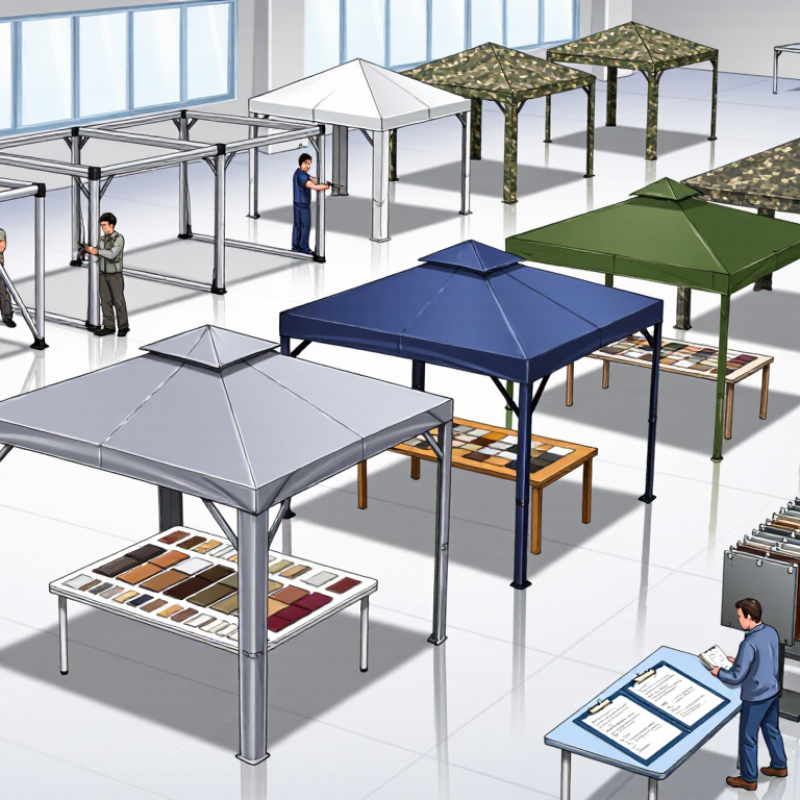
| Prototyping and fit checks | Design teams may use CAD drawings, sample frames, and trial canopy fitting before approving a production specification. | Request a pre-production sample and written confirmation of materials, dimensions, colors, and included accessories. | Sample approval helps identify fit or finish issues before a larger order is manufactured. |
| Production quality control | Typical checks can include incoming-material inspection, measurements during assembly, sewing inspection, and a final visual and function check. | Ask for the inspection checklist, sampling plan, defect criteria, and records for the order being produced. | Documented checks make quality expectations clearer and provide traceability if issues arise. |
| Performance and safety testing | Testing may assess fabric properties, frame function, stability, or resistance to specified environmental conditions. Results depend on the test method and configuration. | Verify the testing laboratory, report date, tested model, sample details, and the standard or method used. | A test report is meaningful only when it applies to the same product configuration and clearly states its scope. |
| Packaging and shipment | Frames and canopy tops are generally packed separately or together in carry bags or cartons, depending on the product and shipping plan. | Confirm packed weight and dimensions, carton protection, accessory list, labeling, and spare-parts policy. | Packaging choices affect freight costs, delivery condition, and ease of inventory handling. |
| Manufacturer comparison | Compare suppliers using the same product specification, sample requirements, inspection criteria, and delivery terms rather than relying on broad claims. | Evaluate verified production capability, sample consistency, communication, documented quality controls, and after-sales support. | A consistent comparison method is more useful than an unsupported ranking when selecting a manufacturer. |