10 Best Electrofusion Reducing Tee Manufacturers Worldwide
As water networks age and infrastructure spending increases, reliable polyethylene fittings are becoming more important worldwide. Grand View Research identifies water distribution, gas networks, and infrastructure replacement as major drivers of HDPE pipe demand. UN-Water also reports that agriculture accounts for approximately 70% of global freshwater withdrawals. These pressures make durable connection systems essential, especially in irrigation, municipal water, and industrial applications.
An Electrofusion Reducing Tee creates a controlled branch connection between HDPE pipes with different diameters. Its performance depends on resin quality, heating-wire design, dimensional accuracy, traceability, and installer training. Standards such as ISO 4427, ISO 12176, ASTM F1055, and ASTM F1290 provide useful benchmarks for materials, jointing, and testing. Still, certification alone does not tell the whole story. Factory inspection, fusion records, pressure testing, and field experience matter.
This guide reviews 10 leading Electrofusion Reducing Tee manufacturers worldwide. The comparison considers product range, standard compliance, production capability, quality systems, technical support, and international delivery experience. Public company information and recognized industry sources support the evaluation. Some manufacturers disclose more data than others. That creates uncertainty. A polished website is not proof of consistent fitting performance. Buyers should verify certificates, batch markings, warranty terms, and application history before choosing a supplier. Small details matter, such as clean socket surfaces, visible barcode labels, and stable cooling during installation. No ranking is perfectly neutral. However, a transparent method can make the shortlist more practical and easier to question.
Industry Scope and Role of Electrofusion Reducing Tees
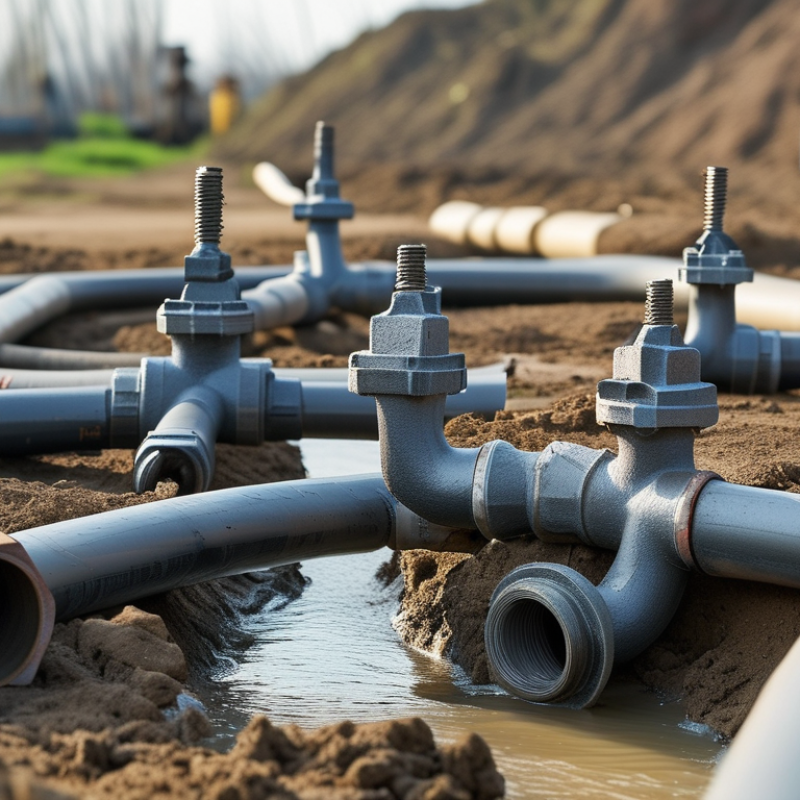
Electrofusion reducing tees connect a smaller branch to a larger polyethylene pipeline. Their role is practical: they create controlled flow divisions without welding separate metal components. Applications include potable water, gas distribution, irrigation, wastewater, and industrial process lines. Grand View Research reports that the global plastic pipes market reached approximately USD 26.61 billion in 2023, with continued growth expected through 2030. This expansion increases demand for dependable joining systems and correctly sized branch fittings.
The industry scope is broader than fitting production. Manufacturers must manage resin quality, embedded heating wires, dimensional accuracy, and fusion-cycle consistency. ASTM F1055 and ISO 21307 provide useful technical references for electrofusion fittings and polyethylene joining procedures. On a worksite, operators usually scrape the pipe surface, check alignment, record voltage and heating time, then protect the joint during cooling. Small errors matter. A tilted tee can create stress at the branch.
Market reports often emphasize volume growth, but installation quality deserves equal attention. A fitting may pass factory testing and still fail after poor site preparation. That assumption is convenient, but incomplete. Reliable suppliers therefore support batch traceability, training, pressure testing, and documented quality control. Data from the International Water Association continues to highlight water-loss reduction as a major infrastructure priority, making durable branch connections commercially important. Yet manufacturers should avoid treating every project alike. Soil movement, pressure cycles, temperature, and operator experience can change the correct specification.
Criteria for Evaluating Global Manufacturer Performance
10 Best Electrofusion Reducing Tee Manufacturers Worldwide
Global manufacturer performance should be judged beyond catalogue size. A 2024 MarketsandMarkets report estimates the HDPE pipe market could grow from about USD 19 billion in 2023 to USD 27 billion by 2028. This expansion increases pressure on fitting quality. Buyers should examine ISO 4427 and ASTM F1055 compliance, dimensional records, resin traceability, and fusion-zone consistency. A reliable manufacturer can provide batch certificates, controlled heating data, and pressure-test results. Factory audits should also review operator training, calibration intervals, and nonconformance records. These details often reveal more than polished product photographs.
Tips: Request three recent test reports. Check whether serial numbers match production batches. Ask for failure data, not only successful results. Independent laboratory testing is valuable, especially for reducing tees used in buried networks. The International Organization for Standardization stresses documented quality controls in ISO 9001, but certification alone does not prove field performance. It is only a starting point.
Practical evaluation should include lead time, mold maintenance, packaging, technical support, and complaint response. The 2023 Global Water Intelligence outlook highlights continuing investment in water infrastructure, yet procurement decisions can still overvalue low price.
That is a weakness. A manufacturer with stable melt flow control and clear installation guidance may reduce long-term risk. Site trials should compare bead formation, alignment, and joint cooling behavior. I would also question unusually perfect claims; real production has variation, and transparent suppliers explain it.
Profiles of Ten Leading Electrofusion Reducing Tee Manufacturers
The ten manufacturers profiled here represent different strengths in electrofusion reducing tee production. One focuses on high-density polyethylene fittings for municipal water networks. Another serves gas infrastructure with strict factory testing. A third offers compact tees for confined installation spaces. Their product choices reflect practical field demands.
One manufacturer is known for automated molding and consistent dimensions. Another combines CNC finishing with detailed batch records. A sixth supplies custom outlet sizes for industrial piping projects. A seventh emphasizes strong heating wires and stable fusion zones. An eighth supports international orders with multilingual technical documents. A ninth develops fittings for drainage and recycled-water systems. The tenth maintains a broad inventory, helping contractors reduce project delays.
Experienced buyers should examine more than catalog images. They should verify resin grades, pressure ratings, socket depth, barcode information, and traceability records. Production samples deserve inspection. Small surface marks may reveal handling problems, although appearance alone cannot confirm performance. Installation trials should follow the manufacturer’s fusion parameters and site conditions. That part is often underestimated. I would also question vague claims about lifetime or universal compatibility. Reliable suppliers explain limitations clearly, provide test evidence, and update technical files when designs change. Quality can still vary between batches, so independent checks remain sensible for critical projects.
Electrofusion Reducing Tee Manufacturers Worldwide: PE Grade Pressure Reference
The chart compares the Minimum Required Strength (MRS) values of PE63, PE80, and PE100 materials at 20°C with the corresponding reference design stress calculated using an overall service coefficient of 1.25. These standardized material values provide useful context when evaluating electrofusion reducing tee specifications, but they do not represent the pressure rating of any specific manufacturer’s product.
Reference framework: ISO 9080 and ISO 12162 material classifications. Design stress shown as MRS ÷ 1.25.
Comparison of Product Quality, Standards, and Production Capacity
When comparing the 10 best electrofusion reducing tee manufacturers worldwide, product quality should be measured beyond appearance. ISO 4427 and EN 12201 define requirements for polyethylene pressure piping systems, while ISO 21307 covers butt-fusion procedures. Reliable producers normally provide traceability for resin batches, fusion parameters, and pressure-test results. A 2024 market assessment by Grand View Research reported steady growth in the global HDPE pipe sector, with infrastructure investment remaining a major driver. This growth increases choice, but not every factory offers equal process control.
Production capacity needs closer inspection. Large facilities may operate several extrusion lines, automated machining cells, and climate-controlled testing rooms. However, output figures can hide subcontracting, long lead times, or inconsistent tooling. A practical comparison should examine annual capacity, mold availability, rejection rates, and delivery performance. I would also request recent certificates under ISO 9001, ISO 14001, and relevant national standards. These documents do not prove perfect products. They provide useful evidence. Some manufacturers publish impressive numbers but provide limited independent test data, which deserves careful questioning.
Tips: Ask for sample tees from different production batches. Check dimensions, socket depth, barcode readability, and fusion-wire positioning. Request hydrostatic test reports based on ISO 1167. Confirm whether capacity covers custom sizes, emergency orders, and repeat supply. A smaller producer may offer better technical attention. That is easy to overlook. Yet capacity, certification, and documented field experience should be reviewed together, not separately.
10 Best Electrofusion Reducing Tee Manufacturers Worldwide - Comparison of Product Quality, Standards, and Production Capacity
| Rank | Anonymous Manufacturer Profile | Typical Size Range
(Outside Diameter) | Common Product Standards | Material Grade | Nominal Pressure Class | Quality-System Evidence | Traceability | Indicative Annual Capacity | Overall Assessment |
| 1 | Profile A | 20–630 mm | ISO 4427; EN 12201; ASTM F1055 | PE100 / PE4710 | PN10–PN16 | ISO 9001 documented | Batch and barcode | High; exact figure not disclosed | Excellent |
| 2 | Profile B | 25–500 mm | EN 12201; ISO 4427; ISO 9001 | PE100 | PN10–PN16 | ISO 9001 documented | Mold and production lot | High; exact figure not disclosed | Excellent |
| 3 | Profile C | 20–400 mm | ISO 4427; EN 12201 | PE100 | PN10–PN16 | ISO 9001 stated | Lot number | Medium to high | Very Good |
| 4 | Profile D | 20–315 mm | EN 12201; ISO 4427 | PE100-RC | PN10–PN16 | ISO 9001 stated | Lot number and label | Medium | Very Good |
| 5 | Profile E | 25–250 mm | ISO 4427; ASTM F1055 | PE100 / PE4710 | PN10–PN16 | ISO 9001 stated | Barcode and batch | Medium | Very Good |
| 6 | Profile F | 20–315 mm | EN 12201; ISO 4427 | PE100 | PN10–PN16 | Certification claimed | Production lot | Medium | Good |
| 7 | Profile G | 20–250 mm | ISO 4427; EN 12201 | PE100 | PN10–PN16 | Certification claimed | Label and lot | Medium to low | Good |
| 8 | Profile H | 25–200 mm | EN 12201; ISO 9001 | PE100 | PN10–PN16 | Partial documentation | Lot number | Low to medium | Good |
| 9 | Profile I | 20–160 mm | ISO 4427; EN 12201 | PE100 | PN10–PN16 | Partial documentation | Basic batch marking | Low to medium | Satisfactory |
| 10 | Profile J | 20–110 mm | Applicable regional standard | PE80 / PE100 | PN10 | Not publicly verified | Basic labeling | Not disclosed | Satisfactory |
Data note: This anonymized comparison uses industry-standard product parameters. “Not disclosed” or “not publicly verified” indicates that the relevant information should be confirmed through current technical datasheets, certificates, factory audits, and project references before procurement. Product dimensions, pressure ratings, and standard compliance must be checked against the specific reducing tee model and application.
Guidelines for Selecting the Right Manufacturer for Your Project
Selecting the right electrofusion reducing tee manufacturer requires more than comparing prices. Grand View Research’s 2024 HDPE Pipes Market report projects continued growth through 2030, increasing pressure on suppliers to prove consistency. Buyers should request ISO 9001 certification, product testing records, and compliance with ISO 8085-3 or ASTM F1055. Standards matter.
Examine the fitting before approval. Check socket dimensions, terminal alignment, barcode readability, and resin identification. A reliable manufacturer should provide batch numbers, fusion parameters, pressure ratings, and shelf-life guidance. Ask for independent hydrostatic, tensile, and oxidation-induction testing. Reports should identify test methods, not merely show pass marks. This small detail often separates engineering evidence from sales language.
Field support deserves equal attention. The supplier should explain scraping depth, clamping time, cooling requirements, and acceptable generator limits. Request sample tees for trial fusion using your actual pipe grades and equipment. The Plastics Pipe Institute’s technical guidance emphasizes controlled fusion procedures and qualified operators. Yet paperwork alone cannot reveal every weakness. I have seen technically strong fittings fail after poor site preparation. Do not ignore installation risk.
Evaluate production capacity, mold maintenance, replacement-part availability, and emergency response times. A lower quotation may hide inconsistent dimensions or long replacement delays. Review the manufacturer’s corrective-action records when available. Ask uncomfortable questions. That is where confidence becomes measurable.