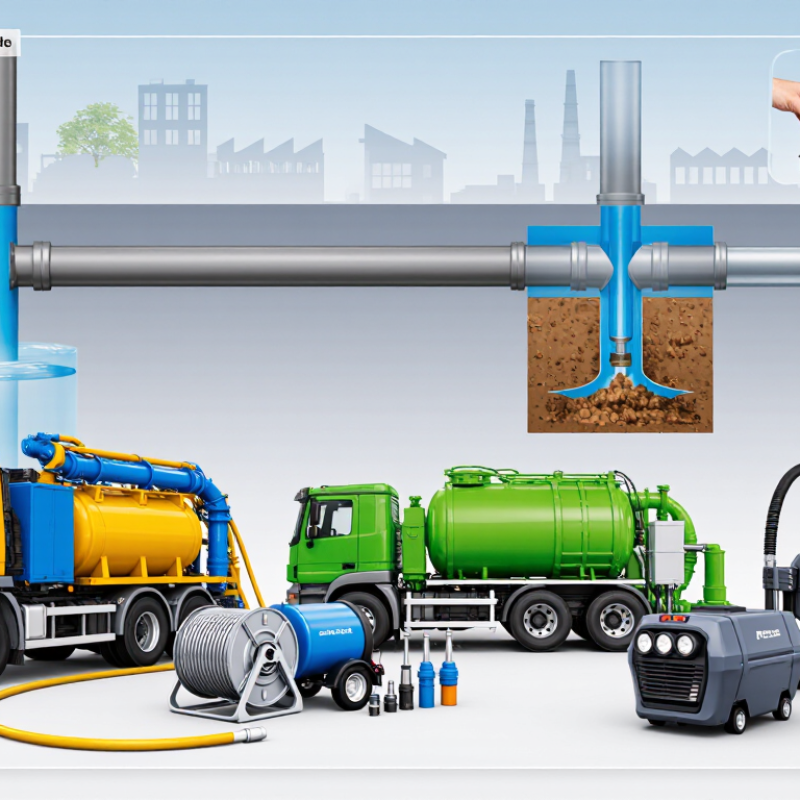
| High-Pressure Sewer Jetting Truck | Water jets remove grease, sediment, scale and loose deposits from pipe walls. | Water tank, high-pressure pump, hose reel, jetting hose and interchangeable nozzles. Typical working pressure is approximately 10–25 MPa, depending on the vehicle and pump configuration. | Municipal gravity sewers, storm drains, culverts, industrial drainage lines and routine preventive maintenance. | Jetting pressure and water flow
Common specifications are evaluated in MPa and L/min because cleaning performance depends on both pressure and flow. | Check pump durability, hose length, nozzle compatibility, water-recycling options, tank material, vehicle emissions compliance and access to service parts. |
| Vacuum Sewer Cleaning Truck | Negative pressure lifts sludge, sand, gravel, wastewater and other loose solids into a collection tank. | Vacuum pump or blower, debris tank, suction hose, filtration system, hydraulic tipping or discharge arrangement. Vacuum level is commonly specified in kPa or equivalent pressure units. | Catch basins, septic tanks, manholes, sediment pits, wastewater facilities and flood-response operations. | Vacuum capacity and tank volume
Buyers normally compare suction performance, usable tank capacity, unloading time and maximum suction distance. | Evaluate wet-material handling, corrosion resistance, anti-overflow protection, filter cleaning, tank discharge method and safe access for operators. |
| Combined Jetting and Vacuum Truck | Uses high-pressure water to loosen deposits and a vacuum system to recover sludge and wastewater in the same operation. | Integrated water tank, debris tank, high-pressure pump, vacuum pump, hose reel and control system. Water and debris capacities are selected according to chassis payload and operating route. | Urban sewer maintenance where one vehicle must perform both desilting and material recovery. | Dual-function productivity
Important indicators include jetting flow, suction rate, tank utilization, cleaning cycle time and payload balance. | Confirm axle-load limits, tank separation, hydraulic system reliability, automatic hose-reel control, water recycling and safe discharge procedures. |
| Sewer Inspection Camera System | Visual inspection using a remotely controlled camera, lighting system and monitor; it does not normally remove deposits by itself. | Push camera or crawler camera, LED lighting, control unit, distance counter, video recording and optional locating transmitter. | Condition assessment, blockage diagnosis, acceptance inspection, rehabilitation planning and post-cleaning verification. | Inspection reach and image quality
Procurement commonly considers camera resolution, cable length, pipe diameter range and crawler traction. | Check waterproofing, self-leveling image capability, data-export format, lighting control, pipe-size compatibility and calibration of the distance counter. |
| Sewer Cleaning Robot | Remote mechanical removal, cutting, milling or water-assisted cleaning inside a pipeline. | Tracked or wheeled crawler, electric or hydraulic drive, interchangeable tools, camera, lighting and remote-control console. | Large-diameter pipelines, hazardous environments, deep manholes and locations where personnel entry is unsafe or restricted. | Remote operating range and tool capacity
Relevant indicators include maximum cable length, slope capability, traction, tool torque and allowable pipe diameter. | Assess ingress protection, emergency stop functions, retrieval provisions, tool-change time, operator visibility and compatibility with confined-space procedures. |
| Drain and Pipe Flushing Unit | High-velocity water flushing transports loose sediment and blockages downstream or into a recovery system. | Compact water tank, high-pressure pump, hose reel, foot-valve or remote control and specialized flushing nozzles. | Small-diameter urban drains, building drainage systems, commercial properties and narrow-access maintenance routes. | Compactness and setup time
Useful purchasing measures include vehicle dimensions, hose deployment time, water consumption and daily service coverage. | Verify low-flow operation, pump protection against dry running, hose flexibility, nozzle selection and compatibility with local water supply practices. |
| Mechanical Root and Blockage Cutter | Rotating cutters or flexible shaft tools mechanically break roots, hardened deposits and localized obstructions. | Power unit, flexible shaft or rotating cable, cutting heads, guide accessories and operator control system. | Root intrusion, hardened grease, mineral deposits and recurring localized blockages in smaller sewer lines. | Working diameter and cutting torque
Buyers compare pipe-size coverage, shaft length, tool durability, rotation speed and operator control. | Use only after checking pipe material and structural condition; confirm overload protection, tool containment and safe operating procedures. |
| Sewer Nozzles and Jetting Accessories | Directs water flow for forward propulsion, rear-wall cleaning, descaling, root removal or grease cutting. | Standard, penetrating, rotary, root-cutting, desilting and specialized nozzles with connection sizes matched to hose and pump output. | Routine maintenance and task-specific cleaning for different blockage types and pipe geometries. | Nozzle efficiency and wear rate
Performance depends on nozzle design, orifice condition, flow balance, hose diameter and pump operating point. | Match nozzle flow to pump capacity; inspect wear regularly and use compatible materials for abrasive sediment and chemical exposure. |
| Hoses, Reels and Recovery Equipment | Transfers high-pressure water or recovered material between the vehicle, manhole and pipe network. | High-pressure hose, suction hose, hose reel, guide roller, couplings, swivel joints and storage or recovery equipment. | All mobile sewer cleaning operations, especially municipal fleets with frequent hose deployment. | Working length, pressure rating and service life
Important measures include burst-pressure margin, bend radius, abrasion resistance, reel capacity and replacement interval. | Confirm hose markings, coupling compatibility, pressure-test records, reel braking, anti-kink performance and operator ergonomics. |
| Water-Recycling Sewer Cleaning System | Separates solids and treats recovered water so a portion can be reused for jetting. | Screen or filtration stage, settling or separation tank, recycled-water tank, pump system and sludge handling arrangement. | Water-constrained regions, long-duration cleaning projects and fleets seeking lower freshwater consumption. | Freshwater reduction and filtration capacity
Procurement should measure reuse ratio, filtration throughput, maintenance frequency and sludge-management cost. | Specify the permitted water quality for the jetting pump, cleaning frequency for filters and disposal requirements for separated solids. |
| 2024 Chinese Market Evaluation Metrics | Market comparison should focus on measurable operating performance rather than supplier branding. | Common evaluation categories include cleaning productivity, equipment utilization, lifecycle cost, safety, emissions, after-sales response and spare-parts availability. | Municipal procurement, industrial maintenance, property-service fleets, infrastructure contractors and emergency drainage response. | Total cost of ownership
Include purchase price, fuel or electricity use, water consumption, scheduled maintenance, consumables, downtime and disposal costs. | Request comparable test conditions, verified technical data, warranty terms, training provisions, service coverage and documentation in English or Chinese. |