China Top Filter Media for Silicon Industry Suppliers?
China has become a significant sourcing base for Filter Media For Silicon Industry applications. Its suppliers serve wafer plants, polysilicon facilities, and chemical processing lines. Yet product selection requires more than comparing prices. Filter media must match particle size, chemical exposure, temperature, pressure, and cleaning procedures.
Experienced buyers usually examine polypropylene, PTFE, polyester, stainless steel, and other engineered materials. Each option behaves differently in corrosive liquids, high-purity gases, and abrasive slurry. A reliable supplier should provide material certificates, batch records, test data, and clear filtration ratings. Factory audits can also reveal practical details, such as clean assembly areas, sealed packaging, and calibrated testing equipment. Small details matter.
This guide introduces leading Chinese suppliers and explains how to assess their technical capabilities. It considers manufacturing experience, quality systems, customization support, delivery performance, and after-sales communication. Certifications may support credibility, but they cannot replace independent verification. Samples should be tested under actual operating conditions whenever possible. That step is often skipped.
The silicon industry leaves little room for unstable filtration. A damaged membrane can contaminate process chemicals or interrupt production. Therefore, supplier claims should be compared with documented performance and customer references. No supplier is perfect. Even strong manufacturers may have gaps in export service, technical documentation, or response speed. Buyers should record these weaknesses before making a decision. This review aims to offer a practical, balanced starting point for selecting China-based filter media partners. Experiences may differ between factories, so careful validation remains essential.
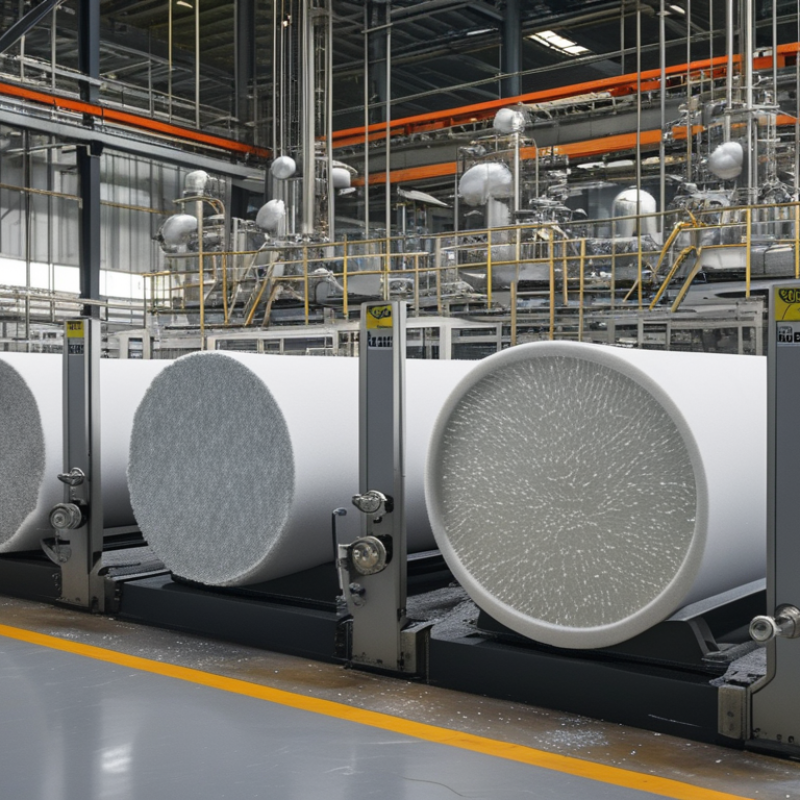
Understanding Filter Media Used in the Silicon Industry
China Top Filter Media for Silicon Industry Suppliers?
Silicon manufacturing needs more than high dust-holding capacity. Filter media must control particles, chemicals, moisture, and metallic contamination. The International Energy Agency reported nearly 420 GW of solar photovoltaic capacity additions in 2023. That expansion increases pressure on polysilicon and wafer plants to maintain stable filtration performance.
Common media include polypropylene for chemical liquids, PTFE membranes for aggressive gases, and polyester for general process filtration. Glass fiber can support fine particle removal in dry applications. Sintered metal media may suit high-temperature gas streams, but cleaning compatibility requires careful testing. SEMI’s World Fab Forecast tracks more than 1,400 semiconductor facilities and lines worldwide. This scale shows why small filtration failures can become expensive production interruptions. A low-cost cartridge may look efficient on paper, yet shed fibers or load too quickly. No medium is universally best. Specifications are sometimes chosen too early.
Tips: Test the actual process fluid before purchasing. Measure pressure drop, particle release, extractables, and service life. Check temperature peaks, not only normal operating conditions. Ask suppliers for batch records and material certificates. ITRPV reports continued pressure toward thinner wafers and lower manufacturing waste, so filtration systems must protect yield without creating excessive replacement waste. Field trials remain essential, even when laboratory data looks convincing.
How to Compare China’s Leading Filter Media Suppliers
Comparing China’s leading filter media suppliers requires more than checking price lists. Silicon production demands stable filtration under heat, chemical exposure, and continuous flow. Start with the media structure, not the sales language. Ask for pore-size distribution, pressure-drop data, tensile strength, and extractables. These details show how the material may behave near sensitive process equipment.
Request samples from several production lots. Test them with your actual slurry, gas, or process liquid. A filter that performs well with clean water may clog quickly with silicon particles. Check operating temperature, chemical compatibility, cleaning methods, and expected service life. Confirm whether the supplier controls fiber diameter, resin content, and sealing quality during manufacturing. Small variations can affect yield.
Supplier evaluation should also include traceability and technical support. Reliable manufacturers should provide batch records, inspection reports, and clear responses to nonconformity. Review factory quality procedures, calibration practices, and packaging conditions. Moisture-resistant packaging matters during long shipments. Lead time deserves attention too. A low quote is less useful when replacement media arrives late.
Be careful with polished datasheets. They may omit test conditions. Ask how each figure was measured, and repeat critical tests independently. Some suppliers may offer excellent customization but weaker documentation. Others may document well but lack process flexibility. That difference is easy to miss. A realistic comparison weighs performance, consistency, communication, and total operating cost, not the lowest unit price.
Choosing the Right Chinese Supplier for Silicon Processing Needs
Choosing the Right Chinese Supplier for Silicon Processing Needs
China’s silicon processing sector is expanding with solar and semiconductor demand. IEA PVPS Trends 2024 reported more than 400 GW of new photovoltaic capacity in 2023. SEMI also forecast global semiconductor manufacturing equipment spending near $109 billion in 2024. These figures indicate tighter expectations for contamination control and filtration consistency.
A suitable Chinese filter media supplier should provide pore-size distribution, pressure-drop curves, extractables data, and trace-metal results. Ask for samples from several production lots, not one perfect batch. Check whether the media tolerates your chemicals, temperature, flow rate, and cleaning cycle. Polypropylene may suit many aqueous processes, while fluoropolymer media can offer stronger chemical resistance. The choice still depends on process validation.
Audit the factory’s cleanroom controls, calibration records, change-management system, and lot traceability. ISO 9001 certification helps, but it cannot replace a technical audit. Request accelerated-life testing and a written response plan for nonconforming material. In practical qualification work, delivery stability often matters as much as the initial quotation. Cheap media can create costly downtime.
The difficult part is measuring hidden risk. Supplier websites rarely show enough detail. A local technical visit, sealed sample testing, and bilingual specifications can expose gaps early. I would also review shipment history and packaging integrity. One overlooked seal can compromise an otherwise excellent filter. Perfect selection is unlikely. Disciplined verification is realistic.