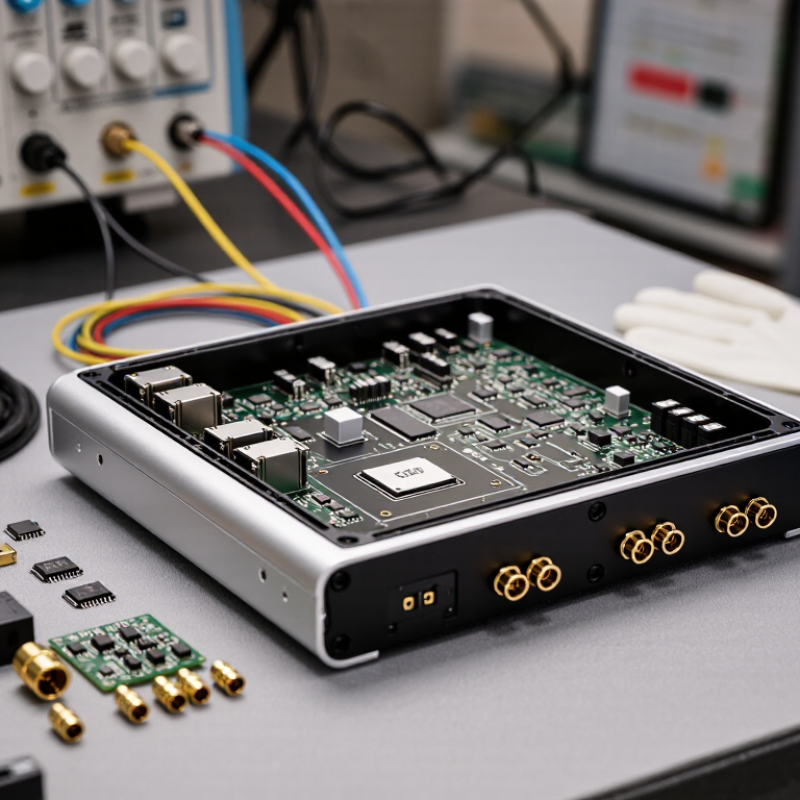
| 1. Supplier Screening | Product configuration | Confirm the exact flight-controller revision, processor, sensor set, ports, mounting pattern, firmware support, and included accessories. | All specifications must match the approved technical requirement before quotation comparison. | Controlled datasheet, product drawing, interface diagram, and revision identification. | Freeze the approved configuration in the purchase specification; do not rely on product photographs alone. |
| 1. Supplier Screening | Legal and export documentation | Check the supplier’s registered business information, invoice capability, export documents, and applicable customs classification. | Supplier identity and commercial documents should be consistent across quotation, invoice, packing list, and shipping documents. | Business registration record, pro forma invoice, packing-list template, and export documentation sample. | Use a written purchase contract and define the responsible party for customs and transport documentation. |
| 1. Supplier Screening | Manufacturing capability | Review assembly resources, PCB production controls, programming capability, inspection equipment, and monthly capacity. | Supplier can explain its production flow and provide traceability from incoming materials to final inspection. | Process-flow chart, facility photographs or audit record, equipment list, and sample production records. | Give preference to suppliers able to provide repeatable batch production rather than one-off assembled samples. |
| 1. Supplier Screening | Quality-management system | Assess incoming inspection, process inspection, final inspection, nonconformance handling, and corrective-action procedures. | Required Documented inspection records should exist for every production batch. | Quality manual, inspection checklist, nonconformance report, corrective-action example, and calibration records. | Include quality records and corrective-action response time in the supplier evaluation score. |
| 2. Technical Review | Electrical interface compatibility | Verify supply-voltage range, current capacity, connector pinout, serial interfaces, CAN or equivalent bus interfaces, and power distribution requirements. | Measured values and pin assignments must match the approved drawing; no unapproved connector or pinout substitution is allowed. | Electrical schematic, connector drawing, pinout table, and sample continuity-test report. | Require written approval for any component, connector, or interface change. |
| 2. Technical Review | Sensor and calibration control | Check sensor presence, factory calibration method, calibration storage, orientation marking, and vibration-isolation arrangement. | Every unit should pass the supplier’s sensor self-test and calibration record review before shipment. | Self-test log, calibration record, sensor-orientation drawing, and firmware parameter backup. | Request a sample calibration report and define the required pre-shipment self-test. |
| 2. Technical Review | Firmware and parameter management | Confirm supported firmware version, bootloader method, parameter backup, configuration reset process, and update restrictions. | Firmware version and parameter file must be identified by revision or checksum for each approved batch. | Firmware release record, parameter template, update instructions, and version-control log. | Record the approved firmware version in the purchase order and prohibit unauthorized software changes. |
| 2. Technical Review | Environmental suitability | Evaluate operating temperature, storage temperature, humidity exposure, vibration, shock, dust, and moisture protection. | Environmental ratings must be suitable for the intended aircraft installation and documented by test method or design specification. | Environmental specification, test report, conformal-coating statement if applicable, and enclosure or mounting guidance. | Use application-specific environmental requirements rather than assuming an indoor electronics rating is sufficient. |
| 3. Sample Ordering | Sample quantity and diversity | Order samples from the intended production configuration, including standard accessories and packaging. | Use multiple samples when possible to identify unit-to-unit variation before a volume order. | Sample order record, serial-number list, photographs, and received-goods inspection report. | Do not treat an engineering prototype as proof of mass-production consistency. |
| 3. Sample Ordering | Commercial terms | Compare unit price, tooling or setup charges, minimum order quantity, lead time, payment terms, packaging, and freight basis. | Quotation must state currency, Incoterm, validity period, lead time, warranty terms, and all additional charges. | Signed quotation, pro forma invoice, order confirmation, and approved commercial-term sheet. | Compare total landed cost instead of unit price alone. |
| 3. Sample Ordering | Change-control commitment | Define notification requirements for changes to PCB layout, components, firmware, connectors, factory location, or manufacturing process. | Required No material change should be implemented without written customer approval. | Signed change-control clause, engineering-change notice template, and revision history. | Add a last-time-buy or requalification procedure for discontinued or substituted components. |
| 4. Incoming Inspection | Packaging and identification | Inspect anti-static protection, moisture protection, cushioning, labels, serial numbers, lot codes, and accessory completeness. | Packaging must prevent electrostatic, mechanical, and moisture-related damage during normal transport. | Packaging checklist, carton photographs, serial-number reconciliation, and shipping-damage record. | Quarantine units with missing labels, damaged seals, inconsistent serial numbers, or incomplete accessories. |
| 4. Incoming Inspection | Visual and mechanical inspection | Check PCB surface, solder joints, connectors, mounting holes, component placement, fasteners, and board cleanliness. | No cracked PCB, loose component, lifted pad, contaminated connector, damaged mounting hole, or visible solder defect. | Inspection photographs, dimensional check, connector-retention check, and nonconformance record. | Use an approved defect classification: critical, major, and minor. |
| 4. Incoming Inspection | Electrical safety and continuity | Perform visual polarity review, ground-to-power short check, connector continuity check, and controlled power-up. | No unintended short circuit, reversed polarity, abnormal current draw, overheating, smoke, or unstable startup. | Test fixture record, measured current, voltage log, operator identification, and equipment calibration status. | Power up through current limiting during first inspection to reduce risk of damage. |
| 5. Functional Verification | Communication and peripheral test | Test all ordered communication ports, receiver input, telemetry, storage, status indicators, and connected peripheral interfaces. | Every specified interface should establish communication and maintain stable operation during the defined test duration. | Automated or semi-automated test log, wiring reference, firmware version, and pass/fail result. | Use a repeatable test fixture and retain results by serial number or batch number. |
| 5. Functional Verification | Configuration and sensor self-test | Load the approved parameter template, check sensor orientation, review calibration status, and perform startup self-test. | No self-test error, unexpected parameter reset, sensor inconsistency, or unapproved default configuration. | Parameter comparison report, self-test screen capture, calibration status, and reset/restart record. | Save the final approved parameter file as a controlled production document. |
| 5. Functional Verification | Thermal and endurance screening | Operate representative samples under controlled load for a defined period while monitoring temperature and stability. | Set the duration and load profile before testing; there must be no crash, abnormal reset, overheating, or communication loss. | Temperature log, load profile, start/end time, firmware version, and failure analysis if applicable. | Apply extended screening to the first production batch or after any major design change. |
| 6. Pre-Shipment Control | Sampling plan | Define lot size, sample size, inspection level, and acceptance criteria before production begins. | Use a recognized sampling approach or a customer-approved plan; critical defects should have zero acceptance. | Signed inspection plan, lot definition, sampling record, and final inspection report. | Do not allow the supplier to change the sampling plan without written approval. |
| 6. Pre-Shipment Control | Traceability | Link each unit or lot to PCB revision, firmware version, component batch, inspection result, and shipment carton. | Traceability information must be legible, retained, and retrievable throughout the warranty period. | Serial-number database, batch record, firmware log, inspection report, and packing-list cross-check. | Require traceability data before final payment or shipment release. |
| 6. Pre-Shipment Control | Final acceptance criteria | Combine appearance, dimensions, electrical tests, functional tests, firmware checks, accessories, and packaging requirements. | All critical requirements pass; any deviation is documented and approved before shipment. | Final acceptance report, deviation waiver if needed, and customer release confirmation. | Make final acceptance a contractual milestone rather than an informal quality promise. |
| 7. Post-Delivery | Warranty and failure handling | Define warranty period, return procedure, response time, replacement policy, repair responsibility, and transport-cost allocation. | Warranty terms should specify covered defects, evidence requirements, response deadlines, and corrective-action expectations. | Warranty clause, return-material authorization process, failure-analysis report, and replacement record. | Track failure rate by batch and suspend repeat orders if unresolved systemic defects appear. |
| 7. Post-Delivery | Supplier performance review | Measure on-time delivery, lot acceptance rate, defect rate, response time, documentation accuracy, and change-control compliance. | Review performance after the first shipment and periodically thereafter using the same scorecard. | Supplier scorecard, corrective-action closure log, delivery record, and customer feedback summary. | Use performance results to determine requalification, improvement actions, or order allocation. |