| Ambulance | Provides emergency medical care and transports patients to medical facilities. | Van, light-duty truck, or medium-duty box-body vehicle with a separated patient compartment. | Patient stretcher, medical oxygen, suction unit, first-aid supplies, monitoring equipment, interior lighting, and sanitation surfaces. | Urban roads, highways, rural communities, industrial sites, and disaster areas. | Patient-care layout, payload, medical-storage capacity, ride comfort, accessibility, and infection-control design. |
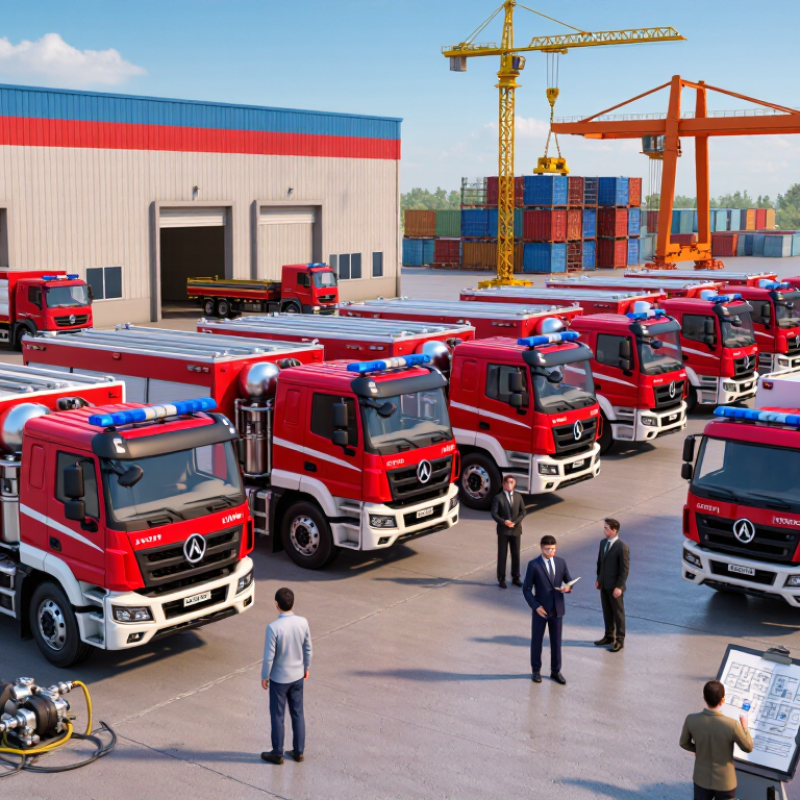
| Fire Engine | Suppresses structural, vehicle, and outdoor fires while supporting initial rescue operations. | Medium- or heavy-duty truck with a crew cab, pump, water tank, and hose body. | Fire pump, water tank, hoses, ladders, nozzles, breathing-apparatus storage, thermal imaging equipment, and portable tools. | Residential areas, commercial districts, industrial zones, and road incidents. | Pump capacity, tank volume, crew seating, equipment weight, maneuverability, and local firefighting standards. |
| Water Tender or Tanker | Delivers large quantities of water to fire scenes where hydrants or water mains are limited. | Medium- or heavy-duty truck fitted with a high-capacity water tank and transfer pump. | Water tank, fill and discharge connections, transfer pump, hoses, valves, and traffic-warning equipment. | Rural districts, wildland-urban interface areas, construction sites, and remote facilities. | Water capacity, axle-load compliance, filling speed, off-road capability, stability, and water-delivery rate. |
| Rescue Truck | Performs technical rescue and extrication during traffic collisions, structural failures, and confined-space incidents. | Medium- or heavy-duty chassis with enclosed equipment compartments and a modular rescue body. | Hydraulic cutters and spreaders, lifting bags, winches, stabilization tools, saws, generators, lighting, ropes, and medical supplies. | Highways, tunnels, collapsed structures, rail corridors, and industrial facilities. | Payload margin, compartment organization, generator output, tool accessibility, stabilization capacity, and scene lighting. |
| Hazardous Materials Response Vehicle | Identifies, contains, and supports cleanup of chemical, biological, radiological, or fuel-related hazards. | Enclosed medium- or heavy-duty body with segregated clean and contaminated equipment zones. | Detection instruments, protective suits, respirators, spill-control materials, decontamination equipment, sampling tools, and sealed storage. | Industrial parks, laboratories, transport routes, ports, warehouses, and fuel facilities. | Compartment separation, chemical resistance, ventilation, decontamination capacity, payload, and regulatory compliance. |
| Command and Communications Vehicle | Provides an operational headquarters for incident management, dispatch coordination, and interagency communication. | Bus, van, or medium-duty truck with an enclosed office and communications compartment. | Workstations, radios, satellite or cellular communications, mapping displays, power systems, recording equipment, and meeting space. | Large fires, natural disasters, public events, search operations, and prolonged incidents. | Communications interoperability, power autonomy, seating, climate control, connectivity, and rapid setup time. |
| Search and Rescue Vehicle | Supports locating, reaching, and evacuating people during floods, earthquakes, storms, and wilderness incidents. | All-wheel-drive truck or utility vehicle with elevated ground clearance and specialized storage. | Rescue ropes, flotation devices, portable lighting, medical kits, navigation equipment, cutting tools, radios, and recovery gear. | Flood zones, mountainous terrain, disaster sites, forests, and remote communities. | Traction, ground clearance, water-fording capability, payload, equipment access, and crew safety features. |
| Mobile Workshop and Support Vehicle | Maintains emergency equipment and provides logistics, power, repair, or shelter support at extended incidents. | Medium- or heavy-duty truck with a box body, service body, or deployable support module. | Tools, spare parts, compressor, generator, welding equipment, workbench, lighting, fuel systems, and storage cabinets. | Disaster recovery areas, remote operations, infrastructure repair sites, and major public events. | Payload, power output, workshop layout, weather protection, service access, fuel efficiency, and operating duration. |
| Airport Crash Tender | Rapidly suppresses aircraft fires and supports rescue operations on airport runways and aprons. | High-capacity all-wheel-drive vehicle with a large water tank, foam system, and roof-mounted monitor. | Water and foam tanks, high-flow pump, roof or bumper turrets, dry-chemical system, thermal protection, and aviation rescue tools. | Airports, aircraft maintenance areas, military airfields, and aviation fuel zones. | Acceleration, fire-agent capacity, discharge rate, crash-rescue access, thermal protection, and airport response standards. |