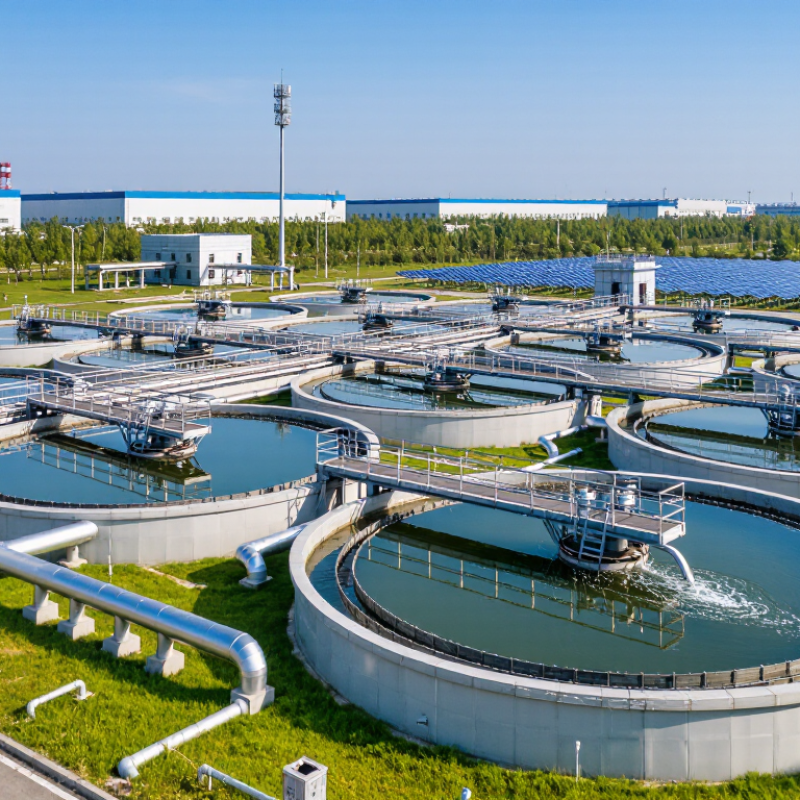
| Conventional activated-sludge systems | Aerobic microorganisms consume biodegradable organic matter in aeration tanks; biomass is separated from treated water in a secondary clarifier. | Municipal wastewater and suitable biodegradable industrial wastewater. | Reduces biochemical oxygen demand (BOD) and suspended biological solids; configurations with suitable anoxic and anaerobic zones can also support nitrogen and phosphorus removal. | Requires reliable aeration, sludge-return control, settling performance, and management of variations in flow and influent composition. |
| Sequencing batch reactors (SBR) | Biological treatment and clarification take place in the same tank in timed fill, react, settle, decant, and idle stages. | Municipal plants and small or decentralized facilities where batch operation is practical. | Treats biodegradable organics and can be operated to remove nitrogen and phosphorus through controlled aerobic and anoxic conditions. | Cycle timing, equalization, decanting, and controls must match the incoming flow pattern and required effluent quality. |
| Moving bed biofilm reactors (MBBR) | Microorganisms grow as a biofilm on freely moving plastic carriers retained within the reactor by screens. | Plant upgrades, compact treatment systems, and wastewater with biodegradable organic matter or ammonia. | Provides attached-growth biological treatment and can increase biomass capacity within an existing tank footprint. | Carrier retention, mixing, aeration, screening, and downstream solids separation need to be designed together. |
| Membrane bioreactors (MBR) | Biological treatment is combined with membrane filtration to separate treated water from suspended biomass. | Sites with limited space or applications requiring low suspended-solids effluent for further treatment or reuse. | Combines organic-matter removal with fine solids separation; it does not by itself remove all dissolved salts or trace contaminants. | Membrane fouling control, cleaning, energy use, sludge management, and appropriate downstream disinfection should be considered. |
| Anaerobic treatment systems | Microorganisms degrade organic matter in the absence of oxygen; some reactor designs capture biogas produced during treatment. | High-strength, readily biodegradable wastewater, including selected food-processing and fermentation streams. | Can reduce organic loading before aerobic polishing and may recover biogas when the wastewater and system are suitable. | Temperature, pH, toxicity, start-up, gas safety, and the need for post-treatment affect performance and feasibility. |
| Biological nutrient-removal systems | Process zones and operating conditions are arranged to support nitrification, denitrification, and, where designed, biological phosphorus removal. | Municipal wastewater and industrial wastewater where nitrogen or phosphorus limits apply. | Targets nitrogen and phosphorus in addition to biodegradable organic matter, helping control nutrient discharge to receiving waters. | Carbon availability, dissolved oxygen, internal recycle, temperature, and influent variability influence nutrient-removal performance. |
| Engineering, controls, and commissioning support | Services may include process selection, pilot testing, equipment integration, instrumentation, start-up, and operator training. | New installations, expansions, retrofits, and facilities with changing influent or discharge requirements. | Connects biological process design with site conditions, effluent targets, and ongoing plant operation. | Evaluate project references, influent testing, process guarantees, lifecycle costs, local service capacity, and compliance documentation. |