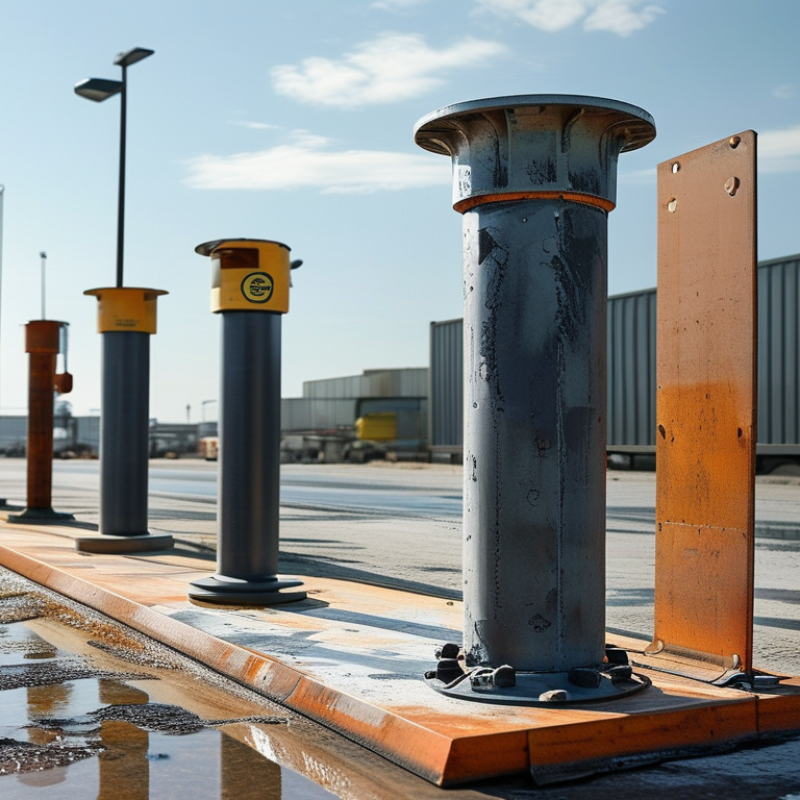
| Carbon Steel | Hot-dip galvanizing, often combined with polyester powder coating | High when correctly specified | Urban streets, parking areas, logistics sites, and general outdoor applications | High structural strength, broad availability, and compatibility with impact-resistant bollard designs | Cut edges, welds, drilled areas, and damaged coatings require proper repair to prevent localized corrosion |
| Hot-Dip Galvanized Steel | Zinc coating applied after steel fabrication; coating performance is commonly specified under ISO 1461 or ASTM A123 | High | Outdoor traffic protection, industrial compounds, and moderately humid environments | Zinc provides barrier protection and sacrificial protection when small areas of steel are exposed | Drainage and vent holes are needed for fabricated hollow sections; white rust may appear during prolonged wet storage |
| Powder-Coated Galvanized Steel | Zinc underlayer plus pretreatment and thermoset powder coating | Very high with proper surface preparation | Public areas where appearance, color coding, and additional moisture protection are required | Provides a decorative finish, additional barrier protection, and a wide range of colors | Adhesion depends on cleaning, conversion treatment, coating thickness, curing, and protection from impact damage |
| 304 Stainless Steel | Mechanical polishing, passivation, or electropolishing | Good | Indoor and standard outdoor environments with low to moderate chloride exposure | Good appearance, easy cleaning, and strong resistance to general atmospheric corrosion | Tea staining and pitting can occur in coastal or salt-contaminated locations; avoid carbon-steel contamination during fabrication |
| 316 Stainless Steel | Passivation, electropolishing, and controlled surface finishing | Very high in chloride-prone settings | Coastal areas, waterfront developments, roads exposed to de-icing salts, and high-maintenance public spaces | Molybdenum content improves resistance to pitting and crevice corrosion compared with 304 stainless steel | It is not immune to corrosion; stagnant water, contaminants, poor weld finishing, and unsuitable fasteners can reduce performance |
| Aluminum Alloy | Anodizing, powder coating, or conversion coating | Good to very high, depending on alloy and finish | Light-duty pedestrian areas, architectural projects, and applications requiring low weight | Low density, natural oxide protection, and good resistance to atmospheric corrosion | Lower strength and impact resistance than many steel designs; galvanic isolation is needed when joined to dissimilar metals |
| Fiber-Reinforced Polymer (FRP) | Resin-rich surface layer, UV stabilizers, and pigmented gel coat | Excellent against rust | Wet, saline, and chemically aggressive environments where metallic corrosion is a major concern | Does not rust, is lightweight, and can provide strong resistance to many salts and chemicals | Impact behavior, fire performance, UV aging, anchorage, and long-term resin durability must be verified for the intended application |
| Steel with Duplex Coating | Hot-dip galvanizing followed by a compatible powder or liquid coating system | Very high | Coastal infrastructure, industrial zones, high-salt roads, and demanding outdoor installations | Combines zinc-based sacrificial protection with an external barrier layer, extending protection after minor surface damage | Requires documented compatibility between galvanizing, pretreatment, coating system, curing process, and repair materials |