| Product Definition | An aluminum composite panel is a multilayer flat sheet consisting of aluminum face sheets bonded to a polymer-based or mineral-filled core. | A qualified manufacturer should clearly identify the panel structure, core type, intended use, and applicable technical limitations. |
| Common Panel Thickness | Typical architectural panels are commonly available in approximately 3 mm, 4 mm, and 6 mm total thicknesses. | The correct thickness affects rigidity, weight, fabrication performance, wind-load behavior, and installation requirements. |
| Aluminum Skin Thickness | Common face-sheet thicknesses range from about 0.15 mm to 0.50 mm, depending on the product and application. | Thicker skins generally improve dent resistance, fabrication durability, and structural performance, subject to the design specification. |
| Core Options | Typical options include polyethylene-based cores, fire-retardant mineral-filled cores, and other project-specific core formulations. | Core selection influences fire performance, weight, impact behavior, machining characteristics, and suitability for exterior façades. |
| Standard Panel Widths | Common production widths include approximately 1,220 mm, 1,500 mm, and other made-to-order dimensions. | Available widths affect material yield, joint planning, transportation, and the number of visible seams on a façade. |
| Surface Finishes | Frequently specified finishes include polyester-coated, fluoropolymer-coated, brushed, mirror, anodized-look, and wood-look surfaces. | The coating system affects color consistency, weathering resistance, cleanability, gloss retention, and maintenance requirements. |
| Coating Quality | Important checks include coating thickness, color difference, gloss, adhesion, pencil hardness, impact resistance, and resistance to humidity or salt spray where required. | Documented coating tests help reduce premature fading, peeling, blistering, scratching, and inconsistent appearance. |
| Fire Performance | Fire behavior depends on the complete panel construction and installation system. Fire-retardant and non-combustible product categories require project-specific testing and classification. | A reliable manufacturer should provide valid fire-test reports for the exact panel structure, thickness, core, and intended market. |
| Dimensional Tolerances | Quality control normally covers length, width, thickness, squareness, flatness, and edge straightness according to the agreed product specification. | Tight and consistently measured tolerances support accurate cutting, routing, folding, joint alignment, and installation. |
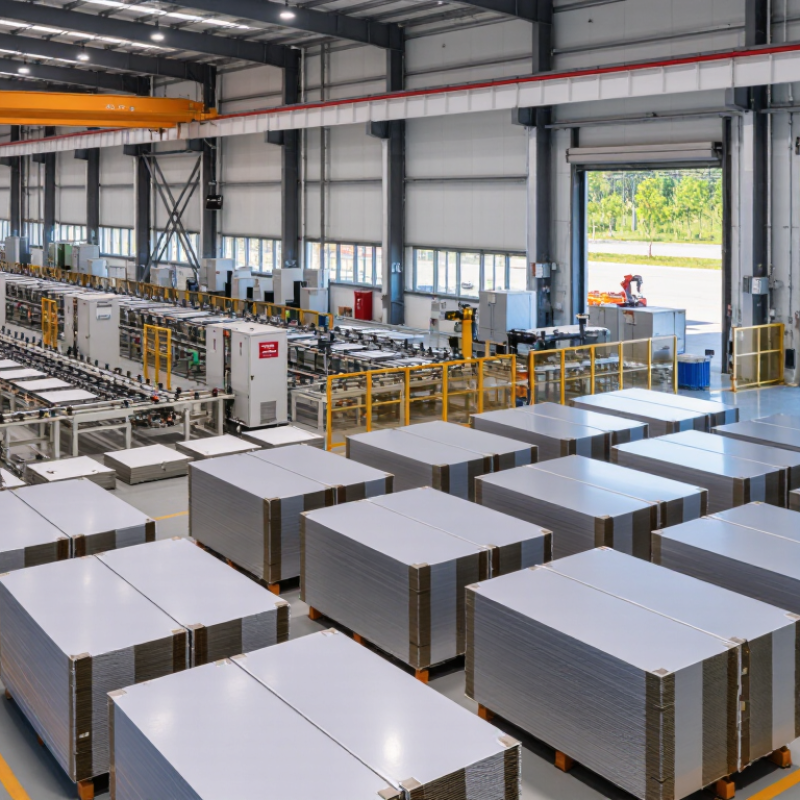
| Manufacturing Process | A typical process includes aluminum preparation, coil coating, core extrusion or lamination, thermal bonding, panel trimming, surface protection, and final inspection. | Controlled production stages help maintain bonding strength, surface uniformity, flatness, and repeatable batch quality. |
| Fabrication Compatibility | Panels may be cut, routed, grooved, folded, drilled, and riveted or fixed with approved systems, depending on their construction. | The manufacturer should provide machining guidance, minimum bending radii, fixing recommendations, and compatible accessory details. |
| Typical Applications | Applications include building façades, canopies, column covers, interior wall panels, signage, shopfitting, partitions, and vehicle or industrial cladding. | Application-specific recommendations help ensure the panel meets structural, fire, weathering, and maintenance requirements. |
| Quality Documentation | Useful documentation includes technical data sheets, inspection reports, coating test results, fire classifications, certificates of conformity, and batch traceability records. | Complete documentation makes it easier to verify compliance, compare suppliers, manage inspections, and support project approvals. |
| Manufacturer Selection Indicators | Strong indicators include stable production controls, transparent specifications, sample approval procedures, export packaging, responsive technical support, and consistent delivery performance. | The best manufacturer is determined by verified compliance, product suitability, quality consistency, and service capability rather than by price alone. |