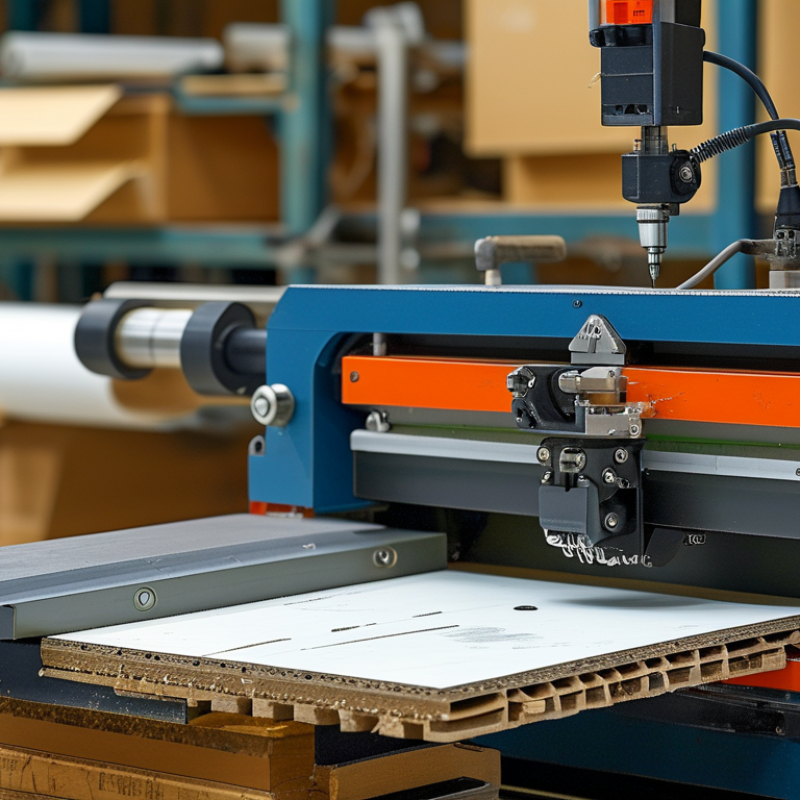
| Flatbed Platen Die Cutting Machine | A flat platen presses a shaped die vertically through sheet or web material. | Paperboard Corrugated board Foam Rubber Leather | Approximately 0.2–10 mm, depending on material density, die design, and machine force. | Short to medium runs; suitable for frequent job changes and multiple shapes. | Versatile tooling, good cut quality, suitable for creasing, perforating, embossing, and stripping in one process. | Usually slower than rotary systems for very high-volume continuous production; tooling setup affects changeover time. | Choose for: packaging, gaskets, insulation parts, and mixed-product production. Check platen size, maximum cutting force, register accuracy, and automatic stripping options. |
| Rotary Die Cutting Machine | A cylindrical engraved or tooled die rotates against an anvil while material moves continuously through the machine. | Labels Flexible packaging Thin films Foils Paper | Commonly below 3 mm, with the practical limit determined by substrate hardness and die construction. | Medium to very high volumes; continuous roll-to-roll production. | High throughput, consistent repeatability, inline slitting and waste removal, and low unit cost at scale. | Rotary tooling can be expensive; less economical for low-volume products or frequent design changes. | Choose for: labels, tapes, medical disposables, and flexible packaging. Compare web width, line speed, register control, tooling cost, and waste-handling capability. |
| Laser Die Cutting Machine | A focused laser beam cuts or perforates material without physical cutting dies. | Paper Cardboard Films Textiles Thin wood | Often used from very thin films up to several millimetres; the usable range depends on laser power and material response. | Samples, prototypes, short runs, variable-data work, and digitally controlled production. | No physical die cost, rapid design changes, intricate patterns, and excellent suitability for customized work. | Thermal effects may create discoloration, melted edges, or fumes; speed can be lower for thick or highly reflective materials. | Choose for: prototypes, personalized packaging, and complex small parts. Verify laser wavelength, power, extraction system, material compatibility, and edge-quality requirements. |
| Steel-Rule Flatbed Die Cutter | A sharp steel rule embedded in a board is pressed into the material to cut, crease, or perforate a flat sheet. | Paperboard Corrugated board Foam Gaskets Synthetic leather | Approximately 0.5–12 mm for many applications, subject to machine force and material compression. | Short, medium, and general-purpose batch production. | Relatively economical tooling, quick access to custom shapes, and the ability to combine cutting with creasing and perforation. | Cutting-board wear and manual tooling changes can limit productivity in highly automated operations. | Choose for: folding cartons, displays, protective packaging, and custom gaskets. Evaluate die-board availability, make-ready time, cutting pressure, and stripping requirements. |
| Clicker Press | A swing-arm or traveling head applies force to a cutting die placed over the material. | Leather Rubber Foam Textiles Synthetic materials | Commonly 1–20 mm, depending on material compression and required cutting force. | Small to medium batches; individual parts or nested layouts. | Flexible for varied shapes and materials, relatively simple operation, and suitable for small or medium workpieces. | Manual positioning may reduce output and consistency; not ideal for continuous high-volume web production. | Choose for: footwear components, bags, upholstery parts, seals, and craft production. Compare cutting area, stroke, force, operator ergonomics, and automation options. |
| Beam Press | A large upper beam descends vertically to apply uniform pressure over a broad cutting area. | Foam Carpet Textiles Rubber Composite sheets | Approximately 5–100 mm for compressible materials, depending on beam travel and available force. | Medium to high-volume production of repeated parts from stacked or layered materials. | Large cutting area, high force, good suitability for stacking, and efficient production of multiple parts per stroke. | Large footprint, higher energy demand, and less suitable for intricate work requiring frequent manual repositioning. | Choose for: automotive interiors, mattresses, insulation, and large foam components. Check beam parallelism, daylight opening, stacking height, safety systems, and energy consumption. |
| Traveling-Head Press | A powered cutting head travels across the worktable and applies pressure at selected positions. | Leather Textiles Foam Rubber Composite materials | Typically 2–30 mm, with thicker stacks possible for compressible materials and high-force models. | Medium to high-volume production with nesting and repeated cutting layouts. | Efficient use of a large table, reduced material movement, and good support for automated or semi-automated workflows. | Higher purchase and maintenance complexity than basic presses; programming and operator training may be required. | Choose for: large-format components and nested cutting layouts. Compare head travel, table dimensions, positioning accuracy, software, and loading or unloading automation. |
| Swing-Arm Press | The cutting head pivots on an arm and presses a die into the material from above. | Leather Rubber Foam Textiles Synthetic leather | Usually 1–15 mm, depending on force, die size, and material properties. | Small to medium production; suited to flexible part sizes and manual batch work. | Compact design, accessible cutting area, relatively simple setup, and good flexibility for varied components. | Cutting pressure may not be equally convenient across the entire table; output depends heavily on operator handling. | Choose for: small components, footwear, upholstery, and general workshop use. Evaluate arm swing coverage, cutting force, table size, safety controls, and spare-part support. |
| Cylinder-Bed Die Cutting Press | A cylinder or reciprocating cutting mechanism applies pressure against a flat bed or cutting forme. | Paper Cardstock Thin board Light packaging materials | Commonly below 3 mm, depending on the press design and substrate stiffness. | Short to medium runs, especially where sheet handling and print-finishing operations are combined. | Good sheet control, reliable registration, and compatibility with certain printing and finishing workflows. | Generally less productive than modern rotary systems for long continuous runs; format and tooling can be specialized. | Choose for: commercial print finishing, cards, envelopes, and light packaging. Check sheet size, feeder compatibility, register accuracy, and available finishing functions. |
| Digital Knife Cutting Table | Computer-controlled oscillating, drag, or rotary knives cut material from programmed digital files without a hard die. | Corrugated board Foam board Textiles Gaskets Composite sheets | Often from thin sheets up to approximately 50 mm, depending on knife type, material, and compression. | Prototypes, sampling, short runs, customized orders, and variable-shape production. | Fast design changes, no hard-die storage, nesting optimization, and clean cold-cut edges on many materials. | Knife wear, limited performance on very dense materials, and lower productivity than dedicated dies for large identical batches. | Choose for: signage, packaging samples, textiles, gaskets, and custom products. Compare tool heads, cutting depth, vacuum hold-down, software compatibility, and nesting capability. |
| Hydraulic Die Cutting Press | Hydraulic cylinders generate adjustable cutting force through a platen or moving head. | Rubber Foam Plastic sheets Leather Composite materials | From thin sheets to more than 50 mm in some applications; force and platen design determine the practical range. | Medium to high-volume production where consistent force and repeatability are important. | High available force, adjustable pressure, stable operation, and suitability for demanding or dense materials. | Hydraulic systems require attention to oil, seals, temperature, noise, and maintenance; cycle speed may be lower than servo-driven alternatives. | Choose for: industrial seals, rubber parts, foam products, and heavy sheet materials. Confirm required tonnage, platen parallelism, cycle time, hydraulic maintenance, and safety compliance. |