| 1 | Define the required application | Structural frame, machinery support, fencing, furniture, or general fabrication | Load-bearing applications require a specified structural standard and documented mechanical properties; decorative applications may prioritize surface finish and dimensional appearance. | Provide the supplier with the end use, loading conditions, connection method, and corrosion environment before requesting a quotation. |
| 2 | Select a recognized standard | Standard designation, production method, dimensional tolerances, and test requirements | Common references include EN 10219 for cold-formed welded structural hollow sections, ASTM A500/A500M for carbon steel structural tubing, and EN 10305 for precision applications. | Do not accept a quotation stating only “iron square pipe.” Request the exact standard, grade, and edition applicable to the project. |
| 3 | Match the steel grade to the load | Yield strength, tensile strength, elongation, weldability, and impact requirements | Typical structural grades may have yield strengths around 235–355 MPa, depending on the applicable standard and grade. | Choose the lowest grade that safely satisfies the engineering calculation; higher strength does not automatically compensate for insufficient wall thickness or poor design. |
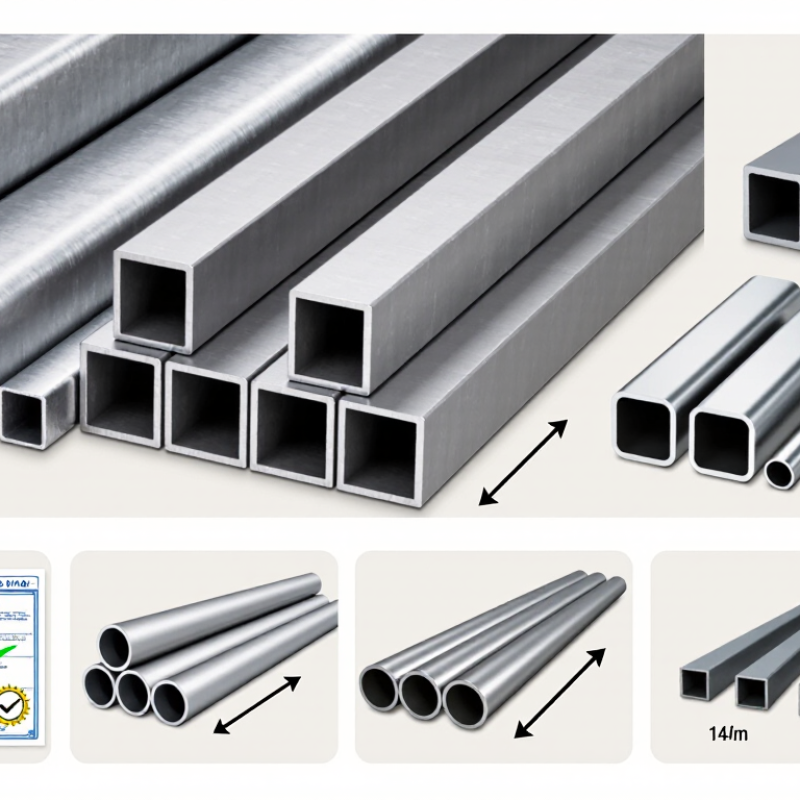
| 4 | Verify outside dimensions and wall thickness | Width × height, nominal thickness, corner radius, length, and permissible tolerances | Commercial square hollow sections are commonly supplied in 6 m or 12 m lengths, while exact size availability depends on the mill and standard. | Specify dimensions in millimetres, required length tolerance, cut-length tolerance, and whether measurements are nominal or minimum values. |
| 5 | Check surface and corrosion protection | Black mill finish, pickled and oiled, painted, galvanized, or post-fabrication coating | Hot-dip galvanized products are often specified by coating mass or thickness; ISO 1461 is commonly used for hot-dip galvanized coatings on fabricated iron and steel articles. | For outdoor or humid service, compare the complete corrosion-protection system rather than comparing uncoated and galvanized prices directly. |
| 6 | Evaluate supplier quality documentation | Mill test certificate, chemical composition, mechanical test results, inspection certificate, and traceability | An EN 10204 3.1 inspection certificate is commonly requested when the buyer needs batch-specific material results certified by the manufacturer. | Make certificate delivery a purchase-order requirement and ensure heat or batch numbers on the documents match the delivered bundles. |
| 7 | Compare prices on the same basis | Price per tonne or metre, grade, thickness, coating, quantity, cutting, packing, taxes, and freight | Indicative carbon-steel square-pipe prices can vary widely, often approximately USD 700–1,400 per metric tonne before project-specific freight, taxes, coating, and processing charges. | Request at least three like-for-like quotations and calculate the landed cost instead of selecting the lowest ex-works price. |
| 8 | Review minimum order quantity and packaging | Minimum order, bundle weight, protective caps, wrapping, marking, and loading method | Steel bundles are commonly secured with straps and may be protected with woven wrapping or waterproof covers for transport. | Confirm bundle dimensions and lifting points so the material can be safely unloaded and stored at the destination. |
| 9 | Compare production and delivery lead times | Stock status, production time, inspection time, port handling, transit time, and customs clearance | Standard stock sizes may ship faster, while non-standard dimensions, special grades, galvanizing, and cut-to-length orders commonly require additional production time. | Obtain separate dates for order confirmation, production completion, dispatch, estimated arrival, and document submission. |
| 10 | Clarify delivery and payment conditions | Incoterm, named place, insurance, shipping responsibility, payment schedule, and claims procedure | FCA, FOB, CFR, CIF, and DAP allocate freight, risk, insurance, and import responsibilities differently; the named place is essential to interpreting the term. | State the applicable Incoterms® rule and named location in the purchase order, then define inspection, shortage, damage, and late-delivery remedies. |