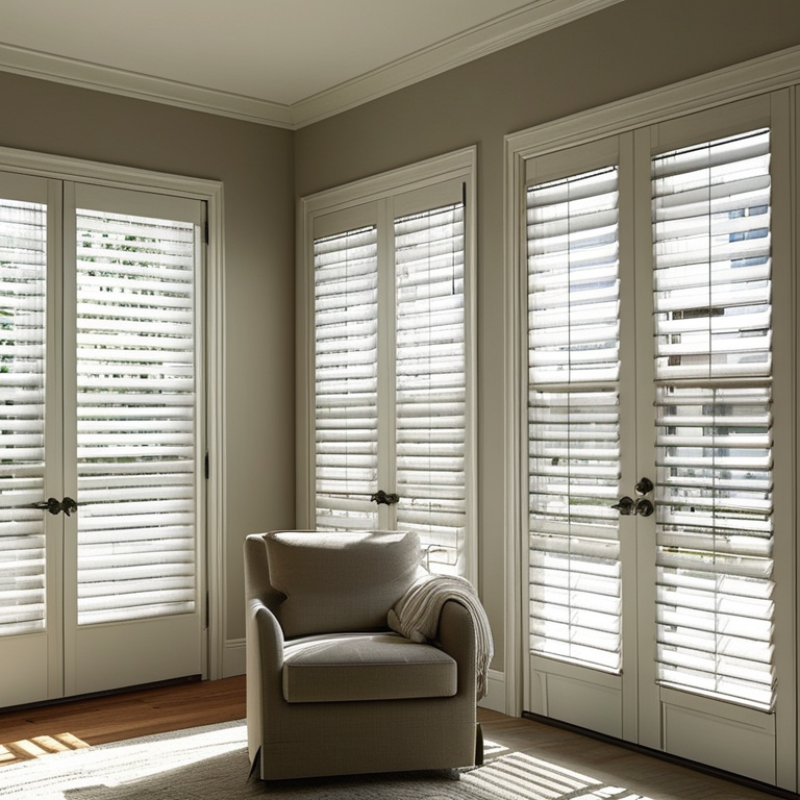
| 1 | Cordless lift design | Choose a blind that raises and lowers without an exposed operating lift cord or loop. | Removing accessible lift cords and loops reduces a major window-covering strangulation hazard for young children. | Product photographs, operating instructions, and a hands-on demonstration before purchase. |
| 2 | ANSI/WCMA A100.1-2022 compliance | Ask whether the complete window-covering product has been tested and documented against ANSI/WCMA A100.1-2022. | ANSI/WCMA A100.1-2022 is a recognized U.S. safety standard for corded window-covering products and related safety requirements. | A dated test report, supplier declaration, or written compliance statement identifying the exact product configuration. |
| 3 | Accessible cords and loops | If any cord, chain, or loop is present, check whether it can be reached from the floor, nearby furniture, or a child-accessible location. | Accessible continuous loops and pull cords can create entanglement and strangulation risks. | Inspect the installed position, nearby furniture, cord guides, tension devices, and safety instructions. |
| 4 | Installation and mounting strength | Confirm that the headrail, brackets, screws, and wall or window-frame anchors match the installation instructions. | Correct mounting helps prevent the blind from falling and ensures that safety features work as intended. | Clear installation instructions, compatible hardware, and a qualified installer when the substrate is uncertain. |
| 5 | Child-safe placement | Keep beds, cribs, sofas, chairs, and other climbable furniture away from the window-covering operating area. | Furniture can give children access to cords, loops, and moving blind components that would otherwise be out of reach. | A room-by-room placement plan completed before measuring and installation. |
| 6 | Slat and tilt durability | Operate the tilt mechanism and inspect that slats move evenly without sharp edges, loose pieces, or excessive resistance. | Smooth operation reduces the likelihood of breakage, loose components, or improvised repairs that may introduce hazards. | Sample inspection, operating-cycle information, warranty terms, and replacement-part availability. |
| 7 | Material, size, and room suitability | Verify slat size, blind width, window depth, moisture exposure, and the product’s cleaning and care requirements. | The correct size and environment help maintain stable operation and reduce premature warping, damage, or installation problems. | Accurate measurements, product specifications, moisture limitations, and written care instructions. |