| Power Transformer | Transfers bulk electrical power between transmission and sub-transmission networks. | Usually steps high transmission voltage down to a lower transmission or sub-transmission voltage. | Mineral-oil immersed with natural or forced oil and air circulation; large units may use directed oil flow. | Commonly tens to several hundred MVA, depending on the grid requirement. | Transmission substations, grid interconnections, and major generation evacuation points. | High efficiency, large physical size, conservator or sealed-tank construction, and on-load tap-changing options. |
| Distribution Transformer | Reduces medium voltage to the low voltage used by homes, commercial buildings, and small industrial loads. | Typically steps medium-voltage feeder levels down to low-voltage utilization levels. | Oil immersed or dry type; natural cooling is common. | Usually from a few dozen kVA to several MVA. | Utility distribution feeders, residential areas, commercial facilities, and light industry. | Designed for continuous service and often optimized for low no-load losses because it remains energized for long periods. |
| Step-Up Transformer | Raises voltage while reducing current for efficient long-distance transmission. | Converts generator or lower-voltage power to a higher transmission voltage. | Oil immersed for medium and large ratings; dry type may be used for smaller indoor installations. | From small industrial ratings to several hundred MVA in generating-station service. | Power plants, renewable-energy collector systems, and transmission connection substations. | Improves transmission efficiency by lowering current and therefore reducing resistive line losses. |
| Step-Down Transformer | Lowers voltage to a level suitable for distribution, equipment, or end users. | Converts transmission or medium voltage to a lower sub-transmission, distribution, or utilization voltage. | Oil immersed or dry type, selected according to rating, location, and fire-safety requirements. | Ranges from control and equipment transformers to large substation units. | Distribution substations, industrial plants, commercial buildings, and infrastructure facilities. | Provides the voltage level required by downstream networks while maintaining electrical isolation. |
| Autotransformer | Changes voltage through a winding with a shared electrical portion between the input and output circuits. | Used where the input and output voltages are relatively close. | Usually oil immersed with natural or forced cooling for substation applications. | Often used for high-capacity interconnections between nearby voltage levels. | Transmission interties, voltage regulation, and large industrial power systems. | Smaller, lighter, and generally more efficient than a two-winding transformer of similar capacity, but it does not provide full galvanic isolation. |
| Two-Winding Transformer | Transfers energy between two electrically separate windings. | Can perform either step-up or step-down voltage conversion. | Oil immersed or dry type, depending on size and installation environment. | Available across a broad range from small kVA units to large MVA substation transformers. | General-purpose substations, industrial distribution, and utility networks. | Provides galvanic isolation and flexible voltage ratios with separate primary and secondary windings. |
| Three-Winding Transformer | Connects three voltage levels or supplies multiple circuits from one magnetic core assembly. | May connect transmission, sub-transmission, and medium-voltage systems simultaneously. | Commonly oil immersed with radiators and auxiliary cooling equipment for larger ratings. | Typically used for medium- to high-capacity substation installations. | Grid substations, industrial complexes, and substations supplying multiple voltage buses. | Can reduce equipment count and footprint, but requires careful impedance and load-flow design. |
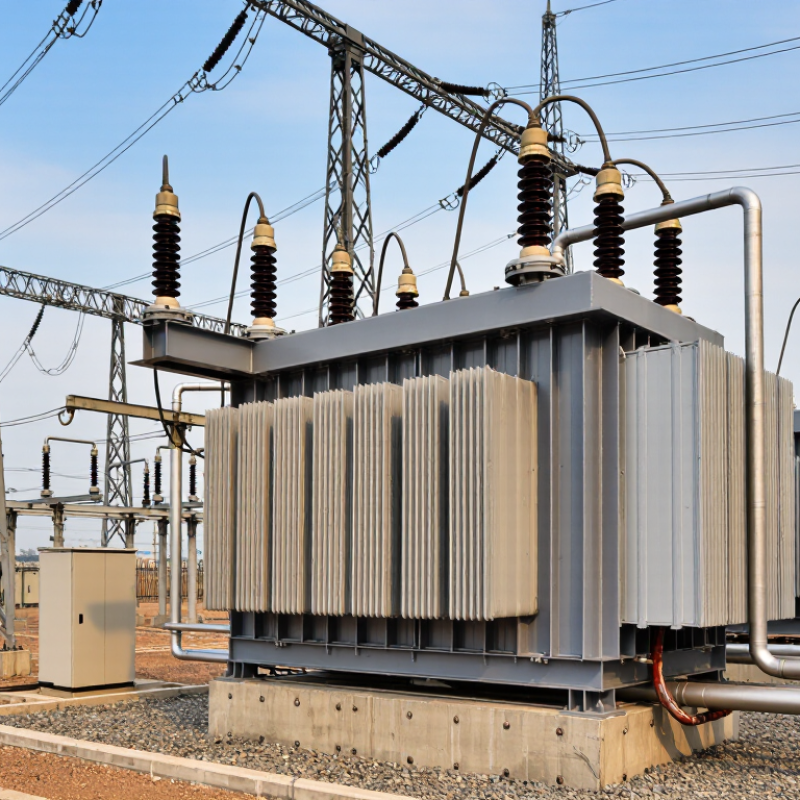
| Oil-Immersed Transformer | Uses insulating liquid for electrical insulation and heat transfer. | Suitable for medium- and high-voltage conversion at substantial power levels. | Oil circulation may be natural or assisted by pumps; heat is released through radiators or coolers. | Common from distribution ratings to several hundred MVA. | Outdoor substations, transmission networks, generation plants, and large industrial sites. | High thermal capacity and compact design; requires fire protection, leak control, and liquid condition monitoring. |
| Dry-Type Transformer | Uses air and solid insulation instead of liquid insulation and cooling. | Primarily used for medium-voltage to low-voltage conversion and selected medium-power substation duties. | Natural air cooling or forced-air cooling. | Commonly used from small kVA ratings to several MVA, with larger designs available for special applications. | Indoor substations, buildings, tunnels, hospitals, data facilities, and areas with strict liquid-fire restrictions. | Lower leakage risk and simplified installation; requires adequate ventilation and careful control of dust and moisture. |
| Grounding Transformer | Creates a neutral point or provides a controlled path for zero-sequence current. | Used on systems that lack a directly grounded neutral. | Oil immersed or dry type, depending on the installation and fault-duty requirements. | Usually rated for short-duration fault duty rather than continuous transfer of full system load. | Medium-voltage substations, renewable-energy collector systems, and isolated or delta-connected networks. | Improves earth-fault detection and protection coordination; may be paired with a neutral grounding resistor. |
| Rectifier Transformer | Supplies a controlled AC voltage to a rectifier that converts AC power into DC power. | Adapts the utility voltage and phase arrangement to the requirements of the rectifier system. | Usually oil immersed with cooling designed for harmonic and load heating. | Rating depends on the DC output, duty cycle, harmonic content, and rectifier configuration. | Industrial electrolysis, traction power, metal processing, battery charging, and high-power DC systems. | Designed to withstand harmonic currents, commutation effects, and frequent or continuous high-load operation. |
| Converter Transformer | Interfaces an AC network with power-electronic converters used to control or convert electrical power. | Matches grid voltage and insulation requirements to converter valves or semiconductor equipment. | Typically oil immersed with specialized cooling for high continuous loading and harmonic losses. | Large ratings are common in high-power transmission and industrial conversion systems. | High-voltage direct-current links, flexible AC transmission, and large industrial converters. | Requires advanced insulation coordination, harmonic design, leakage-reactance control, and cooling analysis. |