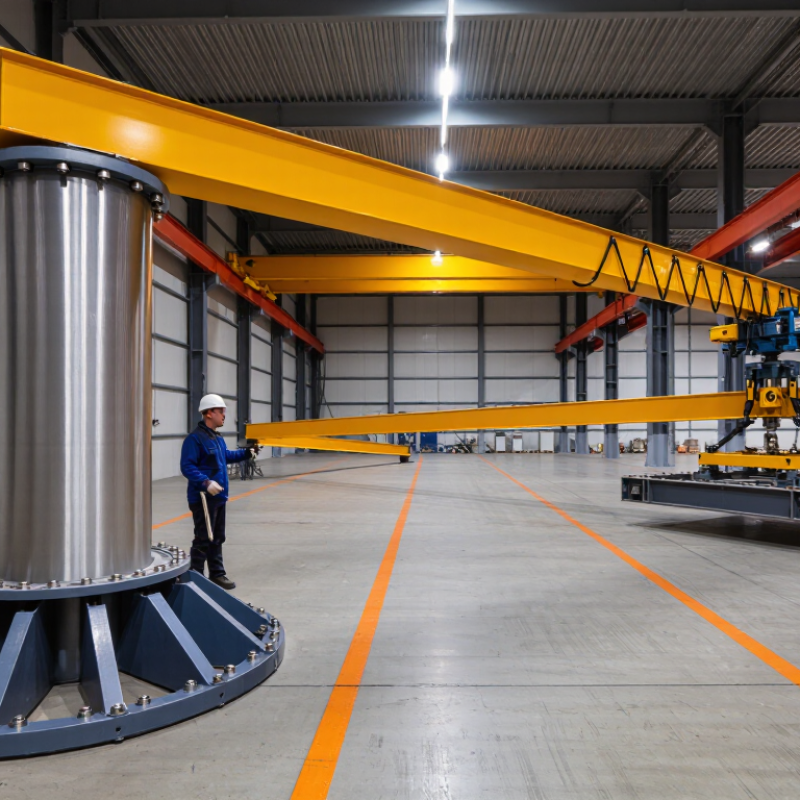
A pivot crane is built around a fixed base and a rotating boom. Its main components determine how safely it lifts and positions a load. The base transfers forces into the floor or supporting structure. A vertical mast rises from this base. At the mast’s top, a pivot assembly allows the boom to swing through a controlled arc.
The boom provides reach and supports the lifting equipment. A slewing bearing, pin, or reinforced pivot joint carries rotational loads between the mast and boom. The hoist raises and lowers materials using a wire rope, chain, drum, and motor. A trolley may travel along the boom, changing the load’s working radius. The hook, latch, and lifting attachment connect to the load. Controls operate movement, while brakes stop motion when power is released. Keep controls clearly labeled.
During lifting, the motor drives the hoist, and the pivot mechanism guides the boom’s rotation. Limit switches prevent travel beyond safe positions. Load charts show how capacity changes with outreach. Operators should inspect the rope, hook, brake, bolts, and electrical connections before use.
From field inspections, loose pivot hardware often reveals poor maintenance before a failure occurs. A neat diagram can hide real vibration, uneven floors, or changing loads. That matters. The crane must be checked in its actual working environment, not only on paper. Maintenance records should document wear, test results, and corrective work. Small details protect people.