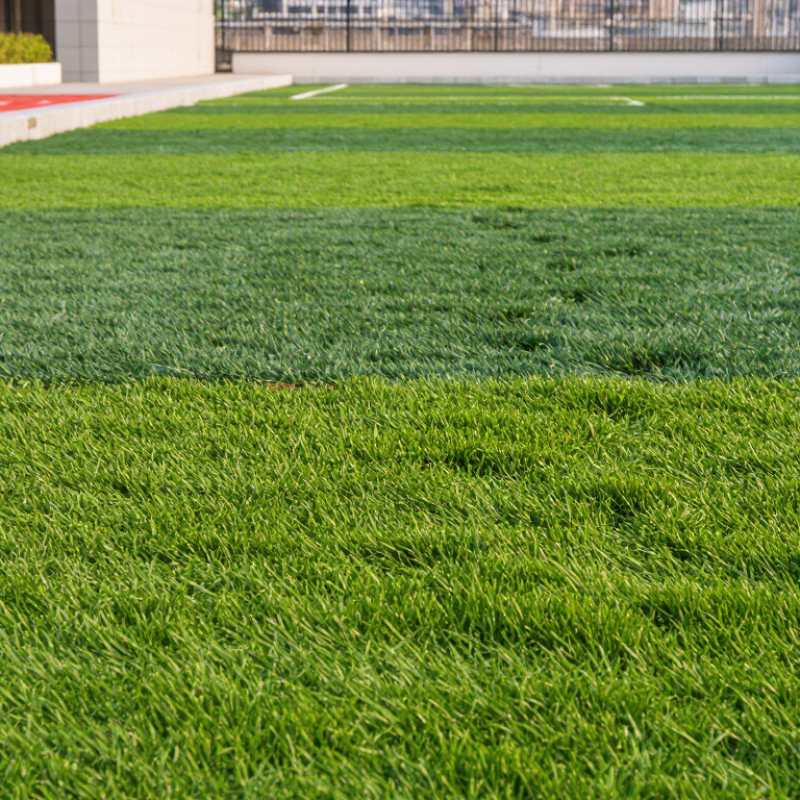
Nylon turf is dense, springy, and unusually resistant to crushing. That matters around goal mouths, walkways, and small training areas. Nylon fibers also tolerate higher temperatures better than many polyethylene surfaces. However, they usually cost more. Their firmer texture can feel less natural under bare feet.
Polyethylene remains the common choice for residential lawns because it offers softer blades and a more realistic appearance.
Polypropylene typically costs less, but it can flatten sooner under frequent traffic.
The Freedonia Group’s 2023 World Synthetic Turf report identifies landscaping and sports as major demand areas, reflecting the need for different performance levels. A 2022 life-cycle review in the journal Resources, Conservation and Recycling found that maintenance impacts, especially infill replacement and end-of-life disposal, can strongly affect synthetic turf’s environmental profile. Material selection alone does not decide sustainability.
In field inspections, nylon often makes sense where repeated foot traffic creates visible wear. It is less convincing for a large decorative yard with light use. The Synthetic Turf Council reports that synthetic fields can reduce irrigation demand substantially, but actual savings depend on climate, cleaning, and the original landscape. That caveat matters.
I would not choose nylon automatically. Its durability can justify the price, yet excessive stiffness may reduce comfort. Measure traffic, heat exposure, drainage, and maintenance needs before comparing samples. Touch the surface after direct sun exposure. Differences become obvious then.