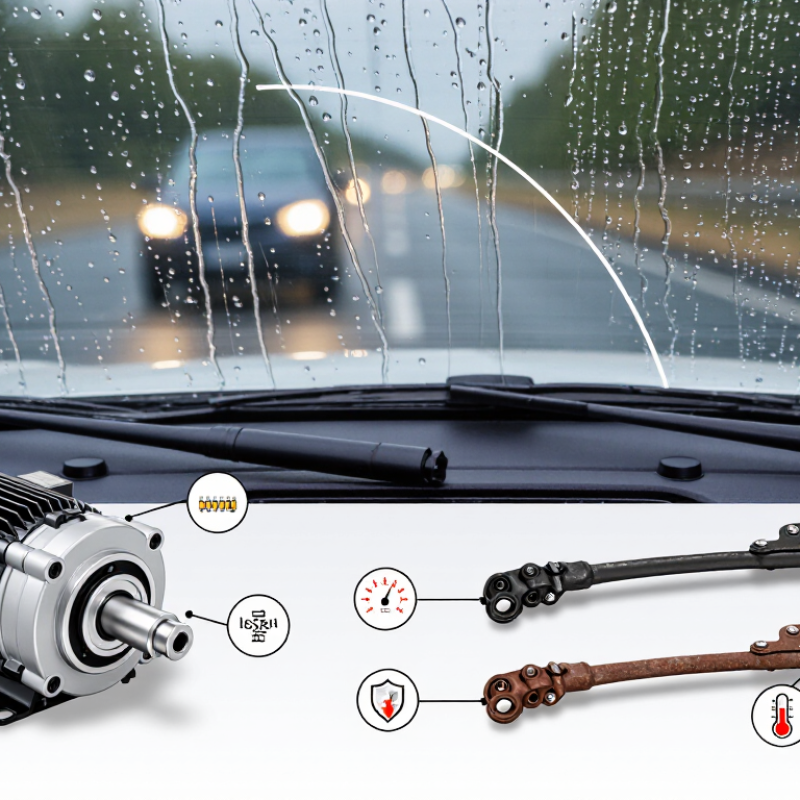
| Vehicle Compatibility | Match the motor to the vehicle model, production year, body style, and windshield configuration. | Passenger cars, light commercial vehicles, buses, and utility vehicles may use different motor assemblies. | Mounting points, shaft length, electrical connectors, and linkage geometry vary between vehicles. | Provide the supplier with the vehicle identification number or the original motor specifications before ordering. |
| Electrical System | Select a motor with the same nominal voltage as the vehicle electrical system. | 12 V is common in passenger vehicles; 24 V is common in many heavy-duty vehicles. | An incorrect voltage can cause slow operation, overheating, premature failure, or complete malfunction. | Confirm voltage, connector pin layout, grounding method, and compatibility with the vehicle control circuit. |
| Motor Speed | Choose a motor that supports the required low-speed and high-speed wiping modes. | Many automotive wiper motors provide two operating speeds and an automatic park function. | Correct speed control helps maintain visibility during light rain, heavy rain, and snow conditions. | Test both speeds and verify that the motor returns the wipers to the designated park position. |
| Output Torque | Use a motor with sufficient torque for the blade length, linkage resistance, and expected weather conditions. | Required torque depends on windshield size, blade pressure, ice loading, friction, and linkage design. | Insufficient torque may cause stalling or skipped wipes, while excessive torque may damage the linkage. | Ask for the rated torque and duty-cycle information; do not select solely by physical appearance. |
| Mounting Configuration | Check mounting holes, bracket shape, shaft orientation, and overall motor dimensions. | Common assemblies use vehicle-specific brackets and splined or threaded output shafts. | A motor that fits electrically may still be unsuitable if the mounting geometry is incorrect. | Compare the replacement part with the original unit before installation and use the specified fasteners. |
| Linkage Compatibility | Confirm compatibility with the existing wiper arms, crank, rods, and linkage mechanism. | Linkage length and crank position determine blade sweep angle and synchronization. | Incorrect linkage alignment can cause blade collision, incomplete windshield coverage, or excessive noise. | Mark the original parked position, inspect ball joints and bushings, and replace worn linkage parts when necessary. |
| Park Function | Select a motor with a park switch or control method compatible with the vehicle. | The park circuit normally keeps the motor running until the blades reach the lower rest position. | A correctly working park function prevents the blades from stopping in the driver’s viewing area. | After wiring, switch the wipers off and confirm that the blades stop at the correct position every time. |
| Protection and Durability | Prefer sealed housings, corrosion-resistant components, and protection against water and dust. | Automotive wiper motors operate in wet, dirty, cold, and thermally variable environments. | Environmental protection reduces corrosion, electrical faults, bearing wear, and moisture-related failures. | Request product test records, operating-temperature information, and details about sealing and corrosion protection. |
| Operating Temperature | Verify that the motor is suitable for the climate and vehicle operating conditions. | Automotive components commonly need to function in sub-zero temperatures as well as hot engine-bay conditions. | Temperature changes affect grease viscosity, electrical resistance, plastic components, and starting torque. | Choose a supplier that can provide temperature-range data and avoid operating the wipers on a frozen windshield. |
| Noise and Vibration | Check for stable rotation, balanced operation, and minimal gear or bearing noise. | Unusual clicking, grinding, or vibration may indicate gear wear, poor alignment, or excessive linkage resistance. | Low noise generally indicates correct installation and smooth mechanical operation. | Run the motor with the blades installed and inspect for abnormal sounds, movement, or vibration. |
| Supplier Reliability | Evaluate technical support, product traceability, quality control, and replacement policy. | A reliable supplier should provide specifications, drawings, wiring information, and inspection records. | Accurate technical information reduces installation errors and helps ensure consistent replacement quality. | Confirm warranty terms, batch traceability, delivery inspection procedures, and after-sales technical support. |
| Tools and Safety | Prepare basic hand tools, protective gloves, electrical test equipment, and suitable trim-removal tools. | Typical work may involve sockets, screwdrivers, a multimeter, and a torque wrench. | Proper tools help prevent damage to connectors, fasteners, trim panels, and the motor assembly. | Disconnect the battery when required, keep hands clear of moving parts, and follow the vehicle service instructions. |
| Installation Alignment | Install the motor and linkage in the correct parked position before tightening all fasteners. | The wiper arms should rest within the manufacturer-defined sweep and parking area. | Incorrect alignment may reduce visibility and cause the blades to strike the body or each other. | Operate the mechanism without contacting the windshield edge, hood, cowl, or adjacent wiper arm. |
| Final Functional Test | Test intermittent, low, high, washer-linked, and park functions when available. | Verify complete blade travel, even contact, correct stopping position, and stable motor operation. | A complete test identifies wiring, linkage, alignment, and control-system problems before road use. | Use clean water or approved washer fluid during testing; never run dry on a dirty or damaged windshield. |