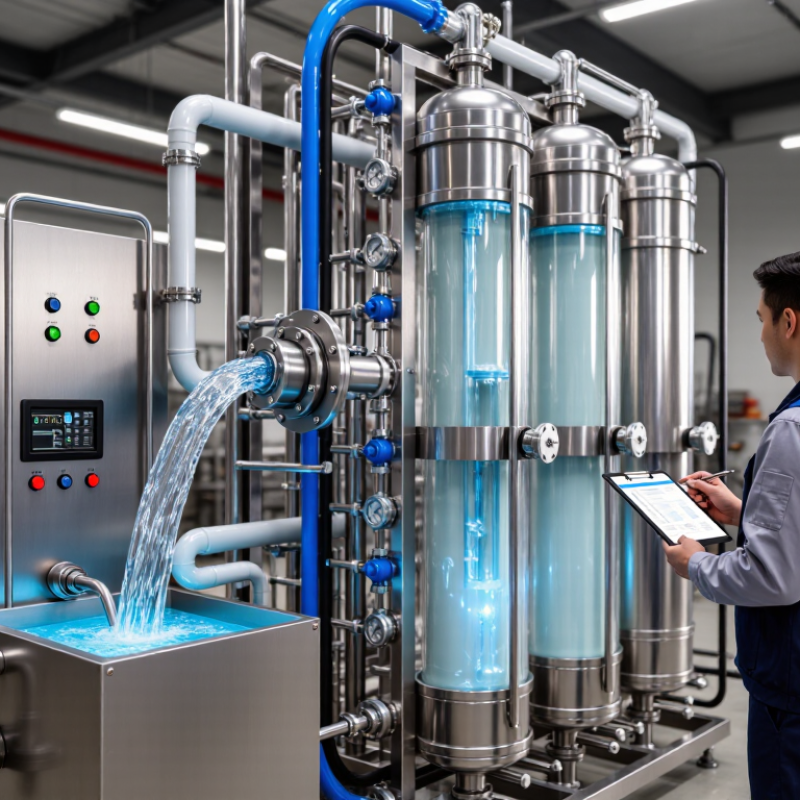
Choosing among China’s top Water Filter Machine manufacturers requires more than comparing factory prices. A reliable supplier should prove how its equipment performs under real operating conditions. Examine filtration media, membrane quality, flow rate, recovery rate, energy use, and cleaning procedures. Ask for test records, component specifications, and clear warranty terms. A polished brochure is not enough.
Experience matters at the installation site. A machine may perform well in a showroom but struggle with hard water, unstable pressure, or heavy daily demand. Request a sample treatment plan based on your raw-water report. Review factory audits, production controls, operator training, and after-sales response times. Relevant certifications and independent laboratory testing can strengthen confidence, but buyers should verify their scope and validity. Standards such as NSF/ANSI or ISO-related quality systems may be useful references, depending on the application and market.
Look closely.
The best manufacturer is not always the largest or cheapest. It should understand your water source, production target, maintenance ability, and local compliance requirements. Ask whether spare filters, pumps, valves, and membranes remain available after installation. One overlooked detail can stop an entire production line. I have also seen buyers focus heavily on automation while underestimating cleaning costs and technician access. That decision can become expensive later.
A careful comparison should balance technical evidence, operating cost, communication quality, and long-term accountability. Some supplier information may remain incomplete, so independent verification is essential. The right choice is a documented fit, not a confident promise.
Choosing a water filter machine starts with the application, not the supplier’s catalogue. For homes, sediment filters, activated carbon, and ultrafiltration can improve taste and reduce suspended particles. Reverse osmosis suits applications requiring lower dissolved solids, such as drinking water or laboratory preparation. Ultraviolet systems target microorganisms, but they need clear water and reliable electricity.
The World Health Organization and UNICEF reported that 2.2 billion people lacked safely managed drinking water in 2022. This figure shows why treatment design must match real water risks.
Commercial kitchens often need higher flow rates and simple maintenance. Factories may require multimedia filtration, softening, reverse osmosis, or specialized membrane systems. Test feed water before comparing machines. Important values include turbidity, hardness, iron, conductivity, microbial contamination, and daily demand.
A machine that performs well in a showroom may struggle with seasonal water changes. That detail is easy to overlook. The neatest specification is not always the safest choice.
Tips: Ask for independent test results, flow-rate data, recovery rates, and replacement intervals. Confirm whether operators can clean membranes safely. Check service access, spare-part availability, and wastewater handling.
The International Water Association emphasizes risk-based water safety planning, not equipment selection alone. Consider a pilot test when water quality is unstable.
My practical view is simple: choose the treatment stages after testing the water, then compare manufacturers on evidence, training, and long-term support.
(WHO/UNICEF Joint Monitoring Programme, Progress on Household Drinking Water, Sanitation and Hygiene 2000–2022)