How to Choose China Top Phase Lack Chrome Rectifier?

Choosing a China Top Phase Lack Chrome Rectifier requires more than comparing prices or polished product photos. The right unit must match your chrome-plating line, bath chemistry, electrode area, working cycle, and local power conditions. A small mismatch can create uneven deposits, burned edges, excessive heat, or unstable production.

Dr. Mordechay Schlesinger, a respected electroplating researcher, expressed a useful principle: “Electroplating quality depends on controlling current, chemistry, and surface preparation together.” This principle remains practical when evaluating a Phase Lack Chrome Rectifier. Buyers should inspect output voltage, current stability, ripple performance, cooling design, protection functions, and phase-loss response. Ask for test records, wiring diagrams, load data, and clear maintenance instructions. A serious manufacturer should explain these details without avoiding technical questions.

The factory visit can reveal more than a sales brochure. Look for clean busbars, secure terminals, labeled control panels, and evidence of thermal testing. Check whether engineers understand your bath temperature and production rhythm. Do not assume a larger transformer always delivers better results. Oversized equipment may increase cost and operating losses. Undersized equipment may overheat during long cycles. This is where careful calculation matters.

There is also room for doubt. Supplier rankings change, and online reviews may be incomplete. Test a sample under realistic conditions before signing a large order. Confirm spare-part availability, response times, warranty limits, and commissioning support. The best China Top Phase Lack Chrome Rectifier is not simply the cheapest or most powerful model. It is the one that performs steadily, safely, and measurably in your actual plating environment.

How to Choose China Top Phase Lack Chrome Rectifier?

Understanding Phase-Controlled Chrome Rectifiers and Their Applications

How to Choose China Top Phase Lack Chrome Rectifier?

Understanding Phase-Controlled Chrome Rectifiers and Their Applications

Choosing a reliable phase-controlled chrome rectifier starts with the plating tank, not a catalog label. This equipment converts AC power into controlled DC current for chromium deposition. Thyristors adjust the conduction angle and regulate output smoothly. That control matters during start-up, loading, and thickness changes. Ask for rated DC voltage, continuous current, ripple percentage, and overload behavior. Do not accept only a peak rating. Check the actual duty cycle.

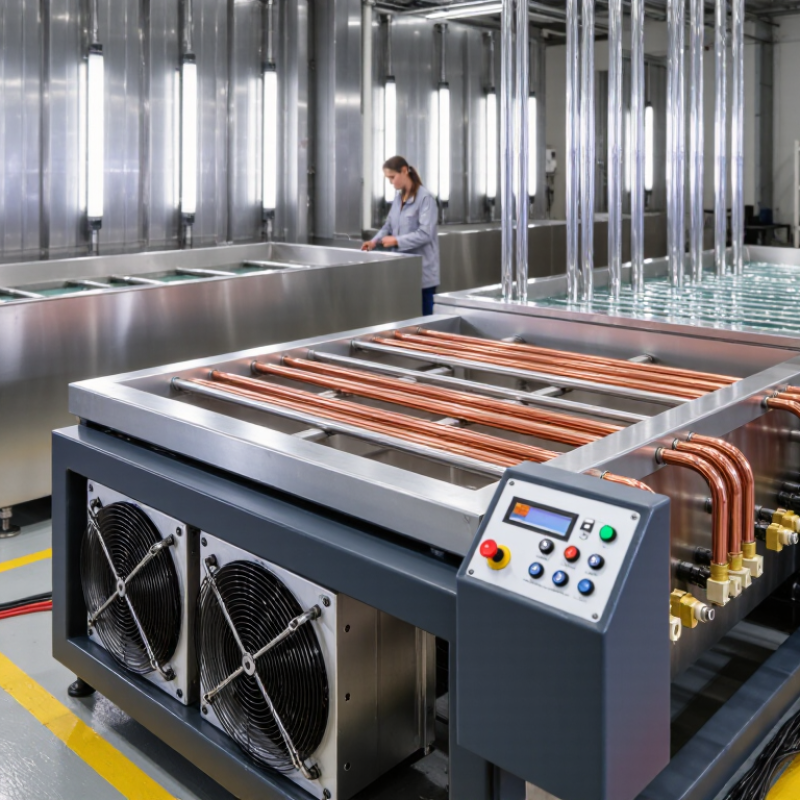
During evaluation, compare the rectifier with tank volume, electrode spacing, bath temperature, and production schedules. A 12-pulse design can reduce ripple and provide cleaner current. A 6-pulse unit may suit less demanding applications. The correct choice depends on process limits. Inspect copper busbars, cooling fans, cabinet sealing, control response, and emergency shutdowns. Request factory test records, insulation checks, thermal tests, and calibration details. Independent verification is valuable. Small omissions become expensive.

A dependable supplier should explain installation, grounding, ventilation, spare parts, and operator training clearly. Request a sample load test before shipment, then repeat key measurements after commissioning. Review local electrical requirements and service response times. A polished cabinet does not prove stable plating. I once underestimated ventilation, and heat affected control stability. That lesson still matters. Verify every promised figure under working conditions.

How to Choose a Top-Performance Phase-Controlled Chrome Rectifier

The chart shows the idealized average DC output of a three-phase, six-pulse fully controlled rectifier at different firing angles. The values are normalized to the AC line-to-line RMS voltage using VDC ≈ 1.35 × VLL × cos(α). A smaller firing angle provides higher DC output, while a larger angle enables finer control for chrome plating processes.

When selecting a rectifier, compare its required DC voltage and current range, regulation accuracy, cooling method, ripple performance, overload capability, and compatibility with the plating tank. Actual output will be lower than the ideal curve because of semiconductor voltage drop, transformer impedance, and commutation overlap.

Key Specifications for Comparing Chinese Chrome Rectifier Manufacturers

How to Choose China Top Phase Lack Chrome Rectifier?

When comparing Chinese chrome rectifier manufacturers, start with operating data, not attractive catalog photos. Confirm rated DC voltage, current, duty cycle, ripple, efficiency, and output stability at your actual plating load. A 12-pulse unit may reduce ripple and improve bath consistency, while a six-pulse design can cost less. Ask for factory test curves. Do not guess.

The U.S. Department of Energy’s metal-finishing energy guide reports that rectifiers can represent roughly 20–40% of a plating plant’s electricity use. Therefore, efficiency deserves careful review. Request measured efficiency at 25%, 50%, 75%, and 100% load, rather than one optimistic figure. The IEA’s Energy Efficiency 2023 report recorded only 2.2% global energy-intensity improvement in 2022, reinforcing the value of verified operating savings. A practical target is efficiency above 90%, but cooling conditions can change the result.

Inspect protection and service details closely. Look for over-temperature, short-circuit, over-voltage, phase-loss, and water-leak alarms. For water-cooled equipment, examine pipe material, flow sensors, and drain access beside the plating line. IEC 60146-1-1 provides a useful reference for power-electronic converter performance and testing. Ask whether production units receive load testing, insulation testing, and ripple measurement. A low quoted price may hide weak calibration or slow spare-parts support. I would also request two customer references using similar current levels. One specification sheet is never enough.

How to Evaluate Rectifier Quality, Safety, and Operating Efficiency

How to Choose China Top Phase Lack Chrome Rectifier?

A quality three-phase chrome rectifier should deliver stable current during long plating cycles. Check output ripple, voltage regulation, cooling design, and transformer insulation. IEC 60146-1-1 defines key requirements for semiconductor power converters, including thermal performance and protection. Ask suppliers for factory test records, not only product brochures. A practical test should measure output current, ripple, temperature rise, and response after a simulated phase-loss event.

Operating efficiency deserves careful attention.

The IEA’s Energy Efficiency 2023 report recorded a global energy-efficiency improvement of about 2.2% in 2022. That figure is not specific to rectifiers, but it shows why conversion losses matter across industry. Compare input power with usable DC output under 50%, 75%, and 100% load.

An efficient unit should also maintain stable output when the workshop voltage changes. Confirm harmonic-control measures against IEC 61000 requirements. In real workshops, poor ventilation can erase expected efficiency gains. I have seen specifications look excellent, while dust-blocked filters caused overheating within weeks.

Tips:

Request a third-party inspection before shipment. Check insulation resistance, emergency shutdown, alarm records, and phase-loss protection. Review at least three months of operating data from a similar chromium-plating line. Pay attention to small details. A missing sensor can become an expensive failure. Do not select only by maximum amperage; service response, spare parts, and calibration support matter equally.

A Step-by-Step Guide to Selecting the Right Rectifier Supplier

How to Choose China’s Top Three-Phase Chromium Rectifier Supplier

Selecting a reliable supplier starts with your process requirements, not an attractive catalog. Define output voltage, current range, ripple tolerance, duty cycle, cooling method, and installation conditions. A chromium plating line may need stable current for long operating hours. Small specification gaps can create uneven coating, overheating, or wasted bath chemicals.

Ask the supplier for a detailed technical proposal. It should include transformer design, protection functions, control accuracy, enclosure materials, and expected efficiency. Request factory test records, calibration methods, and photographs of completed units. If possible, inspect the production site or arrange a live video audit. Engineers should explain load testing clearly. Vague answers are warning signs.

Check whether the supplier has experience with comparable plating systems. Speak with recent customers, but verify their applications and operating conditions. Review warranty coverage, spare-part availability, response time, and installation support. One overlooked detail is software communication with your existing control panel. Confirm it before signing. I once treated a low quotation as a strong advantage, but later found that cooling accessories were excluded. That mistake was avoidable. A careful supplier should also admit limitations, document changes, and accept reasonable factory inspection procedures. Real reliability appears during testing, not only during sales discussions.

How to Choose China Top Phase Lack Chrome Rectifier? - A Step-by-Step Guide to Selecting the Right Rectifier Supplier

Step Selection Dimension Recommended Technical Requirement What to Verify with the Supplier Suggested Weight Practical Selection Advice
1 Confirm the process Use a DC output rectifier specifically designed for chromium electroplating. Confirm whether the process requires conventional hard chrome, decorative chrome, hexavalent chrome, or trivalent chrome. Request the required bath chemistry, cathode area, current density, plating thickness, duty cycle, and operating temperature. 10% Do not select the unit from voltage alone. The plating chemistry and current density determine the required current capacity.
2 Size the DC output Specify rated DC voltage and current based on the process. Typical industrial chrome-plating systems may use approximately 6–24 V DC and hundreds to several thousand amperes, depending on the work area and process. Check the continuous rating, peak rating, overload duration, output adjustment range, and whether the rating applies at the stated ambient temperature. 15% Allow engineering margin for production variation, but avoid excessive oversizing because it can increase purchase price and reduce operating efficiency.
3 Check three-phase input compatibility Match the rectifier transformer and control system to the available three-phase supply, commonly 380–415 V AC at 50 Hz in many industrial installations. Other regional voltages may require a different transformer design. Verify input voltage tolerance, frequency, phase sequence, input current, power factor, transformer impedance, and harmonic-control provisions. 10% Provide the supplier with the actual site electrical data before quotation to prevent transformer mismatch and nuisance protection trips.
4 Evaluate rectification technology Compare a controlled silicon rectifier and a high-frequency switching rectifier. Silicon-controlled designs are commonly selected for robust high-current duty; switching designs can offer a smaller footprint and fast control response. Ask for circuit topology, switching frequency where applicable, control response, efficiency data, cooling method, and maintenance requirements. 10% Choose technology according to current level, space, ripple requirements, operating environment, and local service capability.
5 Set ripple and regulation targets For quality-sensitive chrome plating, specify stable DC output and a clearly defined ripple limit. A ripple target of approximately 3–5% may be acceptable for some general applications, while more demanding finishes may require a lower value. Require the measurement method, load condition, waveform definition, output regulation data, and test record at low, medium, and full load. 15% Do not compare ripple figures unless all suppliers use the same measurement method and operating conditions.
6 Review cooling and enclosure protection Select forced-air, water-cooled, or combined cooling according to output power and plant conditions. The enclosure should be suitable for a humid, corrosive plating area; an IP54-level enclosure is a common baseline when the installation environment supports it. Verify heat-load calculations, fan or pump redundancy, water-quality requirements, airflow, enclosure rating, corrosion protection, and emergency shutdown access. 10% Separate the rectifier from acid mist whenever possible and use suitable ventilation and corrosion-resistant installation materials.
7 Check control and automation The control system should support constant-current and constant-voltage operation, soft start, local adjustment, remote setpoint, digital display, and programmable ramping where required. Confirm analog or digital interface type, communication protocol, PLC compatibility, data logging, recipe control, calibration access, and password protection. 10% Request a control-panel demonstration or video showing adjustment, alarm display, output monitoring, and fault reset procedures.
8 Verify protection functions Essential protections include overcurrent, overvoltage, short circuit, overtemperature, input phase loss, input phase sequence, cooling failure, and output polarity or connection checks where applicable. Request the protection list, alarm thresholds, trip response, reset method, event history, and a factory test procedure for each safety function. 10% A rectifier described as “phase lack” protection should clearly state how loss of one input phase is detected and how the unit responds.
9 Assess construction and serviceability Look for clearly identified busbars, insulated terminals, accessible fuses and contactors, adequate cable sizing, secure cooling connections, and a layout that permits inspection and cleaning. Request drawings, component specifications, wiring diagrams, spare-parts lists, recommended maintenance intervals, and an installation manual in English. 8% Prefer standardized, readily replaceable electrical components and documented maintenance procedures.
10 Audit quality and compliance The supplier should operate a documented quality system and provide traceable inspection records for transformer insulation, dielectric strength, grounding continuity, output performance, and protection tests. Check applicable IEC or local electrical requirements, factory acceptance test records, calibration certificates, quality documents, and evidence of relevant export experience. 7% Treat complete technical documentation and reproducible testing as stronger evidence than a low quoted price.
11 Compare total cost of ownership Evaluate purchase price together with energy consumption, cooling-water or fan requirements, consumables, spare parts, maintenance labor, downtime risk, commissioning, and training. Request a detailed quotation with included and excluded items, delivery terms, warranty period, commissioning scope, spare-parts pricing, and response time for technical support. 5% Use a weighted scorecard and compare at least three technically equivalent quotations rather than ranking suppliers by price alone.
Total Evaluation Weight 100% Select the highest-scoring supplier that meets every mandatory safety and performance requirement.
Minimum information to include in an inquiry: DC voltage and current, three-phase input voltage and frequency, chrome-plating chemistry, cathode area, required current density, duty cycle, ripple limit, cooling method, enclosure conditions, control interface, delivery location, and required inspection documents.

Installation, Maintenance, and After-Sales Support Considerations

How to Choose China Top Phase Lack Chrome Rectifier?

Choosing a high-quality phase-loss chrome rectifier requires more than comparing output current and price. Check whether the unit detects phase failure quickly and shuts down safely. A clear wiring diagram is essential. It should match your plant voltage, frequency, grounding method, and plating tank requirements. Ask for tested efficiency, output stability, ripple data, and protection functions. These details show engineering discipline, not just sales confidence.

Installation conditions strongly affect service life. Place the rectifier in a dry, ventilated room away from acid mist and excessive heat. Leave enough clearance around cooling paths. Use correctly sized copper cables, secure terminals, and independent grounding. A loose connection can create heat marks within hours. Confirm polarity before energizing the system. This simple step prevents expensive tank and workpiece damage. It sounds obvious. Mistakes still happen.

Maintenance should include monthly cleaning of air filters, terminal inspection, and cooling-fan checks. Record output voltage, current, temperature, and unusual noise during operation. Sudden ripple changes may indicate loose wiring or internal component stress. After-sales support matters when production stops unexpectedly. Require a clear response time, spare-parts availability, remote troubleshooting, and qualified field service. Ask whether technicians can provide installation guidance and fault records in English. Some suppliers promise fast support, but response details remain vague. That deserves careful questioning. A reliable supplier should also provide manuals, wiring drawings, inspection reports, and practical training for operators.

Find the Right Repair Product for Your Project

Need to find the most appropriate product for the needs of your project? We can help because we have over 70 years of experience servicing the industry with every kind of project, from Do-it-yourself projects to large skyscrapers. Package Pavement has the experience, the knowledge and the products to help every project succeed.

Quikrete Repair Products
Legend
Package Pavement has two convenient locations in Stormville, NY (Dutchess County) and Ravena, NY (Greene County) to serve the Northeastern Region with bagged concrete, blacktop, mortar, and repair products. This map gives a general idea of where we service and the product lines we offer.
Package Pavement Products
Quikrete Products
Spec Mix Products
map

Our Brands Websites