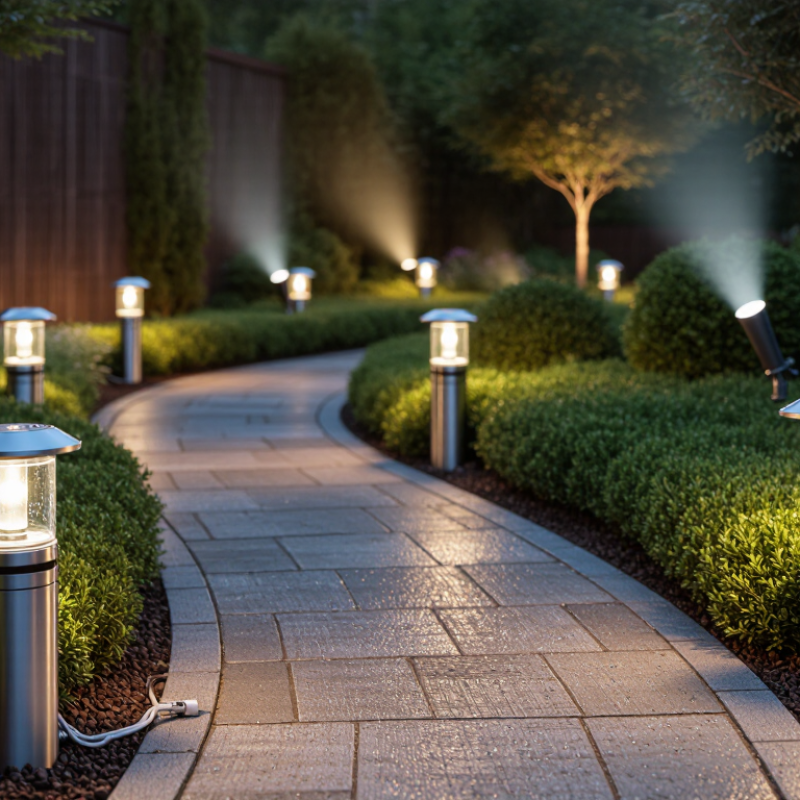
China Top Garden Lighting Manufacturers How to Choose?

Choosing reliable China top garden lighting manufacturers requires more than comparing catalog prices. Garden Lighting must survive rain, dust, temperature changes, and repeated nighttime use. A decorative path light may look excellent online, yet fail after one wet season. Practical evaluation begins with product materials, protection ratings, light performance, and manufacturing consistency.

Experienced buyers usually inspect aluminum grades, glass thickness, cable quality, and drainage design. They also request IP test reports, electrical safety documentation, photometric data, and clear warranty terms. A dependable manufacturer should explain LED brands, color temperature options, lumen output, and expected service life without vague promises. Factory audits, sample testing, and production photographs can reveal details that polished brochures often conceal. Small details matter.

Communication is another useful test. Can the supplier answer technical questions accurately? Can it provide a stable sample before mass production? Can it manage packaging, replacement parts, and compliant shipping documents? These questions help distinguish a trading company from a capable manufacturer. Still, no supplier is perfect. Samples may perform well while later batches show minor color or finish differences. That risk deserves written controls and inspection procedures. A balanced comparison should consider engineering support, customization ability, certifications, export experience, and after-sales response. The lowest quotation may become expensive when installation delays, failures, or replacements appear. Careful selection protects both the landscape and the project budget.

China Top Garden Lighting Manufacturers How to Choose?

Define Garden Lighting Types, IP Ratings, and 50,000-Hour LED Lifespans

Choosing a garden lighting manufacturer begins with the product’s real environment. Path lights, spike lights, wall fixtures, and in-ground luminaires face different moisture and impact risks. Under IEC 60529, IP65 protects against dust and water jets, while IP67 also supports temporary immersion. IP ratings are not decoration.

Check the test evidence.

A credible manufacturer should provide photometric files, thermal test results, and LM-80 data. IES LM-80 measures LED lumen maintenance, while TM-21 projects long-term performance. The U.S. Department of Energy reports that quality LED systems can reach 50,000 hours under suitable operating conditions. That figure is not a promise. Heat, poor drivers, and sealed housings can shorten it sharply.

Ask how the factory manages junction temperature, surge protection, cable sealing, and corrosion resistance. A 50,000-hour LED still fails early if water reaches the driver. The Lighting Global market data and several utility efficiency programs commonly use 25,000 to 50,000 hours for outdoor LED product evaluations, depending on application and maintenance criteria. Compare the stated life with warranty terms, operating temperature, and lumen-maintenance percentages. Also inspect sample units after rain exposure. On paper, everything may look perfect. In practice, one weak gasket can reveal more than a polished catalog.

China Top Garden Lighting Manufacturers: How to Choose?

Garden Lighting Types, IP Ratings, and 50,000-Hour LED Lifespans
Category Lighting Type or Specification Typical Application Recommended Technical Range Key Selection Criteria
1. Garden Lighting Types
Pathway Lighting Low-level bollard or path light Walkways, driveways, steps, and entrances 300–1,000 lumens; warm white 2,700–3,000 K Choose glare control, stable mounting, uniform spacing, and a beam angle that illuminates the path without shining into nearby windows.
Spotlight Adjustable directional LED fixture Trees, sculptures, architectural details, and garden features 300–1,500 lumens; narrow or medium beam, approximately 15°–40° Look for adjustable aiming, a secure ground spike or surface mount, optical control, and adequate heat dissipation.
Floodlight Wide-beam outdoor LED light Large lawns, walls, courtyards, parking areas, and security lighting 1,000–5,000 lumens; beam angle commonly 60°–120° Check glare shielding, mounting strength, power consumption, photocell or motion-sensor compatibility, and light-spill control.
In-Ground Light Recessed walk-over or uplight fixture Decks, plazas, paving, landscape walls, and tree uplighting 300–1,500 lumens; impact rating should be selected for the installation area Verify drainage, load rating, surface temperature, lens strength, corrosion resistance, and service access before installation.
Wall Light Outdoor wall-mounted sconce or up/down light Entrances, terraces, boundary walls, and building facades 400–1,200 lumens; 2,700–4,000 K depending on the desired appearance Confirm the mounting method, cable entry protection, glare control, corrosion resistance, and compatibility with the local electrical system.
Deck and Step Light Compact recessed or surface-mounted LED Stairs, railings, decks, patios, and seating areas 50–300 lumens per fixture; low-glare diffuse output Prioritize low surface temperature, safe cable routing, slip resistance where applicable, and consistent color appearance.
Solar Garden Light Integrated photovoltaic panel, battery, and LED Remote paths, decorative planting areas, and locations without mains wiring Runtime depends on solar exposure, battery capacity, weather, and operating mode Evaluate panel size, battery chemistry, charging performance, winter operation, lumen output after a full night, and replaceable components.
Underwater Light Submersible LED fixture for ponds or fountains Ponds, water features, fountains, and swimming-pool environments where permitted Use only products specifically certified for the intended water installation Check the complete installation requirements, cable gland, low-voltage transformer, corrosion resistance, and local electrical safety regulations.
2. IP Rating Selection Based on IEC 60529
IP44 Protected against solid objects greater than 1 mm and water splashes from all directions Covered patios, sheltered walls, and protected outdoor locations Sheltered use Do not treat IP44 as protection against heavy rain, water jets, flooding, or immersion.
IP54 Limited dust ingress protection and protection against water splashes from all directions Partly exposed outdoor areas with moderate dust and rain General outdoor use Suitable only when the fixture is not exposed to high-pressure cleaning or standing water.
IP65 Dust-tight and protected against water jets from any direction Open gardens, exposed walls, pathways, and general landscape installations Exposed outdoor use A strong common choice for outdoor fixtures, but IP65 does not indicate protection against temporary immersion.
IP66 Dust-tight and protected against powerful water jets Locations exposed to severe weather or periodic wash-down Heavy weather exposure Confirm that cable glands, connectors, seals, and installation orientation maintain the stated protection level.
IP67 Dust-tight and protected against temporary immersion in water up to 1 metre for the specified test duration Recessed ground lights and areas where temporary flooding may occur Temporary immersion Use products designed for ground installation; drainage and correct installation remain essential.
IP68 Dust-tight and protected against continuous immersion under conditions specified by the manufacturer Ponds, fountains, and other approved underwater applications Continuous immersion IP68 is not a single universal depth or time limit. Confirm the manufacturer’s tested depth, duration, water type, and installation requirements.
3. LED Lifespan and Performance
50,000-Hour LED Rating Nominal operating life, commonly stated at an L70 maintenance threshold Long-term residential, commercial, hospitality, and public landscape lighting 50,000 hours does not mean the fixture will remain at 100% brightness Ask whether the rating is LED-chip life or complete-fixture life and request the stated lumen-maintenance standard, such as L70.
Approximate Operating Period 50,000 hours converted to typical daily use Planning replacement cycles and maintenance budgets 8 hours/day: about 17.1 years; 12 hours/day: about 11.4 years; 24 hours/day: about 5.7 years Actual service life depends on temperature, driver quality, voltage stability, moisture, switching frequency, cleaning, and installation conditions.
Color Temperature Warm white, neutral white, or cool white Matching the atmosphere and surrounding architecture 2,700–3,000 K for warm residential gardens; 3,500–4,000 K for a neutral appearance Warm light generally creates a softer landscape appearance and can reduce visual glare compared with cooler light.
Color Rendering Index CRI indicates how accurately colors appear under the light source Planting, flowers, natural stone, hospitality areas, and decorative landscapes CRI 80 or higher for general use; CRI 90 or higher for color-sensitive displays Request consistent color quality across batches and confirm the stated CRI test method.
LED Driver Constant-current or suitable constant-voltage power supply All mains-connected and low-voltage LED garden-lighting systems Choose a driver matched to the fixture load, voltage, dimming method, and environmental conditions Check efficiency, power factor, surge protection, over-temperature protection, flicker performance, and replacement availability.
4. Manufacturer and Product Evaluation Checklist
Compliance Documentation Safety, electromagnetic compatibility, and photometric documentation Importing, commercial projects, public areas, and regulated installations Request test reports and declarations applicable to the destination market Verify that documents refer to the exact model, electrical rating, LED configuration, and production version being purchased.
Material and Corrosion Resistance Aluminium, stainless steel, polycarbonate, tempered glass, seals, and coatings Coastal, humid, urban, and high-rainfall environments Prefer materials and finishes selected for the site’s salt, moisture, UV, and temperature conditions Ask about corrosion testing, UV resistance, fastener material, gasket replacement, and drainage design.
Thermal Management Heat sink, housing design, thermal interface, and operating temperature range High-output lights and installations in hot climates Look for a metal heat-dissipation path and clearly stated ambient-temperature limits Good thermal design helps maintain lumen output and supports the claimed LED and driver service life.
Warranty and Serviceability Written warranty, spare parts, driver replacement, and technical support Projects requiring predictable maintenance and lifecycle cost control Compare warranty terms for the complete fixture, driver, battery, coating, and accessories Clarify exclusions, claim procedures, expected spare-part availability, and whether repairs can be completed locally.
Sample and Batch Consistency Pre-production sample, approved specification, and quality-control records Bulk purchasing and multi-phase landscape projects Approve lumen output, color temperature, CRI, IP construction, dimensions, and cable details before mass production Use a written specification and inspection checklist to reduce differences between samples and delivered products.

Practical rule: Select the lighting type according to the visual task, choose the IP rating according to actual water exposure, and evaluate the complete fixture—not only the LED chip—when reviewing a claimed 50,000-hour lifespan.

Screen Chinese Manufacturers by CRI 80+, 80 lm/W, and 2700–4000K Specs

Choosing Chinese garden lighting manufacturers should begin with measurable performance, not attractive catalog images. The International Energy Agency reports that lighting consumes about 15% of global electricity. Efficient outdoor fixtures therefore matter beyond appearance. Screen suppliers for a minimum luminaire efficacy of 80 lm/W, not merely LED-chip efficacy.

Ask for independent LM-79 test reports showing CRI 80 or higher, output, power, and color temperature. The U.S. Department of Energy’s solid-state lighting research reports emphasize complete-fixture testing because thermal design can reduce real performance. Specify 2700–4000K for garden projects. Warm 2700K suits pathways and hospitality spaces, while 3000–4000K can improve visibility in larger public areas. Check whether the stated color temperature remains stable after extended operation.

Request samples before approving production. Measure the fixture at operating temperature, inspect glare from a seated viewpoint, and compare delivered lumens with the report. A supplier claiming 80 lm/W may quote laboratory conditions rather than installed performance. That detail is easy to miss. Ask for LM-80 data for LED packages, but do not treat it as proof of fixture efficacy. Also review color consistency, preferably with a stated SDCM range. A perfect specification sheet is not enough; field results can still disappoint. That is why batch testing and clear acceptance criteria should be written into the purchase agreement.

Verify CE, RoHS, ISO 9001, and IEC Safety Compliance Before Selection

Choosing among China’s top garden lighting manufacturers requires more than comparing prices or reviewing polished product photos. In supplier evaluations, I check compliance documents before discussing large orders. CE marking should match the exact product, voltage, and intended market. It is not a general quality guarantee. Ask for the EU Declaration of Conformity and supporting test reports.

RoHS evidence should identify restricted substances and cover critical parts, including LED boards, cables, solder, and plastic housings. Request current reports from a competent laboratory. Check the report number, product model, testing date, and laboratory details. Small mismatches matter.

A certificate for an indoor lamp cannot automatically support an outdoor fixture. Keep that in mind.

ISO 9001 can show that a manufacturer operates a documented quality system, but it does not prove every lamp is reliable. Verify the certificate’s scope, validity, and issuing body. For electrical safety, review applicable IEC standards, insulation tests, leakage results, grounding methods, and ingress protection data. Ask for samples from normal production, not specially prepared units. Examine cable seals after rain testing. Inspect screws, gaskets, connectors, and heat dissipation. Some suppliers provide excellent paperwork but inconsistent batches. That risk deserves a factory audit, production records, and random pre-shipment inspection. Compliance checks can feel slow. They are still cheaper than replacing unsafe lights across an entire landscape.

Compare MOQ, OEM Capacity, 5-Year Warranties, and Quality-Control Data

Choosing among China’s top garden lighting manufacturers requires more than comparing catalog prices. In my sourcing experience, MOQ often reveals the supplier’s real flexibility. A 500-piece minimum may suit a large project, but it can burden a small trial order. Ask whether the MOQ applies per model, finish, or carton. Request a pilot batch with the same components used in mass production. That detail matters.

OEM capacity should be measured through evidence, not confident promises. Check whether the factory can modify housings, optics, batteries, packaging, and control systems. Review engineering drawings, sample approval records, and production schedules. A capable supplier should explain tooling costs and lead times clearly. I once underestimated packaging changes, and the first samples arrived with damaged lenses. That mistake was avoidable.

A five-year warranty sounds strong, but its wording deserves careful inspection. Confirm coverage for LEDs, batteries, drivers, corrosion, and water ingress. Ask who pays replacement freight and how claims are documented. Reliable quality control includes incoming inspection, aging tests, IP testing, salt-spray results, and batch traceability. Request recent data, such as failure rates and lumen-maintenance readings, rather than generic certificates. Compare results across several batches. One attractive test report may not represent daily production. Photos of testing equipment help, but signed records and independent verification provide stronger confidence.

Evaluate Quotes Using Total Cost, Delivery Time, and Photometric Reports

China Top Garden Lighting Manufacturers: How to Choose?

Evaluate Quotes Using Total Cost, Delivery Time, and Photometric Reports

A low unit price can hide expensive gaps. When reviewing garden lighting quotes, I check the complete project cost, not only the fixture price. Include poles, mounting parts, controllers, spare units, packaging, freight, duties, installation, and maintenance. Ask whether the quoted price covers sample approval and replacement parts. A quote that excludes these items may look attractive but create budget pressure later.

Delivery time needs practical detail. Request separate dates for sample production, testing, mass production, final inspection, and shipment. For example, a supplier may promise 25 days, but that period may exclude approval delays. Confirm the shipping method and required documents in writing. I also ask for a realistic buffer of five to ten days. It feels cautious. It has prevented rushed site work in my experience.

Photometric reports reveal whether the design will perform outdoors. Request current reports for the exact LED, lens, wattage, and optical angle. Check illuminance diagrams, lumen output, color temperature, glare data, and test laboratory information. Ask for IES or LDT files to simulate spacing before ordering. One report is not enough if the product configuration changes. I once accepted an earlier report too quickly, and the delivered lens produced a wider beam. That mistake changed the planned spacing. Reliable manufacturers explain test conditions clearly and provide traceable documents, not edited screenshots.

China Garden Lighting Supplier Evaluation

Anonymous quotation comparison using total landed cost, delivery time, and photometric report completeness. Scores are indexed from 0 to 100; higher scores indicate better procurement performance.

The evaluation assumes a 100-unit order. Total landed cost includes product value, estimated freight, and standard import-related charges. The weighted decision score gives 40% importance to cost, 30% to delivery time, and 30% to photometric documentation. Hover over each bar to view the underlying quotation details.

Find the Right Repair Product for Your Project

Need to find the most appropriate product for the needs of your project? We can help because we have over 70 years of experience servicing the industry with every kind of project, from Do-it-yourself projects to large skyscrapers. Package Pavement has the experience, the knowledge and the products to help every project succeed.

Quikrete Repair Products
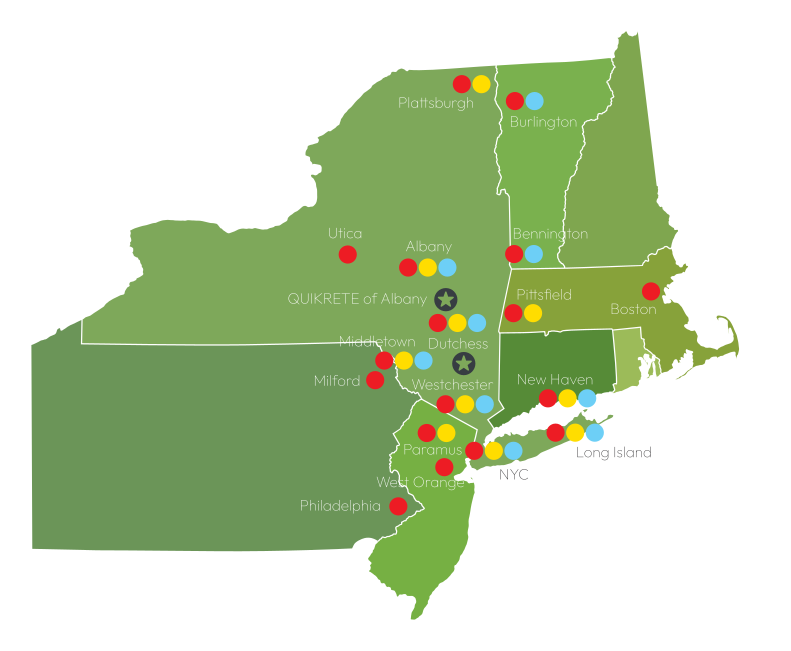
Legend
Package Pavement has two convenient locations in Stormville, NY (Dutchess County) and Ravena, NY (Greene County) to serve the Northeastern Region with bagged concrete, blacktop, mortar, and repair products. This map gives a general idea of where we service and the product lines we offer.
Package Pavement Products
Quikrete Products
Spec Mix Products
map

Our Brands Websites