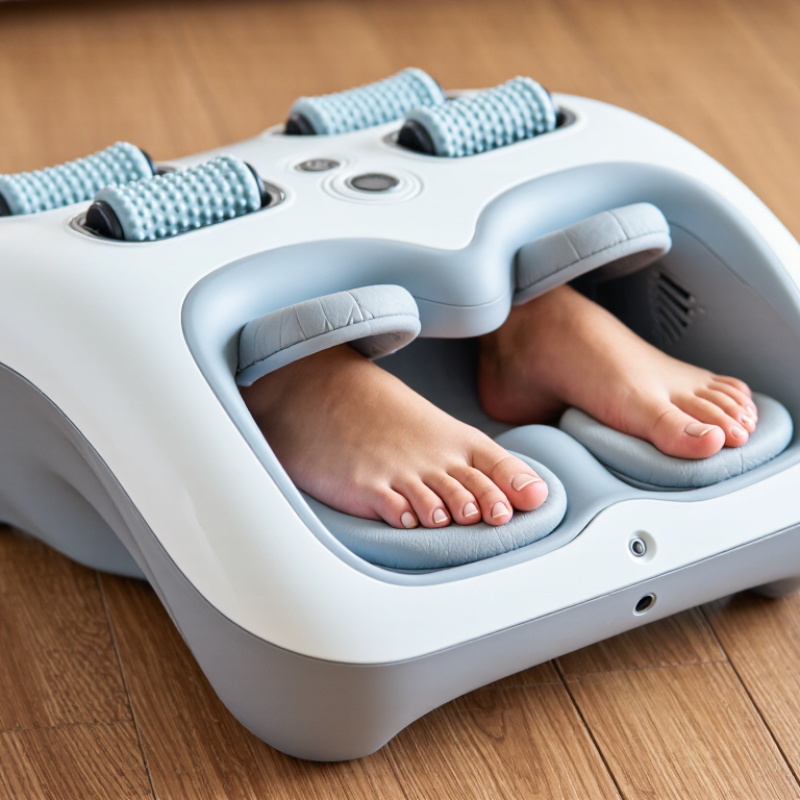
| Heel massager | A device designed to apply mechanical stimulation to the heel and surrounding foot tissues using rolling, kneading, vibration, compression, or a combination of these actions. | Should provide consistent contact without excessive pinching, slipping, or concentrated pressure on one small area. | It may temporarily reduce the sensation of foot fatigue, but it should not be treated as a diagnostic or curative device for an underlying condition. | Generally suitable |
| Rolling or kneading action | Moving rollers or nodes press and release soft tissue in a repeated pattern, creating a massage-like sensation. | Motion should feel smooth and predictable, with no sharp edges, sudden stalls, or abnormal noise. | Start with a short session and low intensity. Stop if there is sharp pain, numbness, bruising, or worsening discomfort. | Useful with control |
| Air compression | Inflatable chambers intermittently squeeze parts of the foot to create rhythmic compression. | The pressure should inflate and release fully, with adjustable intensity and a comfortable fit. | Avoid overly tight compression. People with circulation problems, blood clots, unexplained swelling, or vascular disease should obtain medical advice before use. | Use carefully |
| Vibration | A motor produces rapid, small-amplitude movement that stimulates the skin and superficial tissues. | Effective vibration should be even and controllable rather than excessively forceful or irritating. | Use caution where reduced sensation makes it difficult to detect excessive intensity, heat, or skin irritation. | Use carefully |
| Pressure control | Pressure control includes intensity levels, adjustable air compression, speed settings, or a manual stop function. | A suitable device should allow gradual adjustment, preserve the selected setting, and provide an easy-to-reach stop button. | The strongest setting is not necessarily the most effective. Pressure should remain comfortable and should never cause throbbing, tingling, skin discoloration, or persistent pain. | Essential feature |
| Heat function | Heating elements warm the foot area, which may increase comfort and create a soothing sensation. | Heat should rise gradually, remain moderate, and include automatic shutoff or a separate heat control. | Do not use heat on numb skin or while sleeping. Check the skin regularly because burns can occur even when discomfort is not immediately felt. | Monitor closely |
| Session duration | The length of time the device is used in one session, often controlled by a timer. | A timer and automatic shutoff reduce the chance of prolonged pressure or heat exposure. | A conservative starting approach is a short, low-intensity session. Follow the device instructions and stop if symptoms increase during or after use. | Timer preferred |
| Fit and positioning | The heel should sit in the intended massage zone, with the foot supported and the ankle in a neutral, comfortable position. | The device should remain stable and should not force the heel into an awkward angle or allow the foot to slide during operation. | Do not use a device that causes localized pressure on a wound, blister, inflamed area, or bony prominence. | Important check |
| Skin inspection | Inspect the heel and foot before and after use for redness, abrasions, blisters, swelling, or changes in skin color. | Mild, temporary warmth may occur, but visible damage or prolonged redness indicates that the session should be stopped. | Do not massage open wounds, infected skin, active rashes, burns, or areas with unexplained swelling. | Required practice |
| Reduced sensation | Reduced ability to feel pressure or temperature can occur with certain nerve conditions, diabetes, or other medical problems. | The user may not reliably notice excessive pressure, friction, or heat during operation. | Avoid unsupervised use when sensation is reduced. Seek advice from a qualified healthcare professional before using pressure or heat. | Medical advice |
| Circulation concerns | Compression and massage can affect tissues and blood flow, but they are not substitutes for evaluation of circulatory symptoms. | The device should not cause persistent coldness, pallor, bluish color, unusual swelling, or severe discomfort. | Do not use without medical guidance if there is known peripheral arterial disease, suspected deep-vein thrombosis, unexplained unilateral swelling, or serious vascular disease. | Consult first |
| Inflammation or injury | Mechanical pressure may aggravate an acute injury, significant inflammation, fracture, sprain, or severe heel pain. | A device should never be used to push through acute or progressively worsening pain. | Avoid use over a recent injury or severe swelling until the cause has been assessed by a healthcare professional. | Do not use |
| Pregnancy or complex health conditions | Individual health circumstances may change whether compression, heat, or vigorous massage is appropriate. | There is no single setting that is safe for every user or every medical condition. | Ask a qualified healthcare professional before use when pregnant or when taking medication or managing a condition that affects circulation, sensation, skin integrity, or clotting. | Ask first |
| Electrical and cleaning checks | Electrical components, cables, removable liners, and surfaces should be inspected and maintained according to the instructions. | The unit should have an intact power cord, stable housing, clear controls, and clean, dry contact surfaces. | Keep electrical parts away from water, do not operate with damaged wiring, and unplug the device before cleaning. | Routine check |
| When to stop and seek care | Certain symptoms indicate that the issue may require medical evaluation rather than massage. | Stop immediately for severe pain, new numbness, weakness, marked swelling, skin breakdown, blistering, or a suspected burn. | Prompt medical attention is appropriate for sudden one-sided swelling, significant color or temperature change, chest pain, shortness of breath, or rapidly worsening symptoms. | Stop and assess |