




10 Essential Tips for Perfecting Your Mortar Mix Recipe

Creating the perfect mortar mix is an essential skill for any DIY enthusiast or professional builder. A well-balanced mortar mix ensures strong bonds between bricks and stones. It also enhances durability, weather resistance, and aesthetics in structures. Many struggle to achieve the ideal consistency, which can lead to issues down the line.

Understanding the components of a mortar mix is crucial. This includes knowing the right ratios of sand, cement, and water. Each element plays a significant role in the performance of the mix. Even small mistakes can affect strength and workability. For instance, too much water can weaken the mixture.

Experimenting with different mortar mix recipes is often necessary. Consider adjusting the ratio based on your project requirements. Reflecting on past experiences can provide valuable insights. It’s important to note that not every mix will meet your needs perfectly. Mistakes are opportunities for learning and improvement. By following essential tips, you can refine your technique and achieve a mortar mix that meets your standards.

10 Essential Tips for Perfecting Your Mortar Mix Recipe

Understanding the Basics of Mortar Mix Ingredients

10 Essential Tips for Perfecting Your Mortar Mix Recipe

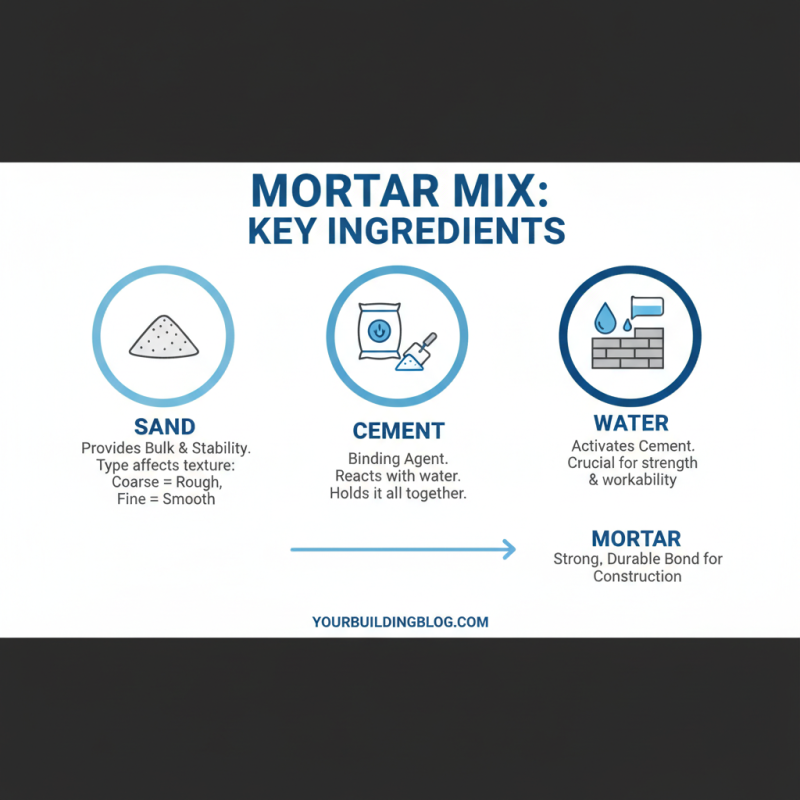
Creating the right mortar mix is crucial for construction projects. Understanding the basic ingredients can make a big difference. Mortar is typically made of sand, cement, and water. Each ingredient plays a vital role. Sand gives bulk and stability. The type of sand can affect the final texture. Coarse sand may lead to a rough mix, while fine sand results in a smoother finish.

Cement is the binding agent. It hardens when mixed with water, providing strength to the mortar. But too much cement can make the mix brittle. Water is necessary for hydration, but too much water can weaken the mix. Finding the right balance is key. Experimenting with ratios can lead to different outcomes. Many may think that following a recipe is enough. However, environmental factors can change everything. Humidity, temperature, and even the type of bricks you use impact the mix’s performance.

It's essential to test your mix before full-scale application. A small batch can reveal issues. Maybe the mix is too thick or too runny. Adjusting the ingredient ratios can help. Pay attention to the texture and workability. A perfect mix might require several attempts. Embrace the learning process. Mortar mixing is as much about science as it is about practice. Understanding your materials can lead to better results.

Choosing the Right Type of Sand for Your Mortar Mix

Choosing the right sand for your mortar mix is crucial. Not all sands are created equal. The type of sand impacts the strength and durability of your mortar. Fine sand may lead to weak mixtures, while coarse sand can produce a rough finish. According to industry reports, using a proper sand-to-cement ratio is essential for optimal results. The recommended ratio typically ranges from 3:1 to 5:1.

Natural sands, often sourced from river beds, provide excellent bonding properties. However, such sands may contain impurities that affect performance. Many project managers have faced issues with contaminated or poorly graded sands, which can weaken the final product. Research indicates that about 30% of construction failures are tied to inferior materials, reinforcing the need for high-quality sand.

It’s also vital to consider the moisture content of sand. Damp sand can lead to inaccurate measurements in your mix. This might cause an uneven consistency in the mortar, leading to ineffective bonding. A study revealed that even slight variations in water content could reduce compressive strength by up to 20%. Regular testing and inspections can help mitigate these risks. Ensuring that your sand is clean and properly graded makes a significant difference in the quality of your mortar mix.

Determining the Ideal Water-to-Cement Ratio

When it comes to mortar mix, the water-to-cement ratio is crucial. This ratio determines the strength and durability of your mix. Too much water can weaken the mix, while too little can lead to brittleness. Striking a balance is essential. Start with the recommended ratio, usually around 0.5 for most mixes, but be ready to adjust based on your materials.

Experimentation can lead to the perfect blend. Testing small batches helps you understand your unique materials. Consider the environment too. High humidity may require less water. Conversely, in dry conditions, a bit more water may be necessary. Pay attention to consistency as well. A workable mix should stick together without being overly soupy.

Reflect on your results. If the mortar cracks or crumbles, revisit the ratio. Each project may demand slight tweaks. Learning from mistakes is part of the process. Observing how your mortar performs in real-world conditions can guide future recipes. Always keep a notebook to track adjustments. With patience and practice, you’ll refine your mortar craft.

10 Essential Tips for Perfecting Your Mortar Mix Recipe

Tip Number Tip Description Ideal Water-to-Cement Ratio
1 Select the appropriate type of cement 0.4 - 0.5
2 Use clean, potable water 0.45
3 Measure materials accurately 0.4
4 Mix thoroughly to achieve uniform consistency 0.5
5 Use additives effectively 0.45
6 Perform a slump test 0.4 - 0.5
7 Consider environmental conditions 0.45
8 Cure the mortar adequately 0.5
9 Avoid over-mixing 0.4
10 Test the mix before full application 0.5

Incorporating Additives for Enhanced Mortar Performance

10 Essential Tips for Perfecting Your Mortar Mix Recipe

Incorporating additives into your mortar mix can significantly enhance its performance. A 2020 study highlighted that the inclusion of specific polymers can improve adhesion by up to 30%. This boosts overall durability and resistance to environmental stress. Choosing the right additives is crucial for optimal results. For example, plasticizers help to maintain workability in wet conditions.

Another area to explore is the use of fibers in mortar mixes. Fibers can reduce cracking and improve tensile strength. Research indicates that using polypropylene fibers can decrease shrinkage cracks by approximately 50%. However, it’s important to experiment with the correct proportions. Adding too much could lead to a brittle mix. Each ingredient plays a vital role in the outcome.

One must also consider the local climate and application. A mix that works well in humid regions may not perform similarly in arid areas. Regularly testing your mortar mix with additives will help fine-tune performance. It's a process of trial and error, requiring careful observation and adjustment.

Techniques for Mixing Mortar to Achieve the Perfect Consistency

Achieving the perfect mortar mix requires a keen understanding of consistency. According to a report by the International Masonry Institute, the right blend can significantly enhance adhesion and durability. A common ratio for a standard mix is 1 part cement to 3 parts sand. However, many inexperienced mixers often stray from this guideline, resulting in a mix that lacks workability.

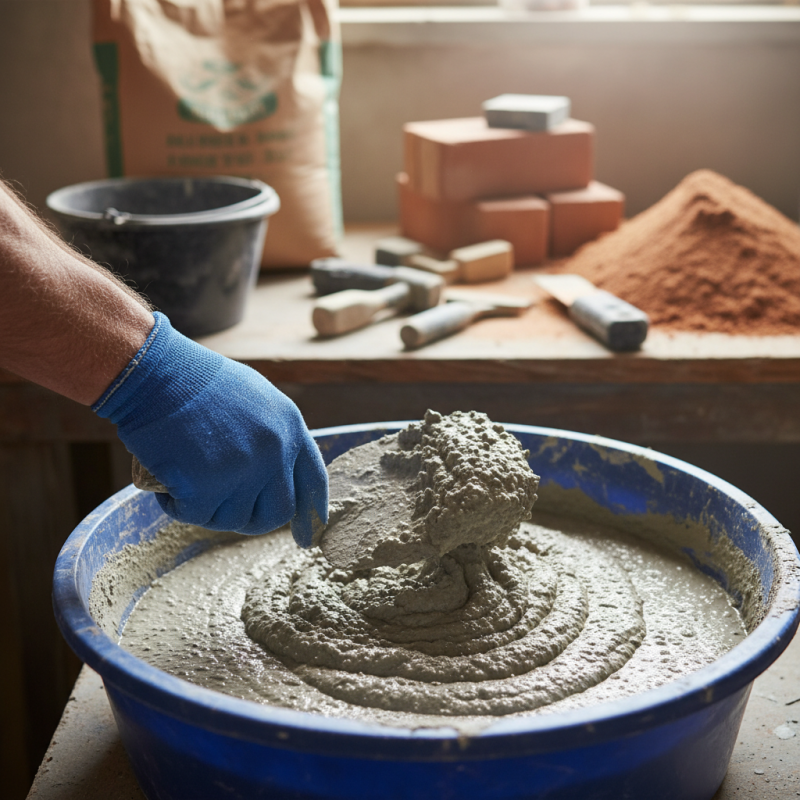
When mixing mortar, it’s crucial to observe the texture. The mortar should hold together without being too dry or too watery. Aim for a consistency similar to peanut butter. This texture allows ease of application and ensures that it bonds well with bricks or stones. The water content can often be the culprit when mixes fail. Too much water can lead to shrinkage cracks, while too little can make the mix difficult to work with.

Additionally, temperature and humidity play key roles in the mixing process. In extreme heat, mortar may dry too quickly, compromising its strength. A report from the American Concrete Institute suggests adjusting the water volume based on environmental conditions. Reflection on these factors is essential. Misjudgments can lead to subpar masonry work. Therefore, consistent practice and attention to detail can help you refine your mixing technique over time.

Mortar Mix Consistency Analysis

Find the Right Repair Product for Your Project

Need to find the most appropriate product for the needs of your project? We can help because we have over 70 years of experience servicing the industry with every kind of project, from Do-it-yourself projects to large skyscrapers. Package Pavement has the experience, the knowledge and the products to help every project succeed.

Quikrete Repair Products
Legend
Package Pavement has two convenient locations in Stormville, NY (Dutchess County) and Ravena, NY (Greene County) to serve the Northeastern Region with bagged concrete, blacktop, mortar, and repair products. This map gives a general idea of where we service and the product lines we offer.
Package Pavement Products
Quikrete Products
Spec Mix Products
map

Our Brands Websites