



5 Essential Tips for Effective Mortar Repair: A Homeowner's Guide

In the realm of home maintenance, effective mortar repair is a critical aspect that ensures the longevity and structural integrity of buildings. According to a report by the National Association of Home Builders, approximately 30% of a home's structural issues stem from deteriorating mortar joints. This emphasizes the importance of addressing mortar repair not only as a cosmetic necessity but as a fundamental element of home preservation.

Industry expert Dr. Alice Bennett, a renowned materials scientist specializing in masonry, states, “Proper mortar repair techniques can extend the life of a structure by decades and improve its resistance to environmental factors.” This highlights the need for homeowners to equip themselves with the knowledge and skills required for effective mortar repair. With the right approach, homeowners can prevent minor issues from escalating into costly repairs, safeguarding their investment and maintaining the aesthetic value of their properties.

In this guide, we will delve into the five essential tips for effective mortar repair, providing homeowners with practical insights and strategies to tackle this important task confidently. By understanding the techniques and materials involved, you can ensure that your home remains safe and visually appealing for years to come.

5 Essential Tips for Effective Mortar Repair: A Homeowner's Guide

Understanding Different Types of Mortar for Repair Projects

When embarking on a mortar repair project, understanding the different types of mortar available is crucial for achieving a durable and effective result. Generally, mortars can be categorized into three main types: Type N, Type S, and Type M. Type N mortar is the most versatile option, suitable for above-grade exterior walls and interior walls. It has a moderate compressive strength, making it an excellent choice for projects where flexibility is required.

Meanwhile, Type S mortar offers greater strength and is often used in situations that endure low lateral load, such as in exterior walls exposed to the elements, providing added durability.

Type M mortar, the strongest of the three, is typically utilized in load-bearing applications or for structures where substantial strength is necessary, such as in foundations or retaining walls.

It’s important for homeowners to select the mortar type according to the specific demands of their repair project. Factors like environmental exposure, load requirements, and whether the repair is structural or non-structural will guide the choice.

Additionally, homeowners should consider the mix proportions, as these can significantly affect the mortar's performance and longevity. Understanding these types forms the foundation upon which successful mortar repairs can be built, ensuring the integrity and aesthetics of the home are preserved.

Identifying Common Issues That Require Mortar Repair

5 Essential Tips for Effective Mortar Repair: A Homeowner's Guide

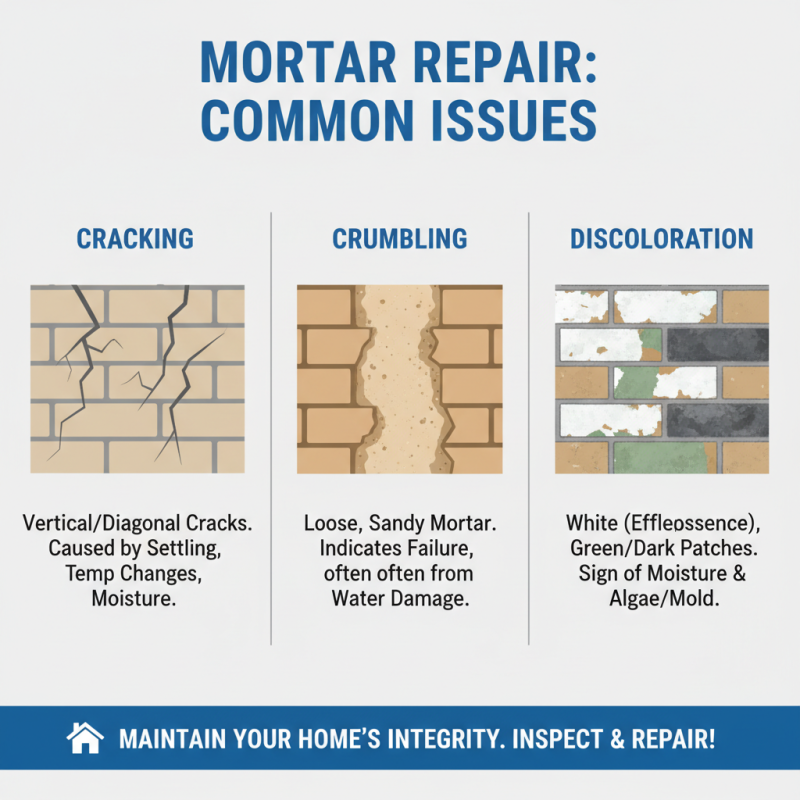
Identifying common issues that require mortar repair is crucial for maintaining the integrity of your home. One of the most frequent problems homeowners encounter is cracking in the mortar joints. These cracks can develop due to natural settling of the building, temperature fluctuations, or moisture infiltration. Observing vertical or diagonal cracks can indicate that the structural integrity is compromised, suggesting it's time for repair. Additionally, if you notice that the mortar is crumbling or has become discolored, this suggests that it may be failing, particularly if caused by water damage.

Another sign that your mortar may need attention is the presence of efflorescence, which appears as white, powdery stains on the surface of the mortar. This is caused by excess moisture in the wall, which carries soluble salts to the surface as it evaporates. If left unaddressed, efflorescence can lead to more serious water damage issues. Furthermore, loose or missing mortar between bricks or stones can compromise your home’s stability and appearance. By promptly identifying these issues and understanding their causes, you can take proactive steps to repair damaged mortar, ensuring the safety and aesthetic appeal of your property.

Essential Tools and Materials for Effective Mortar Repair

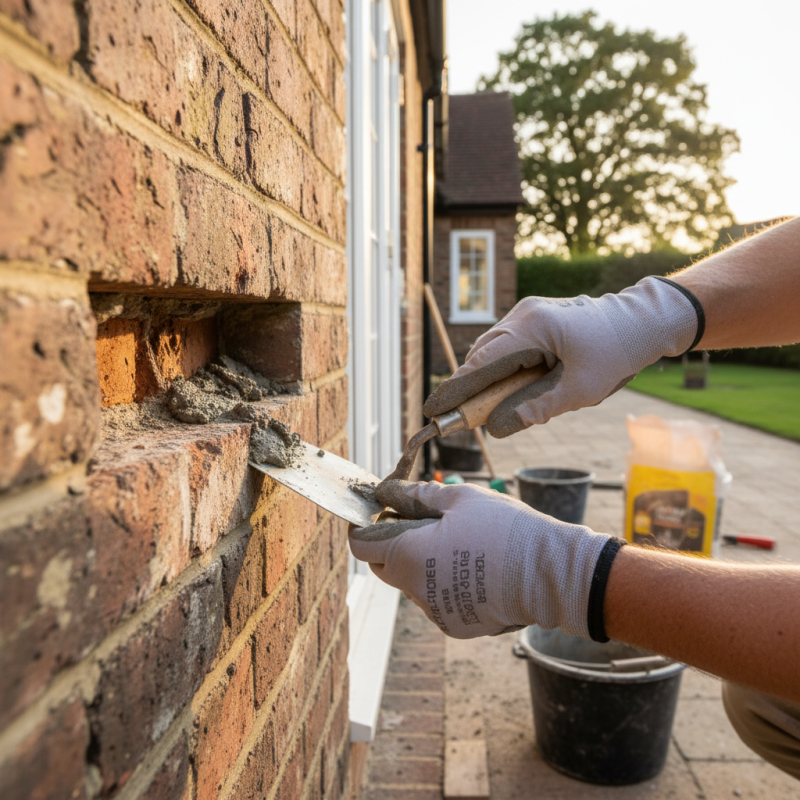
When it comes to effective mortar repair, having the right tools and materials is crucial for achieving durable and aesthetically pleasing results. First and foremost, a quality trowel is essential for applying and smoothing the mortar. A pointing trowel can help shape and press the mortar into joints, ensuring a tight fit that prevents future damage. Additionally, a mixing paddle attached to a power drill is invaluable for achieving the perfect consistency when preparing your mortar mix, making it easier to apply and less prone to cracking.

Other necessary materials include high-quality mortar mix, which comes in different formulations depending on the project requirements. For instance, a sanded mortar might be best for brick repairs, while a non-sanded mix could be ideal for tile work. Don’t forget about protective gear such as gloves and safety goggles to ensure a safe working environment. Finally, a joint knife or scraper is useful for removing old, crumbling mortar to prepare the area for a fresh application. Collecting these essential tools and materials ahead of time can streamline the repair process and help homeowners tackle mortar issues with confidence.

Step-by-Step Guide to Preparing and Applying Mortar

Preparing and applying mortar for repairs is a straightforward process if you follow the right steps. Begin by gathering your materials: mortar mix, water, a mixing container, trowel, and a grout float. Before you start mixing, ensure the surface area you are working on is clean and free from loose debris. Remove any crumbling mortar and dampen the surface slightly with water to promote adhesion.

Once the surface is prepped, mix your mortar according to the manufacturer's instructions, aiming for a consistency that allows for easy application without being too runny. Use your trowel to apply the mortar into the joints or areas requiring repair, making sure to push it in firmly to eliminate any air pockets. Smooth the surface with a grout float to ensure uniformity and ensure that the mortar is flush with the surrounding area.

Allow the mortar to cure appropriately, following the time guidelines provided in the instructions, to achieve a strong and durable repair.

Best Practices for Curing and Maintaining Mortar Repairs

When it comes to mortar repair, proper curing techniques are crucial to ensure the longevity and durability of the repairs. After applying new mortar, it's vital to keep it consistently moist for an optimal curing period, which usually lasts about 48 to 72 hours. Using a fine mist spray or damp cloth can help maintain humidity levels. Avoid allowing the repaired area to dry out too quickly, as this can lead to cracking and weakened bonds. Covering the area with plastic sheeting or wet burlap can also aid in retaining moisture during the curing process.

Maintenance of mortar repairs doesn’t stop after curing; regular inspections and proactive care can greatly extend the lifespan of your work. Look for signs of wear, such as loose particles or hairline cracks, and address them as soon as possible. Additionally, applying a breathable sealant can help protect the mortar from moisture infiltration and environmental stressors. Regular cleaning to remove dirt and other debris will also prevent premature aging and damage. By following these best practices for curing and maintenance, homeowners can ensure their mortar repairs stay strong and resilient for years to come.

5 Essential Tips for Effective Mortar Repair: A Homeowner's Guide - Best Practices for Curing and Maintaining Mortar Repairs

Tip Number Tip Description Best Practices Recommended Curing Time
1 Choose the Right Mortar Mix Match the mortar type to the existing structure. 24 hours
2 Prepare the Surface Properly Clean and dampen the area before application. 1 hour
3 Mix Mortar to the Right Consistency Avoid too thick or too runny mixes. Immediate application
4 Apply Mortar at the Right Temperature Ideal temperature is between 50°F to 90°F. 3 days
5 Cure the Mortar Correctly Keep it moist and covered for several days. 7 days
Find the Right Repair Product for Your Project

Need to find the most appropriate product for the needs of your project? We can help because we have over 70 years of experience servicing the industry with every kind of project, from Do-it-yourself projects to large skyscrapers. Package Pavement has the experience, the knowledge and the products to help every project succeed.

Quikrete Repair Products
Legend
Package Pavement has two convenient locations in Stormville, NY (Dutchess County) and Ravena, NY (Greene County) to serve the Northeastern Region with bagged concrete, blacktop, mortar, and repair products. This map gives a general idea of where we service and the product lines we offer.
Package Pavement Products
Quikrete Products
Spec Mix Products
map

Our Brands Websites