

Top 10 Essential Tips for Effective Cement Repair at Home

When it comes to maintaining the structural integrity of your home, proper cement repair is crucial. According to the American Concrete Institute, over 70% of structures built with concrete experience some level of deterioration, emphasizing the need for timely and effective repair techniques. Not only does neglected cement damage pose safety risks, but it can also lead to costly repairs down the road. With home improvement spending projected to exceed $400 billion in the coming year, homeowners are increasingly seeking efficient and economical solutions for preserving their properties.

Understanding the essential aspects of cement repair is not just helpful, but necessary for anyone aiming to maintain a safe and aesthetically pleasing home environment. Research from the National Association of Home Builders indicates that nearly 60% of homeowners encounter issues with their home's foundation or exterior surfaces; thus, mastering the art of cement repair can significantly enhance one’s property value. This guide will delve into the top 10 essential tips for effective cement repair at home, ensuring that you are equipped with the knowledge to tackle any concrete maintenance project with confidence.

Top 10 Essential Tips for Effective Cement Repair at Home

Understanding the Common Causes of Cement Damage in Residential Settings

Cement damage in residential settings often stems from several common causes that homeowners should be aware of. One significant factor is moisture infiltration, which can lead to cracks and spalling when water seeps through the cement and freezes, expanding and causing structural weakness. Additionally, poor drainage systems can exacerbate this issue, allowing water to pool around foundations and cause deterioration over time. It’s essential to inspect gutters and downspouts regularly to ensure they direct water away from your home effectively.

Another prevalent cause of cement damage is the use of substandard materials during construction or repair. Low-quality cement or improper mixing can result in a weaker bond, making your surfaces more susceptible to damage from temperature fluctuations and heavy loads. Furthermore, environmental factors such as extreme heat, cold, and salt exposure can also contribute to the deterioration of cement over time. Understanding these causes allows homeowners to take proactive measures, ensuring that their cement structures remain durable and aesthetically pleasing.

Essential Tools and Materials for Efficient Home Cement Repair

When embarking on a cement repair project at home, having the right tools and materials is crucial for efficiency and effectiveness. A well-equipped toolbox can significantly enhance the success rate of any repair venture. According to the Portland Cement Association, more than 80% of residential cement projects fail due to improper materials or inadequate tools. Essential tools such as a concrete mixer, trowels, and floaters are fundamental. A concrete mixer ensures a consistent and smooth mix, while trowels are necessary for shaping and leveling the surface.

In addition to tools, selecting the appropriate materials is equally important. High-strength concrete mixes, for instance, are designed to withstand heavy loads and can reduce future repair needs. The American Concrete Institute notes that using quality materials can extend the lifespan of your repairs by up to 50%. Other essential materials include sealants and bonding agents that enhance adhesion and waterproofing. Together, these tools and materials create a solid foundation for any cement repair project, increasing both durability and aesthetic appeal in your home.

Top 10 Essential Tips for Effective Cement Repair at Home

Tip Number Tip Description Essential Tools Recommended Materials
1 Clean the area thoroughly before starting. Wire brush, vacuum Concrete cleaner
2 Identify the type of damage to determine repair method. None N/A
3 Use a patching compound for smaller cracks. Putty knife, trowel Patching compound
4 For larger cracks, use hydraulic cement. Trowel, mixing bucket Hydraulic cement
5 Ensure proper moisture before applying cement. Spray bottle Water
6 Mix the cement according to package instructions. Mixing paddle, drill Cement mix
7 Apply cement smoothly and level it off. Trowel, float N/A
8 Allow adequate drying time as per instructions. Timer None
9 Seal the repaired area to prevent future damage. Paintbrush or roller Waterproof sealant
10 Regularly inspect and maintain cement surfaces. None N/A

Step-by-Step Guide to Preparing the Surface for Cement Repair

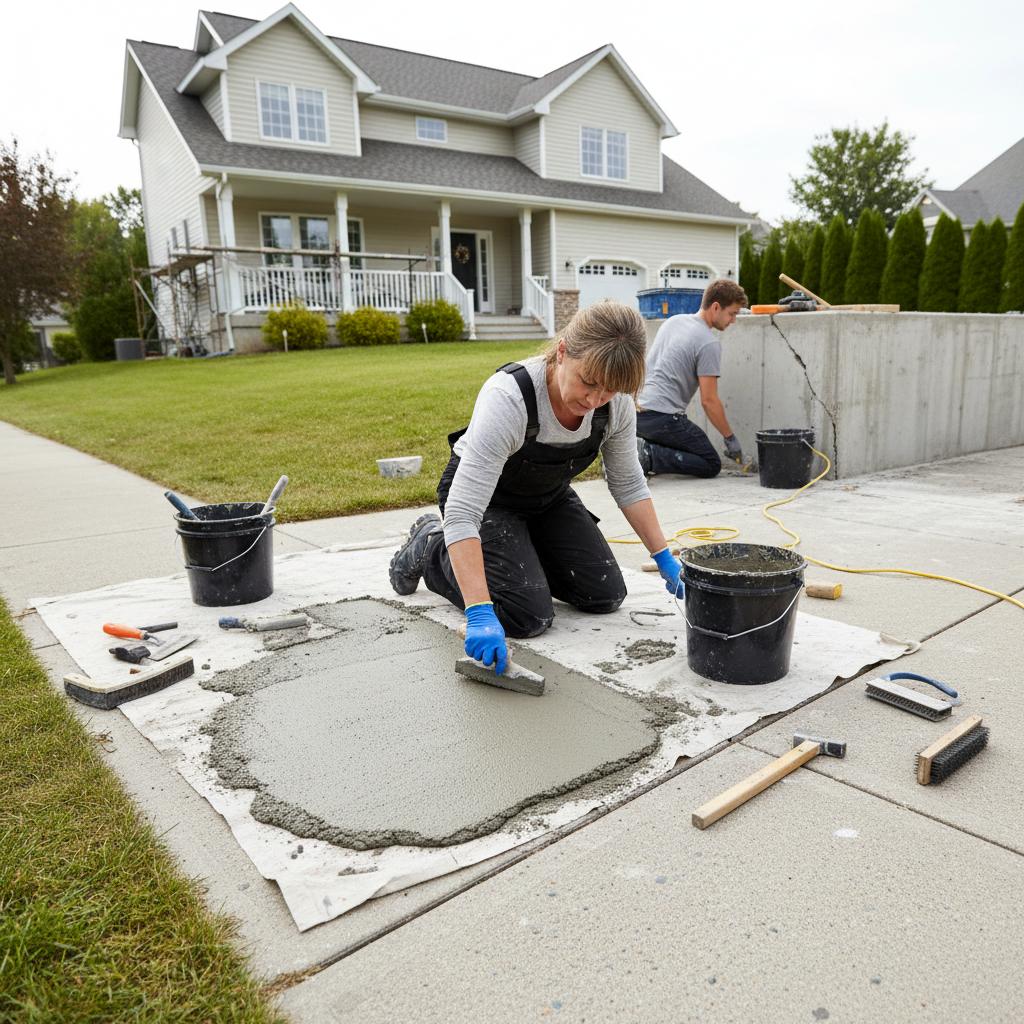
When it comes to effective cement repair at home, the preparation of the surface is crucial for achieving a long-lasting result. Start by assessing the area that needs repair. Remove any loose or deteriorating material using a chisel and hammer to expose a clean, stable foundation. This initial step is essential to ensure that the new cement adheres properly and does not crack shortly after application.

Next, clean the surface thoroughly. Use a wire brush to eliminate dirt, dust, and debris, which can prevent the new cement from bonding effectively. Depending on the extent of the damage, a pressure washer may be beneficial for deep cleaning, especially in outdoor areas. Once cleaned, allow the surface to dry completely. Moisture trapped beneath the cement can lead to future issues, so waiting for a dry surface will enhance the effectiveness of your repair.

Before applying the new cement mix, consider dampening the surface lightly. This helps to prevent the existing substrate from drawing moisture out of the fresh cement too quickly, which can weaken the bond. Finally, follow the manufacturer's instructions regarding the application techniques and curing times to maximize the longevity of your repair. Proper preparation is key to a successful outcome.

Top 10 Essential Tips for Effective Cement Repair at Home

Best Practices for Mixing and Applying Cement for Longevity

Top 10 Essential Tips for Effective Cement Repair at Home

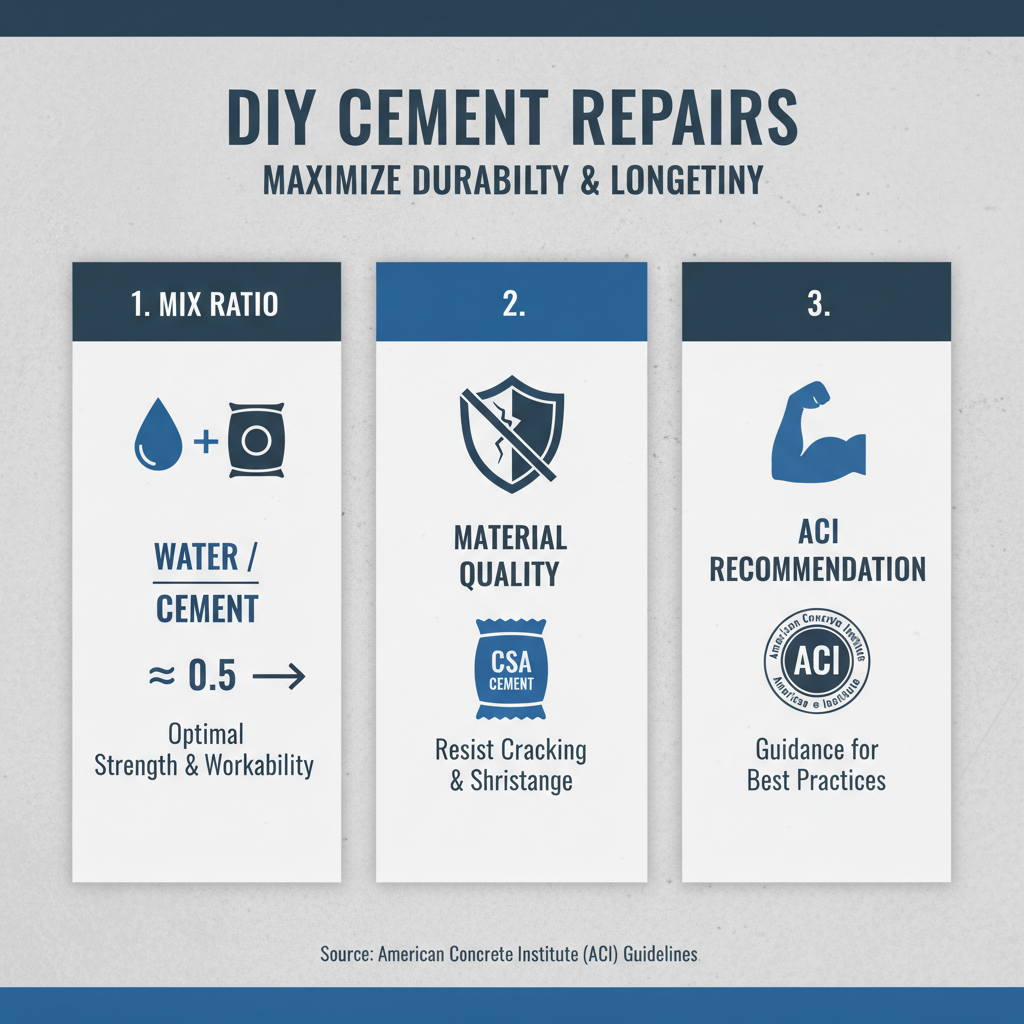
When embarking on cement repairs at home, understanding the best practices for mixing and applying cement can significantly enhance durability and longevity. According to the American Concrete Institute (ACI), the correct water-to-cement ratio is crucial; a ratio of about 0.5 is generally recommended for achieving optimal strength without sacrificing workability. Additionally, using quality materials, such as CSA (calcium sulfoaluminate) cements, can improve resistance to cracking and shrinkage, extending the life of repairs.

Properly mixing cement not only involves the right ratios but also the method of blending the ingredients. ACI reports indicate that using a mechanical mixer can achieve a more homogenous mix compared to manual mixing. This uniformity is essential for ensuring that the concrete sets evenly, reducing the risk of weak points that can lead to future damage. Furthermore, applying a bonding agent can enhance the adhesion of the new cement to existing structures, a practice that ACI stresses for successful cement repair outcomes. Following these best practices not only optimizes the repair process but also ensures that the results stand the test of time, protecting your home for years to come.

Curing Methods to Ensure Strong and Durable Cement Repairs

Curing methods are critical for ensuring strong and durable cement repairs. A study found that curing concrete properly can reduce the risk of cracking significantly, enhancing its lifespan and structural integrity. Research indicates that high-quality curing methods can improve the compressive strength of concrete by up to 50% compared to poorly cured specimens, demonstrating the importance of ensuring adequate moisture and temperature control during the curing process.

Innovative solutions in concrete technology, such as self-healing concrete, are revolutionizing the industry. For example, scientists have engineered concrete that uses bacteria like Bacillus subtilis to autonomously repair cracks, offering a sustainable approach to maintaining and enhancing durability. This breakthrough could change how we perceive cement repairs at home, with the potential to mitigate common issues like cracking and water ingress. Additionally, researchers have explored AI-designed self-healing concrete that can address pavement wear, potentially leading to roads that require less maintenance over time. These advancements highlight the evolving nature of cement repair techniques and the importance of adopting modern methodologies for better results.

Find the Right Repair Product for Your Project

Need to find the most appropriate product for the needs of your project? We can help because we have over 70 years of experience servicing the industry with every kind of project, from Do-it-yourself projects to large skyscrapers. Package Pavement has the experience, the knowledge and the products to help every project succeed.

Quikrete Repair Products
Legend
Package Pavement has two convenient locations in Stormville, NY (Dutchess County) and Ravena, NY (Greene County) to serve the Northeastern Region with bagged concrete, blacktop, mortar, and repair products. This map gives a general idea of where we service and the product lines we offer.
Package Pavement Products
Quikrete Products
Spec Mix Products
map

Our Brands Websites