China Top Tube Benders Manufacturers How to Choose?

Choosing among China’s top Tube Benders manufacturers requires more than comparing prices or browsing polished factory websites. The real question is simple: can the machine produce accurate bends repeatedly, under your actual production conditions?

“Reliable bending begins with repeatable control, not impressive specifications,” says tube-forming engineer Michael Reed. This practical observation matters when evaluating Chinese suppliers. A machine may promise high speed, but your workshop may need stable results on stainless steel, aluminum, or thin-wall tubing. Check the material range, tube diameter, wall thickness, bending radius, and maximum production length.

Ask manufacturers for sample parts made from your own tubes. Inspect the ovality, surface marks, springback, and dimensional consistency. A clean-looking sample proves little if it was produced slowly by a senior technician. Request cycle-time data from repeated tests.

Control systems deserve close attention. Confirm whether the Tube Benders use CNC or NC control, and identify the software’s compatibility with your drawings. Ask about tooling changes, angle compensation, remote support, spare parts, and operator training. These details often decide whether a machine earns money or creates delays.

Factory audits can reveal useful facts. Look at calibration records, welding quality, assembly areas, and finished-machine testing. However, a visit is not a guarantee. I have seen attractive workshops hide weak after-sales systems. That part is easy to underestimate.

Compare total ownership cost, not only the quotation. Include tooling, shipping, installation, maintenance, electricity, and downtime. The cheapest supplier may become expensive after one failed production week. Choose a manufacturer that documents limitations honestly. That is less exciting, but usually more trustworthy.

China Top Tube Benders Manufacturers How to Choose?

Classifying Tube Benders by Tube OD, Bend Radius, and Number of Axes

China Top Tube Benders Manufacturers: How to Choose?

Tube benders are easier to compare when classified by tube outside diameter (OD). Small machines may handle thin tubes for furniture, heat exchangers, or light frames. Heavy-duty models can process larger steel or stainless-steel tubes. Check the maximum OD, wall thickness, material strength, and ovality control. A stated capacity alone can mislead. A 50 mm tube may bend well in thin aluminum but struggle with thick stainless steel.

Bend radius is equally important. A tight radius saves space but demands stronger tooling and better material control. For example, a 25 mm tube with a 30 mm centerline radius needs more precision than a gentle 75 mm radius.

Ask whether the quoted radius is measured to the centerline, inside wall, or outside wall. This detail is often overlooked. Request sample bends from the manufacturer and inspect wrinkles, flattening, and springback.

The number of axes shows how much automation and flexibility the machine provides.

Two-axis equipment may suit repeated single-plane bends. Three-axis or multi-axis systems can control rotation, feeding, and bending with fewer manual adjustments. More axes do not always mean better production. They can increase programming time, maintenance needs, and operator training.

During evaluation, check actual cycle time, tool-change procedures, software support, and service response. I would also verify accuracy after several hundred bends, not only after a clean showroom demonstration.

Auditing Chinese Suppliers Against GB/T 26955, ISO 9001, and CE

China Top Tube Benders Manufacturers: How to Choose?

When auditing Chinese tube bender suppliers, verify compliance rather than trusting catalog claims. GB/T 26955 should be checked against the machine’s exact type, application, and current edition. Request test records for bending accuracy, repeatability, surface damage, and tube ovality. During a factory visit, watch a trial bend using your material, wall thickness, and target radius. Inspect welds, guides, tooling alignment, and emergency-stop functions. Small deviations can become expensive production defects.

ISO 9001 shows whether a supplier controls its quality system. Review process documents, incoming inspection records, calibration certificates, corrective-action reports, and staff training logs. Ask how rejected parts are isolated. A certificate alone is not enough. CE compliance also requires careful verification. The supplier should identify applicable EU directives, complete a risk assessment, prepare technical documentation, and issue a valid Declaration of Conformity. Check whether the delivered configuration matches those documents. An impressive showroom proves little.

Tips: Use a written audit checklist and score every supplier consistently. Ask for three recent production records, not selected samples. Confirm certificate numbers with the issuing body when possible. Measure five consecutive bends during acceptance testing. Record springback and dimensional results. Leave room for doubt. Even experienced auditors can miss undocumented software changes or outdated drawings. A second technical review is often worthwhile.

Comparing Performance: ±0.1° Accuracy and ±0.05 mm Repeatability

When choosing a Chinese tube bender, compare measured performance, not brochure claims. A ±0.1° bending accuracy can control visible angle variation on short elbows. However, repeatability matters more during repeated production. A ±0.05 mm repeatability target helps maintain tube length, clamp position, and fixture alignment. These figures should be verified across multiple cycles, not one successful sample.

The International Federation of Robotics reported 541,302 industrial robot installations worldwide in 2023, a 10% annual increase. This growth reflects stronger demand for stable, automated manufacturing. It does not prove every bender can hold tight tolerances. Ask suppliers for test reports using calibrated angle gauges, laser measurement, or coordinate measuring machines. ISO 230-2:2014 also stresses defined measurement conditions and positioning-error evaluation. Material hardness, wall thickness, lubrication, and springback can still change results. That assumption is easy, and often wrong.

During factory evaluation, request a trial using your actual tube grade and diameter. Check at least 30 repeated bends, then inspect the first and last parts. Record angle deviation, end-length variation, tooling changes, and machine temperature. I would also review maintenance records and calibration intervals. A polished report can hide unstable production. Sometimes a slightly slower machine delivers better repeatability than a faster model. Performance should be judged beside real samples, not impressive numbers alone.

Assessing Capacity: Wall Thickness, CLR, Cycle Time, and Tooling Range

Choosing a top tube bender manufacturer requires measurable capacity, not polished photographs. Request documented ranges for outside diameter, wall thickness, and material type. A machine bending 50 mm stainless steel tube may handle only 2 mm wall thickness reliably. Ask for actual sample results, including ovality, wrinkles, and springback. Thin-wall work demands controlled pressure dies and accurate mandrel positioning.

CLR, or centerline radius, also reveals practical capability. A tight CLR can require rotary-draw control, advanced tooling, and slower acceleration. Confirm the smallest radius for each tube size, not one impressive specification. Cycle time matters too. A supplier should state whether its cycle time includes loading, clamping, bending, unloading, and tool repositioning. A ten-second claim may exclude manual handling.

Tooling range often exposes hidden costs. Check whether the manufacturer supports round, square, and rectangular sections, plus different bend directions. Ask how quickly dies, mandrels, and pressure tooling can be changed. A five-minute changeover sounds useful, but production data should support it. Inspect test parts from your own material and wall thickness. One overlooked variable can distort the result. I would also review maintenance records, operator training, and measurement reports. Capacity tables are helpful, but they are not proof. A careful trial remains necessary.
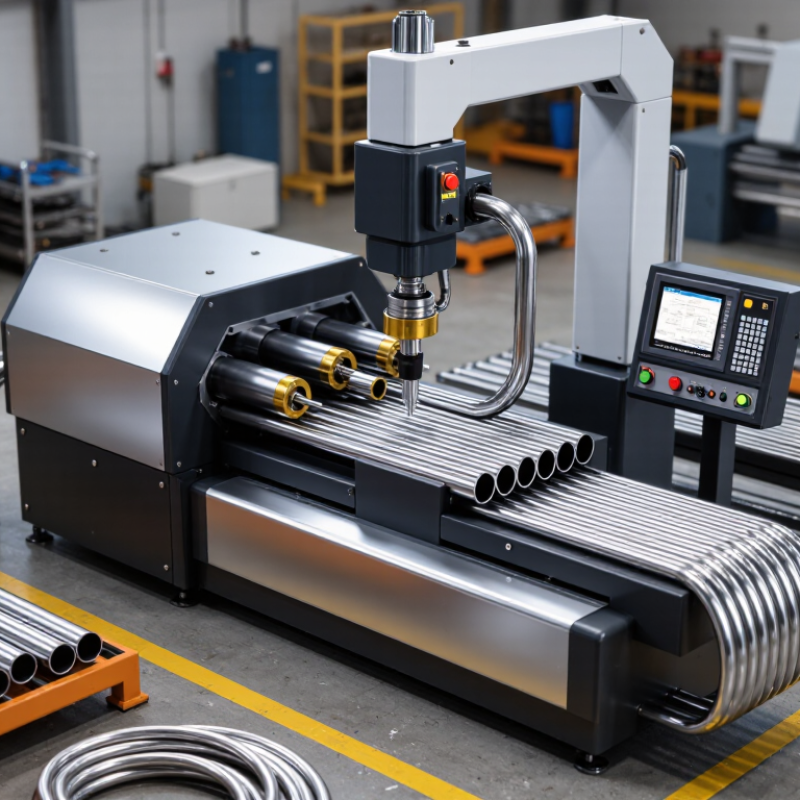

Choosing by Total Cost, Warranty, Service Response, and ROI

China Top Tube Benders Manufacturers How to Choose?

When comparing Chinese tube bender manufacturers, the purchase price is only the visible number. Practical factory evaluations should include tooling, shipping, installation, training, spare parts, energy use, and scheduled maintenance. Ask for a detailed total-cost sheet, not a polished quotation. A machine priced 10% lower may require custom tooling or longer commissioning time. That difference can quickly disappear.

Warranty language needs careful reading. Confirm coverage for the control system, motor, hydraulics, tooling, and labor. Check whether international service is included or billed separately. A useful agreement states response times, remote diagnosis procedures, replacement-part availability, and escalation contacts. Request recent service records and speak with comparable users. Their comments about missed deadlines may be more valuable than a sales presentation. Small details matter.

ROI should connect machine performance with real production data. Compare cycle time, bend accuracy, scrap rate, setup time, and operator requirements against your current process. Request sample bending trials using your tube material, diameter, wall thickness, and required radii. Measure the results independently. Be cautious with optimistic output claims; production floors are rarely perfect. I have seen estimates fail because changeover time was ignored. Recalculate ROI with conservative utilization, unexpected downtime, and exchange-rate changes. A reliable manufacturer will discuss these weaknesses openly and provide test evidence rather than promising effortless savings.

China Top Tube Benders Manufacturers: How to Choose by Total Cost, Warranty, Service Response, and ROI
Supplier Profile Typical Machine Configuration Maximum Tube OD Bending Accuracy Estimated Purchase Price Tooling & Accessories Freight, Installation & Training 3-Year Maintenance Budget 3-Year Total Cost of Ownership Warranty Initial Service Response Estimated Annual Operating Benefit 3-Year ROI Estimated Payback
Entry-Level CNC 3-axis CNC electric bender
For light and medium production
38 mm ±0.5° US$18,000 US$2,500 US$2,800 US$4,500 US$27,800 12 months Within 48 hours US$21,000 126.6% 15.9 months
Standard Production 5-axis CNC electric bender
Automatic feeding and rotation
60 mm ±0.35° US$32,000 US$4,000 US$4,200 US$6,000 US$46,200 18 months Within 36 hours US$32,000 107.8% 17.3 months
High-Precision CNC 8-axis CNC bender
Servo-controlled mandrel and booster
80 mm ±0.25° US$48,000 US$6,000 US$5,500 US$8,000 US$67,500 24 months Within 24 hours US$48,000 113.3% 16.9 months
Heavy-Duty Production Multi-stack CNC bender
For automotive and industrial tubing
100 mm ±0.20° US$72,000 US$9,000 US$7,000 US$11,000 US$99,000 24 months Within 24 hours US$68,000 106.1% 17.5 months
Automated Cell Fully integrated CNC bending cell
Robotic loading, inspection, and unloading
120 mm ±0.15° US$110,000 US$14,000 US$9,500 US$16,000 US$149,500 36 months Within 12 hours US$95,000 90.6% 18.9 months
Evaluation basis: Costs are benchmark estimates in USD for comparison purposes and include machine purchase, standard tooling, delivery-related expenses, training, and scheduled maintenance over three years. ROI is calculated as [(Annual Operating Benefit × 3) − 3-Year Total Cost of Ownership] ÷ 3-Year Total Cost of Ownership × 100. Actual results depend on tube material, labor rates, production volume, tooling requirements, energy consumption, local taxes, and negotiated warranty terms.

Article Source:

Find the Right Repair Product for Your Project

Need to find the most appropriate product for the needs of your project? We can help because we have over 70 years of experience servicing the industry with every kind of project, from Do-it-yourself projects to large skyscrapers. Package Pavement has the experience, the knowledge and the products to help every project succeed.

Quikrete Repair Products
Legend
Package Pavement has two convenient locations in Stormville, NY (Dutchess County) and Ravena, NY (Greene County) to serve the Northeastern Region with bagged concrete, blacktop, mortar, and repair products. This map gives a general idea of where we service and the product lines we offer.
Package Pavement Products
Quikrete Products
Spec Mix Products
map

Our Brands Websites