How to Choose a US DDP Freight Forwarder?

Choosing a US DDP Freight Forwarder can shape the entire customer experience, not just the shipping cost. A dependable partner manages transport, customs coordination, duties, taxes, delivery, and communication through one structured process. The right choice should reflect your product type, sales channel, delivery locations, and expected order volume.

Look beyond a low quotation. Ask how the forwarder calculates landed costs, verifies shipment data, and handles unexpected delays. Request a clear breakdown covering pickup, international freight, customs services, duties, taxes, storage, and final-mile delivery. A practical test can help: send a sample carton with a known weight, dimensions, invoice value, and destination. Then compare the promised timeline with the actual tracking updates.

Experience matters here. A capable provider should explain common clearance issues in plain English, provide responsive support, and maintain reliable records. Check its service history, warehouse capabilities, insurance terms, and communication process. References from similar businesses are useful, especially when they describe real delivery problems and how the forwarder solved them.

No checklist is perfect. Product classification, seasonal congestion, incomplete documents, and address errors can still affect results. That is why honest communication matters more than confident promises. A trustworthy US DDP Freight Forwarder will identify uncertainties early and explain what it can and cannot control. Before signing, review the service agreement carefully, confirm responsibility for each charge, and test the support channel. Small details matter. Your customers will notice.

How to Choose a US DDP Freight Forwarder?

Define the Role and Scope of a US DDP Freight Forwarder

How to Choose a US DDP Freight Forwarder?

Define the Role and Scope of a US DDP Freight Forwarder

Choosing a US DDP freight forwarder starts with defining the job. The forwarder coordinates export booking, ocean or air transport, customs entry, duty payment, and final delivery. Under DDP, the seller carries the cost and risk until goods reach the named destination. That scope must appear in writing. A forwarder is not automatically the importer of record. The contract should identify who provides the importer number, customs bond, product data, and tax documents. Without this detail, a delivery promise may look complete but leave clearance responsibility unclear.

A reliable forwarder checks commercial invoices, packing lists, tariff classifications, and country-of-origin information before departure. They should explain possible duties, processing fees, and local delivery charges in plain language. Ask for milestone updates, such as container release, customs status, and appointment time. Real experience matters here. A warehouse scan or delivery photo can resolve disputes quickly. Still, estimates are not guarantees. Tariff changes, inspections, missing data, or an incorrect address can change the final cost.

I would compare a forwarder’s written process, response time, insurance terms, and claims procedure. Do not select only by the cheapest DDP quote. One overlooked fee can erase the saving. It is also wise to test the service with a small, low-risk shipment. Review who pays when customs requests clarification or storage begins. The best scope is clear enough to question. That may feel slower, but it protects both sides.

How to Choose a US DDP Freight Forwarder?

Define the forwarder’s role by checking which cross-border responsibilities are managed under Delivered Duty Paid (DDP) compared with Delivered at Place (DAP). Under Incoterms® 2020, DDP assigns import clearance, duties, and taxes to the seller, usually through appointed logistics providers.

How to use this chart: A qualified US DDP freight forwarder should be able to coordinate every DDP-stage activity shown below, while clearly documenting customs authority, tax handling, delivery terms, and proof of delivery in the service agreement.

Verify Licensing, Customs Expertise, and Import Compliance

A US DDP freight forwarder must prove more than a low landed-cost quote. Ask for its legal entity, operating authority, and customs role. Freight forwarding and customs brokerage are different responsibilities in the United States. A forwarder may coordinate transport without filing customs entries. Confirm the broker’s CBP license, assigned filer, bond arrangements, and authorization process. For ocean shipments, verify the relevant Federal Maritime Commission OTI license. Check official records, not only a sales presentation. Small detail. Big risk.

U.S. Customs and Border Protection reported more than 36 million import entries and over $80 billion in duties during fiscal year 2023. This volume shows why compliance cannot become an afterthought. Request classification reviews, valuation procedures, origin checks, and record-retention policies. Ask who acts as importer of record under DDP. Confirm who pays duties, corrects entries, and answers CBP notices. The provider should explain each step clearly. If answers change between calls, pause. Experience appears in questions about materials, use, packaging, and transaction value.

The World Bank’s 2023 Logistics Performance Index ranked the United States 17th overall, with a 3.8 score out of 5. Review customs handling, tracking, and delivery consistency separately. Require milestone scans, entry numbers, duty invoices, and exception logs. Compare promised transit times with lane-level records, not broad averages. No provider is perfect. I would document one recent error and its corrective action. That uncomfortable conversation may reveal more than a polished certificate. Keep the contract specific about audits, data access, classification corrections, and missing records.

Compare DDP Services, Shipping Routes, and Delivery Coverage

How to Choose a US DDP Freight Forwarder?

A reliable DDP forwarder should manage transport, import clearance, duties, and final delivery. Compare the full service, not only the ocean or air rate. UNCTAD’s Review of Maritime Transport 2023 reports that over 80% of global merchandise trade moves by sea. Sea freight suits stable, bulky shipments. Air freight fits urgent cartons but costs more.

Study the route carefully. Direct services may reduce handling, while hub routes can lower prices but add transfer risks. The World Bank’s 2023 Logistics Performance Index covered 139 countries and 4,090 logistics assessments. Its findings highlight tracking, customs, and delivery timeliness as practical performance factors. Ask whether the forwarder provides milestone tracking, customs support, and final-mile delivery across all US states, including Alaska, Hawaii, and remote ZIP codes. A low quote can mislead me. Accessorial charges, storage, or address corrections may appear later.

Tips: Request a written DDP quotation with duties, taxes, clearance, delivery limits, and claim procedures. Confirm who acts as the importer of record. Check sample tracking updates and delivery coverage by ZIP code. Do not assume “nationwide” means every location. Compare two routes and three delivery-time options. Small details matter.

Evaluate Pricing, Duties, Fees, and Contract Transparency

How to Choose a US DDP Freight Forwarder?

A reliable US DDP freight forwarder should explain every charge before pickup. DDP usually includes transportation, import clearance, duties, and delivery to the agreed address. However, “all-inclusive” can hide exclusions. Request a line-item quotation showing freight, customs brokerage, duty estimates, taxes, and final-mile delivery. Ask how the estimate changes when product classification or customs value changes. A low price may simply move costs into later invoices.

Check the contract carefully. It should identify who handles import entry, who pays duties, and who responds to customs questions. It should also explain storage, demurrage, inspection, redelivery, address correction, and tariff-change fees. Require the currency, payment deadline, exchange-rate method, and refund process in writing. Do not accept vague wording such as “other local charges.” That phrase deserves scrutiny.

Ask for sample commercial documents and a clear escalation contact. Experienced providers can explain customs procedures without promising guaranteed clearance times. They should also describe how shipment data, invoices, and product details are reviewed before dispatch. Compare the written quote with the contract, not just the sales message. I have found that missing details create more disputes than high prices. Still, even a detailed agreement may need revision after the first shipment. Review the final invoice against the original quote, line by line. Small differences can reveal weak controls.

Assess Communication, Tracking Systems, and Customer Support

How to Choose a US DDP Freight Forwarder?

Clear communication is the first test of a reliable US DDP freight forwarder. Ask how quickly the team answers shipment questions and handles unexpected delays. A practical provider should explain duties, taxes, delivery timing, and required documents in plain English. Avoid vague promises. You need names, dates, and specific next steps.

Test the communication before signing a contract. Send a sample shipment with several details, such as carton size, delivery ZIP code, and product value. Notice whether the representative checks the information carefully. Fast replies are useful, but accurate replies matter more. In my experience, small misunderstandings about dimensions can create larger delivery problems. This part is easy to underestimate.

The tracking system should show more than “in transit.” Look for pickup confirmation, customs progress, warehouse scans, and final-mile updates. A useful dashboard should match the carrier’s records and display timestamps clearly. Ask whether alerts arrive by email or through a customer portal. Support also matters when tracking stops moving. You should receive a real explanation, not a copied status message. Try asking who manages escalations and how quickly they respond. No system is flawless. A forwarder that admits limits may be more dependable than one claiming perfect visibility. Keep written records of quotes, updates, and service commitments. That habit can expose communication gaps before they affect regular shipments.

How to Choose a US DDP Freight Forwarder? - Assess Communication, Tracking Systems, and Customer Support

Evaluation Category Dimension Measurable Indicator Recommended Benchmark How to Verify Weight
Communication Initial response speed Time required to acknowledge a quotation request or shipment inquiry during agreed business hours. Within 4 business hours for standard inquiries; urgent cases should have a defined escalation response. Send the same test inquiry to each candidate and record the response time and completeness of the reply. 10%
Communication Information completeness Clarity of the quotation regarding freight, customs clearance, duties, taxes, delivery, surcharges, exclusions, and validity period. All major cost components and exclusions are itemized before booking. Use a quotation checklist and confirm whether the provider explains assumptions, commodity restrictions, and possible accessorial charges. 10%
Communication Ownership and escalation Presence of a named account contact, backup contact, escalation path, and operating hours. A primary contact and backup contact are available, with written escalation procedures for delays or customs issues. Request the service-level document and ask who handles exceptions outside normal working hours. 8%
Tracking System Milestone visibility Availability of shipment events such as booking, pickup, departure, arrival, customs status, release, and final delivery. Key milestones are visible online or delivered through scheduled notifications. Request a live demonstration or sample tracking record and check whether event timestamps and locations are shown. 12%
Tracking System Data accuracy and timeliness Difference between the actual operational event and the time shown in the tracking system. Updates are posted promptly after carrier, terminal, customs, or delivery events, with delays clearly marked. Compare a sample tracking history with carrier documentation, delivery records, or independently verifiable milestone data. 10%
Tracking System Exception alerts Ability to notify customers about customs holds, missing documents, delivery failures, schedule changes, or storage risks. Exceptions trigger an alert that identifies the issue, responsible party, required action, and deadline. Ask for sample exception notices and confirm whether alerts can be sent by email, portal, or other agreed channels. 10%
Customer Support Issue-resolution process Time to assign an owner, provide a first action plan, and close a service issue. Every case receives a case number, responsible owner, next step, and agreed update schedule. Review the written claims and escalation procedure and ask for anonymized examples of resolved cases. 12%
Customer Support Customs and DDP capability Ability to manage importer-of-record requirements, customs documentation, duty and tax handling, and delivery after release. Responsibilities, required documents, tax treatment, and compliance limitations are documented before shipment. Request a process map covering commercial invoices, classification data, power of attorney, customs entries, and duty or tax settlement. 14%
Customer Support Delivery performance reporting Regular reporting of transit time, on-time delivery, exceptions, claims, and shipment-level performance. Monthly or shipment-cycle reporting includes agreed service metrics and explanations for deviations. Ask for a redacted performance report and confirm metric definitions, reporting frequency, and review ownership. 8%
Commercial Controls Price transparency Difference between the quoted landed cost and the final invoiced amount, excluding customer-caused changes. The provider states included services, variable charges, tax assumptions, and approval rules for additional costs. Compare the quote with a sample invoice and ask how accessorial charges are approved and documented. 6%
Scoring guide: Rate each dimension from 1 to 5: 1 = insufficient evidence, 2 = below expectations, 3 = acceptable, 4 = strong, and 5 = independently verified. Multiply each rating by the listed weight to compare providers consistently.
Find the Right Repair Product for Your Project

Need to find the most appropriate product for the needs of your project? We can help because we have over 70 years of experience servicing the industry with every kind of project, from Do-it-yourself projects to large skyscrapers. Package Pavement has the experience, the knowledge and the products to help every project succeed.

Quikrete Repair Products
Legend
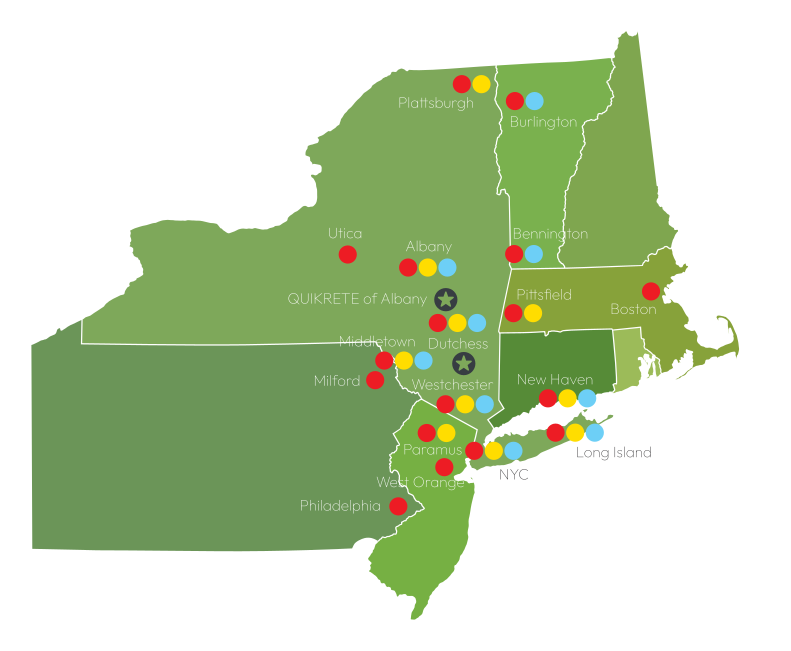
Package Pavement has two convenient locations in Stormville, NY (Dutchess County) and Ravena, NY (Greene County) to serve the Northeastern Region with bagged concrete, blacktop, mortar, and repair products. This map gives a general idea of where we service and the product lines we offer.
Package Pavement Products
Quikrete Products
Spec Mix Products
map

Our Brands Websites