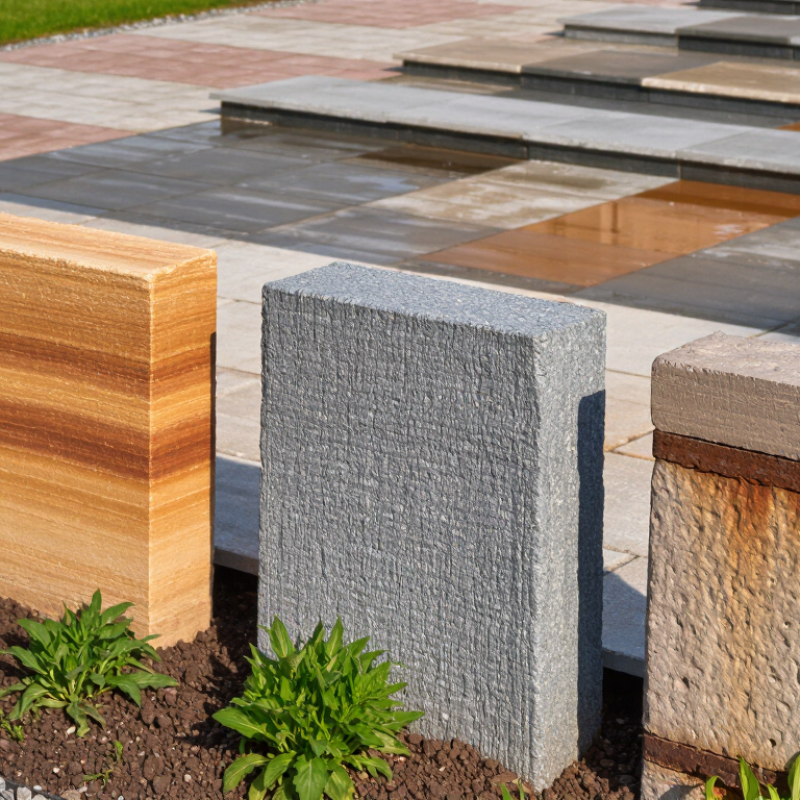
| Quartzitic Sandstone | Gray, cream, white, pale yellow, pink | Dense, fine to medium grain; natural cleft, honed, or flamed surfaces | Low to moderate when well-cemented; verify with project-specific testing | Very hard and abrasion-resistant; generally one of the most durable sandstone options | Good resistance to weathering; natural cleft surfaces can provide good outdoor slip resistance | Heavy-traffic floors, stairs, paving, exterior façades, retaining walls |
| Arkose Sandstone | Pink, reddish, tan, buff, gray | Coarse-grained with visible feldspar particles; textured or natural split finish | Moderate to high depending on cementation and pore structure | Moderate to high durability; feldspar-rich areas may weather faster than quartz-rich areas | Suitable outdoors when properly selected, detailed, drained, and maintained | Walls, façades, landscape features, paving in moderate-use areas |
| Calcarenite Sandstone | White, cream, beige, pale gray, golden | Fine to medium grain with shell or carbonate particles; smooth or honed appearance | Moderate to high; porous varieties can absorb water readily | Moderate durability; may be more vulnerable to acids, salt, and prolonged wet conditions | Good for suitable climates; use caution in freeze-thaw, coastal, or de-icing salt exposure | Interior walls, decorative cladding, low-traffic flooring, sheltered exterior work |
| Iron-Rich Sandstone | Red, rust, orange, brown, burgundy | Visible iron-oxide coloration; natural cleft, sawn, brushed, or tumbled finishes | Moderate and highly dependent on porosity and cementation | Moderate to high; iron minerals create strong color but may contribute to staining or oxidation | Generally suitable outdoors; inspect for color consistency, efflorescence, and rust-related staining | Feature walls, patios, garden paths, fireplaces, architectural accents |
| Mica-Rich Sandstone | Silver-gray, beige, greenish gray, golden brown | Layered or sparkly surface with visible mica flakes; split or textured finish | Moderate to high where the stone has open bedding planes | Moderate; thin layers may delaminate if poorly selected or exposed to persistent moisture | Can offer good traction, but freeze-thaw and moisture testing is important for exterior use | Interior feature surfaces, covered patios, accent walls, low-load landscaping |
| Fine-Grained Sandstone | Buff, cream, yellow, gray, light brown | Uniform, smooth visual texture; available in honed, sawn, brushed, or sandblasted finishes | Low to moderate in dense varieties; porous varieties require sealing | Moderate to high, with a more consistent surface than coarse-grained types | Good for façades and moderate-traffic floors; textured finishes improve wet slip resistance | Interior flooring, wall cladding, countertops with appropriate protection, façades |
| Coarse-Grained Sandstone | Tan, brown, red, gray, yellow | Visible sand grains and a pronounced natural texture; split, bush-hammered, or sawn finish | Moderate to high because larger pores may hold more moisture | Moderate to high; surface texture can improve wear concealment and traction | Often suitable for landscaping and paving, provided absorption and freeze-thaw performance are acceptable | Paving, steps, retaining walls, outdoor seating, landscape construction |
| Bedded or Layered Sandstone | Beige, gold, red, brown, gray, multicolor | Distinct horizontal bedding planes; natural split face or sawn face reveals layering | Variable; bedding planes may allow water movement and increase delamination risk | Variable; strong when installed with the correct orientation and adequate support | Use the recommended natural bed orientation; avoid unsupported thin pieces in freeze-thaw settings | Walling, paving, steps, dry-stack construction, landscape structures |