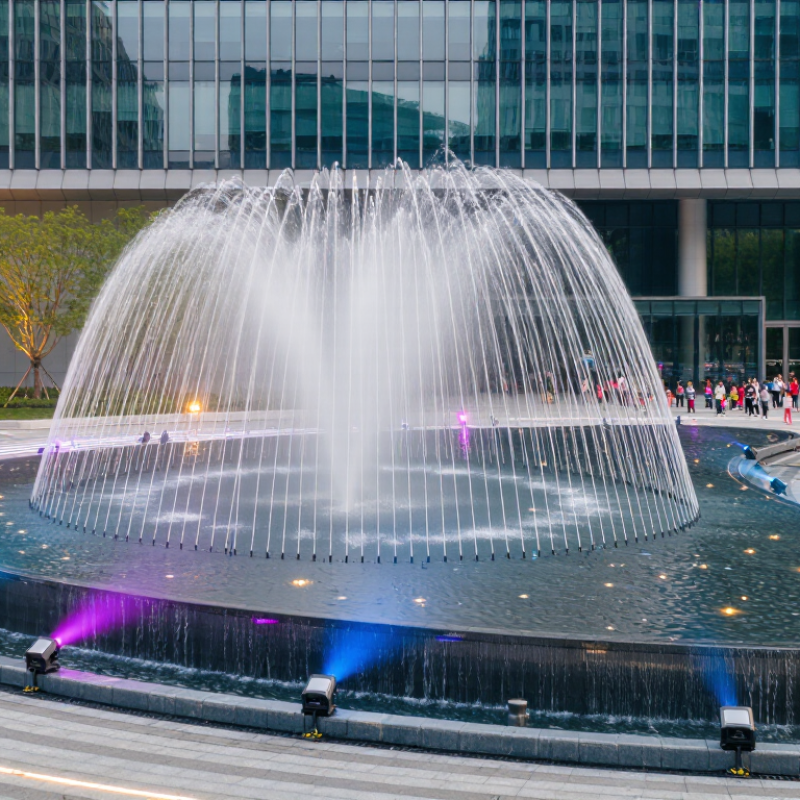
| Fountain Design | Visual concept, water geometry, viewing angles, musical synchronization, and suitability for the site. | The design should provide clear sightlines from the main audience areas and include hydraulic, electrical, lighting, and maintenance layouts. | Concept drawings, 3D renderings, hydraulic calculations, site-layout drawings, and examples of comparable project types without confidential client information. | 15% | Very High |
| Hydraulic Performance | Pump selection, nozzle distribution, water height, flow stability, filtration, and resistance to wind effects. | The supplier should specify pump flow rate, total head, nozzle flow requirements, filtration capacity, and expected operating tolerances. | Hydraulic calculations, pump curves, nozzle data sheets, flow-control diagrams, and commissioning test records. | 12% | Very High |
| Structural Materials | Corrosion resistance, water exposure, ultraviolet exposure, mechanical strength, and compatibility with treatment chemicals. | Wet-area metal components should generally use suitable stainless steel or equivalent corrosion-resistant materials; exposed finishes should be rated for outdoor use. | Material certificates, grades and thicknesses, coating specifications, corrosion-resistance information, and fastener details. | 10% | Very High |
| Nozzles and Water Effects | Nozzle precision, spray pattern consistency, clog resistance, adjustability, and replacement availability. | Nozzles should maintain stable patterns at the specified pressure and be accessible for cleaning, adjustment, and replacement. | Nozzle specifications, spray-height data, maintenance procedures, spare-part list, and water-quality requirements. | 8% | Very High |
| Lighting Technology | Underwater lighting, color control, brightness, beam angle, waterproofing, heat management, and serviceability. | Lighting equipment should be designed for continuous wet-environment use, with appropriate ingress protection and accessible replacement procedures. | Lighting technical sheets, ingress-protection ratings, power consumption, color-control protocol, cable details, and testing documentation. | 8% | Very High |
| Music and Control System | Show programming, audio synchronization, automation, remote access, fault monitoring, and integration with site systems. | The control system should support timed shows, manual override, emergency stop, adjustable water and light cues, and backup show files. | Control-system architecture, software demonstration, supported file formats, user permissions, backup method, and operator training plan. | 10% | Very High |
| Customization Options | Custom water patterns, site-specific dimensions, music programming, lighting scenes, architectural integration, and branding-free visual design. | The supplier should clearly separate standard modules from custom engineering and identify the effect of changes on cost, schedule, and maintenance. | Customization matrix, revision process, design-fee schedule, sample show storyboard, and approval milestones. | 8% | High |
| Safety and Compliance | Electrical protection, equipotential bonding, emergency shutdown, slip prevention, water hygiene, and local code compliance. | The proposal should address electrical protection, safe access, emergency stop locations, chemical handling, and applicable local regulations. | Risk assessment, single-line diagrams, grounding details, safety procedures, compliance declarations, and inspection documentation. | 12% | Very High |
| Energy and Water Efficiency | Pump efficiency, variable-speed control, water recycling, evaporation management, lighting consumption, and operating schedules. | The supplier should provide estimated electrical consumption, water-loss assumptions, filtration strategy, and reduced-operation modes. | Energy calculations, pump-efficiency data, water-balance estimate, control logic, and annual operating-cost assumptions. | 6% | High |
| Installation Capability | Site coordination, civil-interface requirements, lifting, pipework, electrical connections, testing, and commissioning. | Responsibilities should be defined for foundations, drainage, power supply, plant-room access, embedded items, installation, and final testing. | Installation method statement, interface schedule, project program, manpower plan, commissioning checklist, and handover requirements. | 5% | High |
| Maintenance and Spare Parts | Routine cleaning, filter servicing, nozzle access, pump maintenance, software support, and spare-part availability. | The supplier should provide preventive-maintenance intervals, critical spare parts, recommended stock levels, and response procedures for faults. | Maintenance manual, spare-parts catalog, service schedule, troubleshooting guide, and training materials. | 4% | High |
| Warranty and Technical Support | Warranty coverage, exclusions, response time, remote assistance, on-site support, software updates, and long-term serviceability. | The contract should define coverage for equipment and workmanship, response targets, replacement procedures, and post-warranty support options. | Warranty terms, service-level agreement, escalation process, support contacts, and lifecycle-support statement. | 2% | Medium |