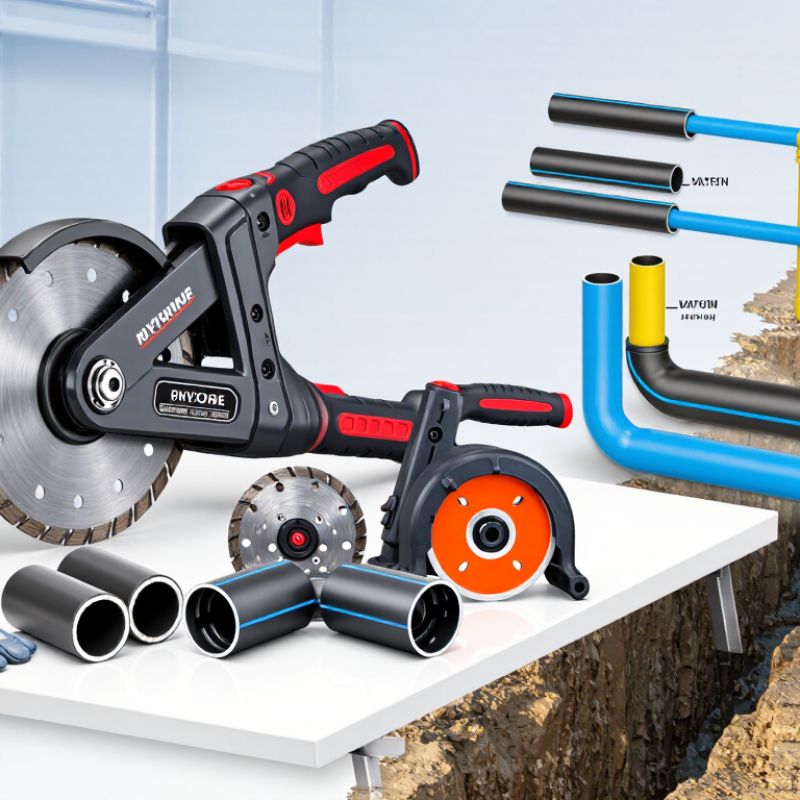
| Ratcheting hand cutter | Small-diameter pipe; many designs are rated for tubing or pipe up to about 1½–2 in. Check the tool’s stated outside-diameter capacity. | Hardened steel or stainless-steel blade, depending on the design. A sharp blade helps reduce crushing and ragged edges. | About $10–$40 per replacement blade; availability depends on the cutter design. | Look for a blade-lock or handle-lock for storage. Keep fingers clear of the blade path and secure the pipe before cutting. | Lightweight and quick for repeated small cuts. Requires hand force and is unsuitable when the pipe exceeds the cutter’s rated capacity. |
| Manual guillotine or scissor-style pipe cutter | Medium- to larger-diameter PE pipe, where the cutter’s frame and blade capacity match the pipe’s outside diameter and wall thickness. | Replaceable hardened-steel blade or cutting knife. Some designs use a guided blade to help keep the cut square. | Roughly $20–$100 or more; larger or proprietary blades can cost more. | A stable frame and positive pipe restraint reduce movement. Use gloves and follow the manufacturer’s instructions for blade changes. | Can produce a controlled cut without power. Bulkier and slower than powered tools on large pipe; verify capacity before purchase. |
| Rotary or wheel-style pipe cutter | Certain larger-pipe applications, especially where the cutter is specifically designed for the pipe material, diameter, and wall thickness. | Replaceable cutting wheel, commonly hardened steel. Confirm that the wheel is specified for PE; a wheel intended for metal pipe may not suit plastic pipe. | Approximately $15–$60 per wheel; specialty wheels may cost more. | Use the correct wheel and maintain even alignment to limit slipping or pinching. Keep hands away from the wheel and rotating parts. | May offer a controlled cut when properly matched to the pipe. Compatibility is tool-specific; do not assume every rotary cutter is suitable for PE. |
| Reciprocating saw with pipe guide | Larger pipe or field work where a hand cutter is impractical. Suitable capacity depends on access, blade length, and the pipe support setup. | Replaceable saw blade; select a blade suited to plastic and the required cut. A guide or clamp helps maintain alignment. | About $10–$50 per blade, depending on blade type and pack size. | Wear eye protection and hearing protection; secure the pipe, control the saw, and check for hidden services before cutting. | Versatile and useful for on-site cuts. Vibration can make a square cut harder; deburr and inspect the end before joining. |
| Dedicated powered pipe saw or guided cold-cut saw | Frequent or precision cutting of larger PE pipe, when the saw is rated for the pipe’s diameter and intended material. | Application-specific circular blade or cutting element. Use only the blade type and diameter approved for the saw and PE pipe. | Typically about $20–$100 or more per replacement blade; specialty blades may be higher. | Use guards, clamps, and the specified power source; follow operating instructions and wear appropriate eye and hearing protection. | Can deliver repeatable cuts on demanding jobs. Higher initial cost, more setup, and a need for trained operation and maintenance. |
| Buying note: Capacity and compatibility vary by tool. Confirm the pipe’s outside diameter, wall thickness or SDR, and material; check the manufacturer’s specifications before buying. Replacement-cost figures are approximate US retail ranges and may vary by blade type, size, and supplier. For fusion or mechanical joining, follow the applicable pipe and fitting instructions for preparing a clean, square end. |