| Plain Cotton Canvas | Woven cotton fibers, usually treated with a water-repellent finish | Traditional storefront awnings, market stalls, patios, temporary outdoor shade, decorative residential projects | Natural appearance, good air circulation, comfortable shade, easy to print or customize | Can absorb moisture, may mildew if stored damp, and generally fades faster than synthetic fabrics | Moderate | Moderate when treated | High | Dry or seasonally mild regions; suitable where natural aesthetics are important | Approximately 3–8 years with proper care | Natural texture and traditional design |
| Acrylic-Coated Polyester Canvas | Polyester base fabric coated with acrylic on one or both sides | Retractable patio awnings, window awnings, balcony covers, residential and light commercial shading | Good dimensional stability, moderate color retention, lightweight construction, and broad color availability | Coating may wear after prolonged abrasion; less breathable than uncoated woven fabric | Good | Good to high | Moderate | Mixed climates with moderate to strong sunlight | Approximately 5–10 years with regular maintenance | Balanced cost, appearance, and performance |
| Solution-Dyed Acrylic Canvas | Acrylic fibers colored throughout before being spun and woven | Premium retractable awnings, hospitality terraces, restaurants, hotels, coastal homes, and high-sun-exposure applications | Strong color retention, good UV resistance, low water absorption, and good resistance to mildew growth | Higher purchase price; fabric can still be damaged by sharp objects, harsh cleaners, or improper tension | Excellent | Good to high | High | Hot, sunny, humid, or coastal environments | Approximately 8–15 years with suitable cleaning and storage | Long-term outdoor exposure and color stability |
| PVC-Coated Polyester Canvas | Polyester scrim coated with polyvinyl chloride on one or both sides | Commercial entrance canopies, industrial shelters, truck-side covers, event structures, and heavy-duty shade systems | High water resistance, easy cleaning, strong tear resistance, and suitability for large panels | Lower breathability, higher weight, possible heat buildup, and a more plastic-like surface appearance | Good to excellent | Excellent | Low | Wet climates, high-use commercial areas, and applications requiring weather protection | Approximately 7–15 years, depending on coating quality and exposure | Waterproofing, durability, and easy maintenance |
| PU-Coated Polyester Canvas | Polyester fabric coated with polyurethane, generally lighter and more flexible than PVC-coated fabric | Portable awnings, camping shelters, lightweight canopies, vehicle awnings, and temporary shade structures | Lightweight, flexible, compact for transport, and suitable for portable products | Coating can degrade under continuous UV exposure; may have lower abrasion resistance than heavier coated fabrics | Moderate to good | High | Low to moderate | Travel, seasonal use, and moderate outdoor exposure | Approximately 3–8 years, depending on exposure and handling | Low weight, portability, and compact storage |
| Fire-Retardant Canvas | Woven synthetic or natural fabric treated with a flame-retardant finish or manufactured with inherent flame resistance | Event tents, public-space canopies, hospitality venues, transport facilities, and projects with fire-safety requirements | Supports compliance with applicable fire-performance requirements and is available in multiple fabric weights | Fire performance depends on the specific standard, testing method, and certification; some treatments may reduce after repeated washing | Varies by fiber and finish | Varies by coating | Moderate to high | Public or commercial environments subject to local fire regulations | Approximately 4–12 years, depending on fabric and exposure | Documented fire performance and regulatory compliance |
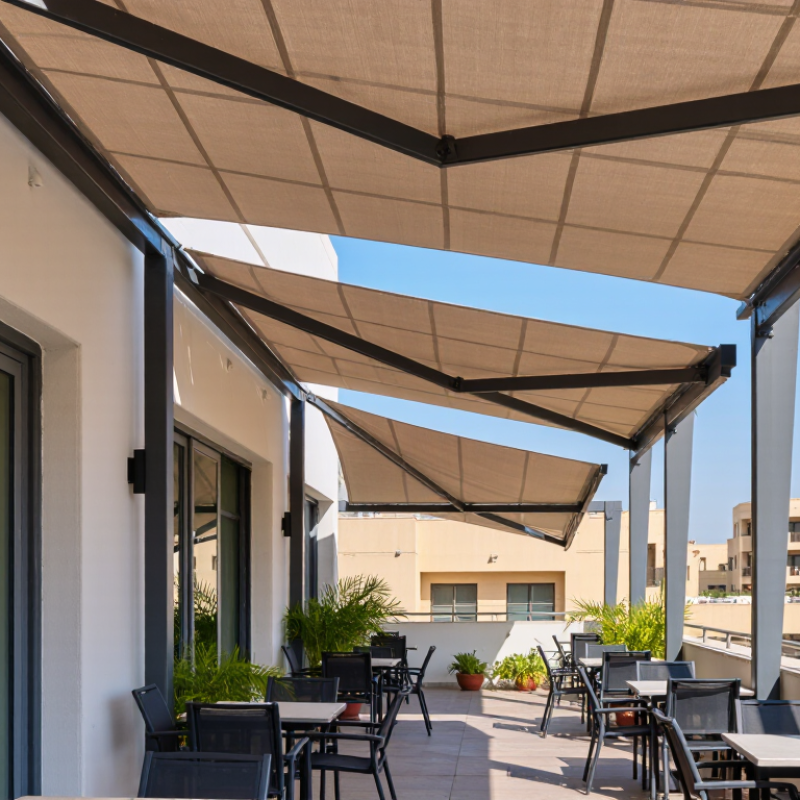
| Mesh Canvas | Open-weave polyester or acrylic mesh designed to allow controlled airflow and visibility | Solar screens, pergola covers, balcony screens, outdoor seating areas, and wind-exposed locations | Reduces glare and solar heat while allowing ventilation; lower wind load than solid fabric | Does not provide complete rain protection; privacy and shade levels depend on openness factor | Good to excellent | Limited | Excellent | Hot, windy, and sunny regions where airflow is essential | Approximately 5–12 years with proper installation | Ventilation, glare reduction, and wind management |
| Marine-Grade Canvas | High-performance solution-dyed acrylic or coated polyester designed for severe outdoor exposure | Boat covers, waterfront awnings, yacht decks, coastal patios, and high-humidity outdoor installations | Strong resistance to sunlight, moisture, salt-air exposure, and repeated outdoor use | Higher material cost; requires correct tension, ventilation, and cleaning to prevent staining or corrosion of hardware | Excellent | High to excellent | Moderate to high | Coastal, marine, humid, and high-salinity environments | Approximately 8–15 years with marine-appropriate care | Salt-air resistance and severe-weather durability |