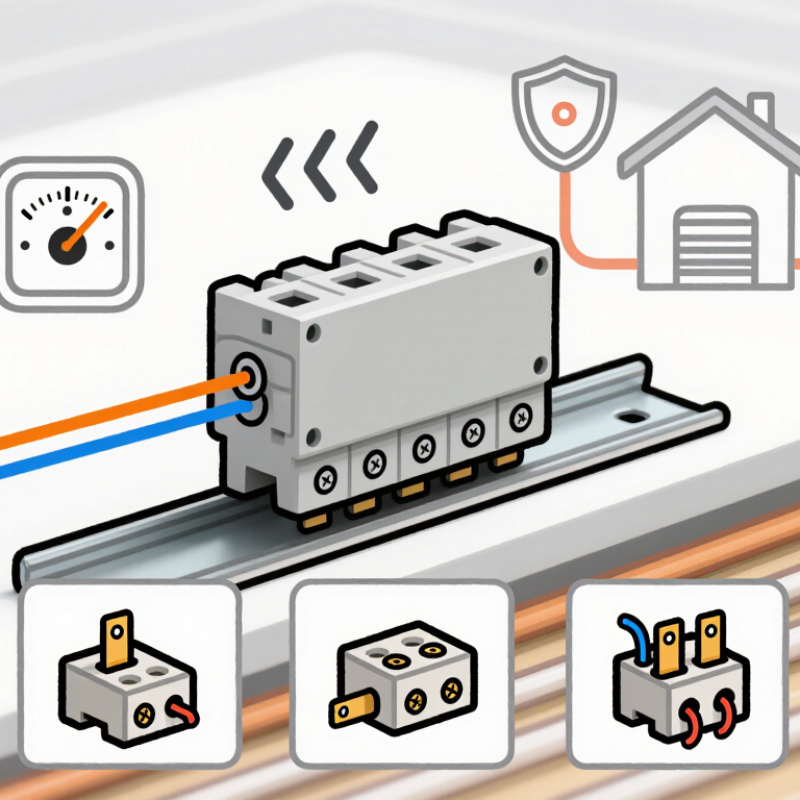
| Definition | An electric heat relay is a switching device that allows a low-power control signal to turn an electric heating load on or off. | It separates the control circuit from the higher-power heater circuit and enables automated temperature control. |
| Primary Function | Switches electrical power to resistance heaters, heating elements, heat lamps, cabinet heaters, and similar loads. | The heater can be controlled by a thermostat, programmable controller, timer, or building-management system. |
| Common Relay Types | Electromechanical relays use physical contacts; solid-state relays use semiconductor switching components. | The choice affects switching noise, service life, heat generation, leakage current, and switching speed. |
| Control Voltage | Common control options include 12 V DC, 24 V DC, 24 V AC, 120 V AC, and 230 V AC, depending on the system design. | The relay coil or input must match the controller output voltage to operate correctly and safely. |
| Load Voltage | Heating loads may operate on low-voltage or line-voltage circuits, commonly including 120 V, 208 V, 230 V, 240 V, 277 V, or 480 V AC systems. | The relay contact or output rating must be suitable for the heater supply voltage and electrical system configuration. |
| Current Rating | The required rating is determined by the heater's operating current, calculated as power divided by voltage for a single-phase resistive load. | Selecting an adequate current rating helps prevent contact damage, overheating, nuisance trips, and premature failure. |
| Switching Method | Relays may switch one pole, two poles, or multiple poles, depending on whether the heater circuit is single-phase or multi-phase. | Correct pole configuration ensures that the intended conductors are switched and that the installation meets applicable electrical requirements. |
| Temperature-Control Compatibility | A relay can be controlled by thermostats, thermocouple or resistance-temperature detector controllers, and electronic temperature controllers. | Compatibility supports automatic heating cycles and helps maintain the required temperature range. |
| Electromechanical Relay Characteristics | Uses a coil and movable contacts; it has very low off-state leakage but produces audible contact movement and experiences mechanical wear. | It can be practical for straightforward on/off heating applications where switching frequency is moderate. |
| Solid-State Relay Characteristics | Uses semiconductor devices with no moving contacts, enabling silent operation and frequent switching. | It is often suitable for rapid temperature cycling, but it requires proper heat dissipation and may have off-state leakage current. |
| Switching Frequency | Resistance heaters may be controlled by intermittent on/off cycles, time-proportional control, or zero-cross switching. | A relay designed for the actual switching frequency can improve temperature stability and service life. |
| Electrical Protection | Typical systems require appropriately rated circuit protection, over-temperature protection, grounding, and correctly sized conductors. | A relay is not a substitute for circuit breakers, fuses, disconnects, or independent safety controls. |
| Heat Dissipation | Solid-state relays generate heat during operation because their output devices have a small voltage drop. | A suitable heat sink, thermal interface, ventilation, and installation clearance may be necessary. |
| Typical Applications | Electric ovens, duct heaters, HVAC auxiliary heat, industrial enclosures, incubators, water-heating systems, and process equipment. | The relay provides a practical interface between low-power control equipment and electric heating loads. |
| Selection Checklist | Verify control voltage, load voltage, current, number of poles, switching frequency, ambient temperature, enclosure requirements, protection, and applicable electrical codes. | Matching these parameters helps achieve reliable operation and supports safe installation by a qualified professional. |