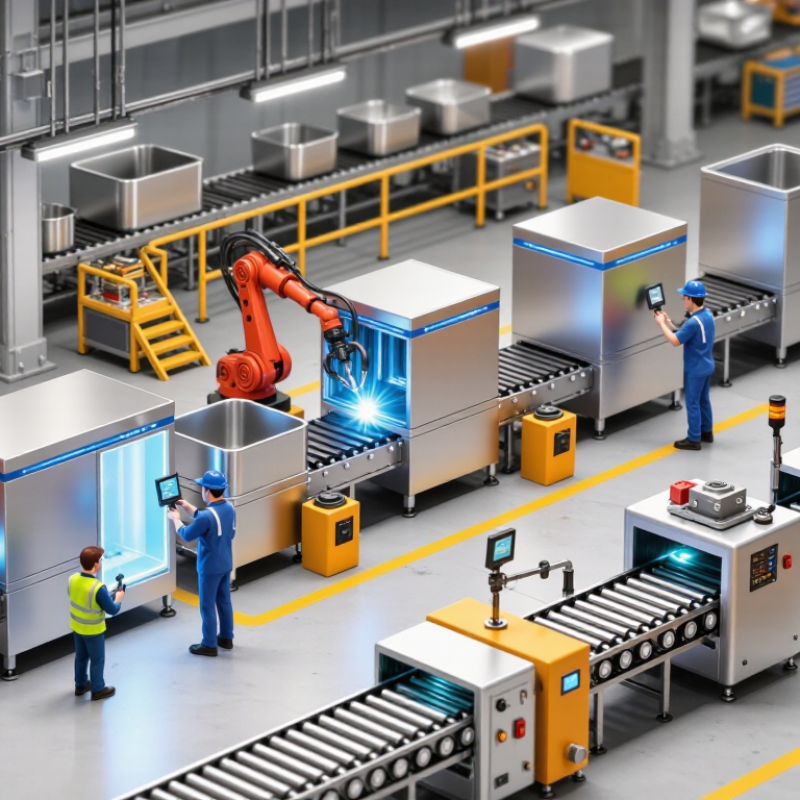
| Automation and cycle time | Review the proposed sequence for tub loading, joining or fastening, inspection, and unloading. Check how the line handles model variants, planned changeovers, and manual exceptions. | Process flow, cycle-time study, equipment list, and a description of assumptions such as operator tasks, product mix, and planned availability. | Compare the demonstrated cycle with the required production takt. Confirm that changeover steps and any manual work are included in the timing. |
| Part handling and process quality | Check that fixtures and handling methods support the tub geometry and the specified joining or fastening processes without damaging visible or sealing surfaces. | Fixture concept, process parameters, inspection plan, and sample-part results for the intended product variants. | Run representative parts through the proposed process and inspect critical dimensions, fit, surface condition, and specified joint characteristics. |
| Traceability and production data | Define what must be recorded for each tub, such as its identifier, model or recipe, process results, timestamps, and any required component or material links. | Data map, sample production record, identifier-reading plan, and details of interfaces with the plant’s manufacturing or quality systems. | Verify that a sample unit can be traced from its identifier to the required station results, and that failed or missing data are clearly flagged. |
| Robot and cell safety | For robot-equipped cells, review the application risk assessment, safeguarding design, operating modes, and safe access for setup and recovery. ISO 10218 addresses industrial robot and robot-system safety; confirm the applicable editions and scope for the project. | Risk assessment, cell layout, safeguarding concept, safety-function documentation, and validation records prepared by the responsible integrator. | Review foreseeable access and intervention tasks, including jam clearing and maintenance. Confirm that safeguards and safety functions are validated for the installed application. |
| Operator ergonomics and access | Assess loading, replenishment, inspection, and recovery tasks, including reach, visibility, handling aids, and access to routine service points. | Operator-task review, line layout, access-clearance drawings, and descriptions of material presentation and replenishment. | Walk through normal production and common recovery tasks with representative operators before approving the final layout. |
| Controls, diagnostics, and changeover | Check whether alarms identify the affected station and likely cause, and whether authorized users can select validated product recipes without unintended parameter changes. | Alarm list, HMI examples, recipe-management description, and changeover procedure. | Demonstrate a planned model change and a representative fault recovery. Confirm that instructions are clear and production settings are controlled. |
| Acceptance, documentation, and support | Agree on measurable factory and site acceptance criteria, training, spare parts, maintenance tasks, and the documentation required before handover. | Acceptance-test plan, maintenance schedule, operator and technician training plan, recommended-spares list, and final machine documentation. | Use the agreed tests to verify production, quality, traceability, and safety requirements at acceptance; record open items and responsible parties. |