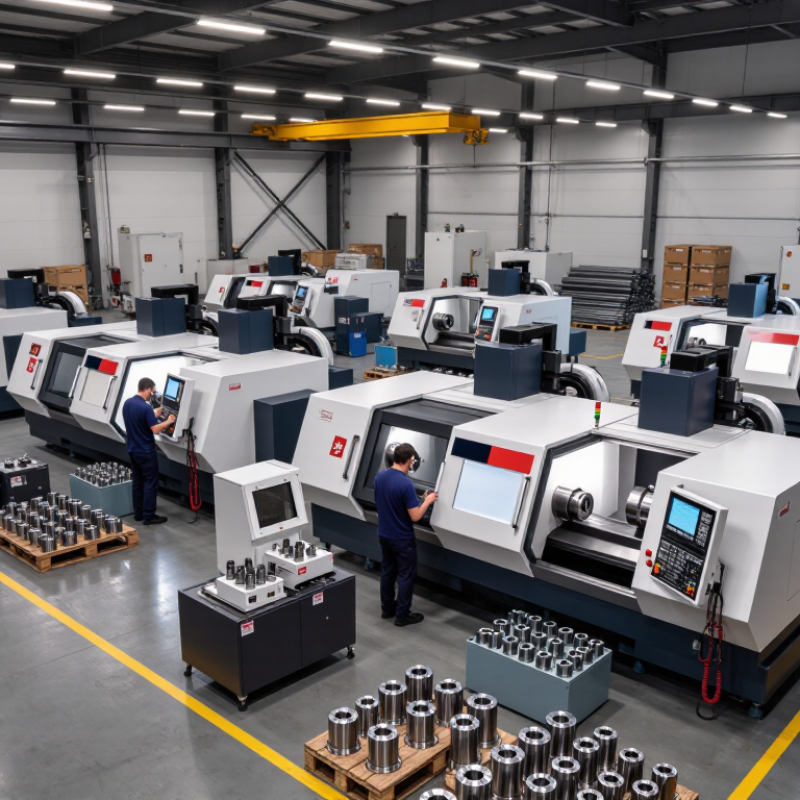
China’s leading CNC turning parts suppliers usually specialize rather than serve every market equally. Their key products include shafts, bushings, threaded fittings, valve bodies, pins, spacers, and miniature connectors. Common materials are 6061 and 7075 aluminum, 304 and 316 stainless steel, brass, carbon steel, titanium, and engineering plastics. Material certificates and hardness records matter more than attractive photographs.
According to Grand View Research’s CNC machine market report, the global market was valued at about USD 88 billion in 2023. Automotive demand remains significant, while aerospace, medical devices, robotics, electronics, and energy applications require tighter control. Suppliers serving automotive buyers often produce suspension pins, transmission components, and sensor housings. Medical suppliers focus on small stainless-steel and titanium parts. Aerospace work usually demands traceability, difficult-alloy machining, and documented inspection.
Quality differences can be subtle. Some suppliers offer turning, milling, grinding, anodizing, passivation, and heat treatment through one production network. Others rely on qualified partners. The latter is not automatically weaker, but process visibility becomes essential. ISO 9001 certification helps, yet it cannot replace sample inspection. The 2024 ISO Survey recorded more than one million ISO 9001 certificates worldwide, showing its reach, not guaranteed machining skill. Buyers should compare tolerance results, batch consistency, lead times, and actual material reports. A lower quotation may simply exclude inspection, finishing, or packaging. Ranking the top ten is therefore useful, but never absolute.