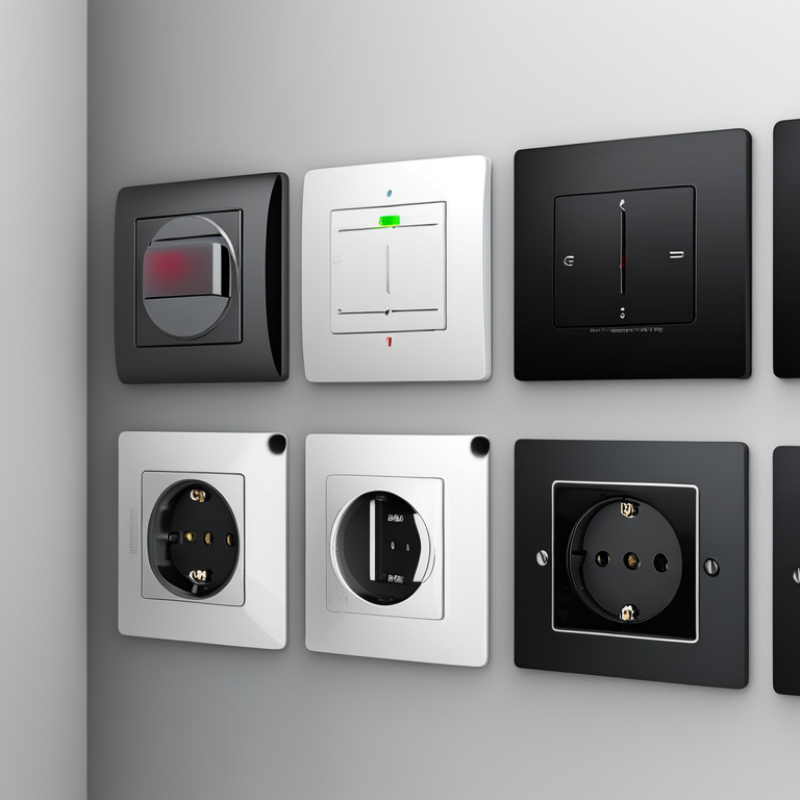
China Top 10 Smart Switch Manufacturers for Global Buyers

Choosing a reliable Smart Switch manufacturer requires more than comparing factory prices or polished product photos. Global buyers must examine electrical safety, communication protocols, firmware support, app stability, and production consistency. A switch may look modern on a showroom wall, yet fail after repeated relay cycles or unstable Wi-Fi connections. Small details matter: terminal quality, heat management, button response, packaging protection, and the clarity of installation instructions.

Bruce Sinclair, a recognized IoT strategist and author, once stated, “IoT is about connecting things to the Internet.” That connection, however, must remain useful, secure, and dependable. This guide to China Top 10 Smart Switch Manufacturers for Global Buyers considers practical evidence, including manufacturing experience, certifications, customization capability, quality-control procedures, export performance, and after-sales support. It also looks at whether suppliers can support common ecosystems, such as Wi-Fi, Zigbee, Matter, and intelligent home platforms.

No list is perfect. A manufacturer with strong engineering may not offer the lowest price. Another supplier may provide fast samples but weaker long-term software support. These differences deserve careful attention. Buyers should request test reports, sample units, warranty terms, and production references before making a final decision. Factory visits and independent inspections can reveal problems that online catalogs hide. This overview aims to create a clearer starting point, not replace technical due diligence. Smart Switch sourcing still involves judgment, trade-offs, and occasional uncomfortable questions. That is part of buying responsibly.

China Top 10 Smart Switch Manufacturers for Global Buyers

What Defines a Leading Smart Switch Manufacturer in China

A leading smart switch manufacturer in China proves capability through consistent details, not attractive catalogs alone.

Experienced buyers inspect circuit design, relay quality, enclosure materials, and firmware stability before discussing volume. A reliable factory can explain its testing process clearly. It should provide sample reports, production records, and traceable quality checks.

Technical expertise also appears in practical performance. Engineers should understand Wi-Fi, Zigbee, Bluetooth, and wired control requirements. They must manage heat, signal interference, load limits, and repeated switching cycles.

During evaluation, ask how the team handles voltage variation and failed samples. Specific answers reveal more than broad claims.

Factory audits matter too. Clean assembly areas, calibrated equipment, and trained inspectors indicate disciplined operations.

No factory is perfect. A trustworthy manufacturer admits limitations and documents corrective actions. That honesty supports long-term cooperation.

Global buyers should review communication speed, packaging protection, installation instructions, and after-sales response. A switch may pass a laboratory test yet confuse installers with unclear terminals. Small weaknesses become expensive at scale.

The strongest supplier combines engineering depth, transparent evidence, stable production, and careful listening. It also welcomes reasonable redesign requests without hiding unexpected costs. Capability must be visible in samples, records, and everyday communication—not just promised during negotiations.

Selection Criteria for Global Smart Switch Suppliers

Selecting China’s top smart switch manufacturers requires more than comparing prices and product photos. Global buyers should examine factory experience, engineering capability, and export records. A reliable supplier can explain wiring layouts, load limits, communication protocols, and installation conditions clearly.

Request product samples before placing a large order. Test them with common lamps, motors, and different neutral-wire configurations. Check response speed, heat levels, relay noise, and connection stability. Ask for test reports, material specifications, warranty terms, and traceable quality records. Suppliers should also support relevant safety and electromagnetic compatibility requirements in the target market. Documentation matters.

Visit the production site when possible. Observe incoming material checks, assembly lines, aging tests, and final inspections. A supplier that only shows a showroom may deserve more questions. Confirm customization limits, minimum order quantities, packaging details, and spare-part availability. Clear communication is essential when firmware, app functions, or language settings need adjustment.

Do not trust every impressive claim.

In my experience, some suppliers provide polished samples but weaker mass production. Ask for recent batch records and independent inspection options. Evaluate response times during technical discussions, not just sales enthusiasm. A dependable partner admits limitations and proposes practical corrections. That honesty can prevent costly returns, delayed installations, and uncomfortable conversations with distributors.

China Top 10 Smart Switch Manufacturers for Global Buyers - Selection Criteria for Global Smart Switch Suppliers

Rank Selection Criterion Key Data to Review Global Buyer Benchmark Recommended Verification
1 Electrical Safety Compliance Compliance with applicable switch and household electrical equipment standards, insulation, temperature rise, dielectric strength, and abnormal-operation testing. Products should be evaluated against IEC 60669-1 and the applicable national requirements for the destination market. Request current test reports, certificates, product specifications, and samples from the same production model.
2 Voltage, Frequency, and Load Compatibility Rated voltage, frequency, current, neutral-wire requirement, minimum load, motor-load compatibility, and LED-load performance. Export models commonly support 100–240 V AC and 50/60 Hz, but the exact rating must be confirmed for each model and market. Check the nameplate, technical datasheet, load-test results, and installation wiring diagram.
3 Wireless Connectivity and Interoperability Supported wireless technologies, operating frequency, network security, local control, cloud dependency, and gateway requirements. The supplier should clearly identify whether the product uses Wi-Fi, Bluetooth, Zigbee, Thread, or another protocol and state compatibility limitations. Perform integration tests with the buyer’s target platform and verify firmware, encryption, reset, and recovery procedures.
4 Radio and EMC Compliance Radio-frequency emissions, electromagnetic compatibility, immunity, spectrum requirements, and destination-market approvals. Products sold in the European Economic Area may require assessment under the Radio Equipment Directive; other markets have separate radio rules. Review accredited laboratory reports, radio-module approvals, EMC reports, and market-specific declarations.
5 Material and Environmental Compliance Restricted substances, material declarations, plastics, flame-retardant grades, packaging materials, and supply-chain traceability. For European sales, suppliers should support applicable RoHS and REACH obligations and provide documentation for the finished product. Request RoHS test reports, REACH statements, material declarations, and change-control records.
6 Product Design and Installation Adaptability Wall-box depth, terminal design, neutral-wire and no-neutral options, switch geometry, faceplate compatibility, and installation instructions. The product should be matched to the electrical box standards, wiring practices, and mounting dimensions used in the target country. Use installation samples and confirm fit with local boxes, wiring systems, faceplates, and circuit protection.
7 Reliability and Quality Control Incoming inspection, in-process controls, aging tests, relay or electronic-switch endurance, firmware release control, and failure analysis. A qualified supplier should maintain documented quality procedures and provide traceability from components to finished goods. Request quality certificates, inspection plans, sample inspection records, corrective-action reports, and batch traceability.
8 Firmware, Cybersecurity, and Data Protection Secure onboarding, authentication, software updates, vulnerability handling, account management, data storage, and privacy controls. The supplier should document update support, security responsibilities, cloud-service location, and procedures for vulnerability reporting. Conduct a software review, test account and device reset functions, and obtain a written security and privacy statement.
9 Customization and Private-Label Capability Housing design, colors, labels, packaging, user manuals, mobile-app localization, firmware configuration, and tooling support. Customization should not invalidate safety, radio, EMC, or environmental compliance for the finished product. Confirm engineering drawings, approved artwork, change-control rules, tooling ownership, and certification impact before production.
10 Export Service and Total Cost of Ownership Quotation structure, minimum order quantity, sample policy, production lead time, spare parts, warranty, technical support, and shipping terms. The lowest unit price should not be the sole measure; certification, installation, returns, software support, and after-sales costs should also be included. Compare written quotations, Incoterms, warranty terms, response times, production capacity, and after-sales escalation procedures.

Note: Certification requirements, electrical ratings, radio approvals, and installation standards vary by destination market and product configuration. Buyers should verify the exact finished model before placing a production order.

Profiles of China’s Top 10 Smart Switch Manufacturers

China Top 10 Smart Switch Manufacturers for Global Buyers

Profiles of China’s Top 10 Smart Switch Manufacturers

China’s smart switch sector serves residential, hospitality, and commercial projects worldwide. Statista Market Insights estimates global smart home revenue will exceed US$150 billion in 2024. The demand is real, but product quality varies.

Manufacturer 1 focuses on Wi-Fi wall switches for apartments. Manufacturer 2 develops Zigbee systems with low standby consumption. Manufacturer 3 supplies dimmers for hotels and lighting contractors. Manufacturer 4 combines switches with energy monitoring. Manufacturer 5 offers Matter-compatible devices for broader platform integration.

Compatibility matters. A low price cannot repair an unstable connection.

Manufacturer 6 specializes in private-label production and flexible packaging. Manufacturer 7 emphasizes fire-resistant materials and factory testing. Manufacturer 8 builds products for humid environments, including bathrooms and coastal homes. Manufacturer 9 provides gateway-based systems for offices and larger properties. Manufacturer 10 supports custom firmware, regional plugs, and multilingual applications. IDC’s Worldwide Smart Home Device Tracker reports continued growth in connected home devices, yet replacement and support costs remain important purchasing factors.

These profiles should be checked through factory audits, sample testing, and certification records. Reports from the International Energy Agency show that buildings remain a major source of global electricity demand, making energy control increasingly relevant. Still, some manufacturers present impressive app demos without clearly explaining server locations, update policies, or warranty procedures. That gap deserves attention. A reliable supplier should disclose test methods, communication standards, failure rates, and spare-part availability before a global buyer signs a contract.

Product, Certification, and Technology Comparison

China’s top ten smart switch manufacturers should be compared through products, certifications, and technology, not catalog size alone. Statista Market Insights projects global smart home revenue to exceed US$170 billion in 2025. This growth raises buyer expectations for safety, compatibility, and stable software.

Product checks should cover relay life, neutral-wire requirements, standby power, load protection, and temperature performance. IEC 60669-2-1 certification supports switch safety in relevant markets. Regional marks, such as CE, FCC, or UKCA, may also be necessary. However, a certificate does not prove long-term quality. Buyers should request test reports, factory audit records, and samples from different production batches. The International Energy Agency reports that buildings consume about 30% of global energy. Energy monitoring and scheduling features therefore deserve serious attention.

Tips: Compare real test data, not only claimed specifications. Ask whether firmware updates remain available after purchase. Check support response times. For connectivity, Matter compatibility can improve multi-platform integration, while Wi-Fi, Thread, and Zigbee offer different installation benefits. Security reviews should examine encrypted communication, secure boot, password policies, and vulnerability handling. ETSI EN 303 645 provides a useful cybersecurity reference. Statista data suggests strong market expansion, but adoption figures can hide regional differences. That is easy to overlook. A manufacturer with advanced features may still fail on documentation, app translation, or replacement support. Global buyers should score those details before placing a large order.

This reference chart summarizes the main evaluation dimensions used by global buyers: product formats, wireless technologies, international compliance references, and automation functions. The figures represent the number of commonly specified options in each dimension, not a company ranking or market-share result.

Reference scope: 1-, 2-, 3-, 4-, and 6-gang products; Wi-Fi, Zigbee, Thread/Matter, and Bluetooth Low Energy; CE, RoHS, RED, FCC, UKCA, and UL/ETL references; scheduling, scenes, energy monitoring, voice control, and over-the-air updates.

How Global Buyers Can Choose the Right Manufacturer

China Top 10 Smart Switch Manufacturers for Global Buyers

Global buyers should assess performance before comparing factory prices. The International Energy Agency reports that buildings consume about 30% of global final energy. Smart switches can support better control, but poor installation can reduce those benefits. Ask manufacturers for verified standby-power data, load testing, and clear wiring diagrams.

Interoperability deserves close attention. The 2024 Smart Home Market analysis by Grand View Research identifies connected-home adoption as a major growth driver through 2030. Choose suppliers supporting the protocols your market requires, such as Wi-Fi, Zigbee, or Matter. Request samples for pairing tests, response-time checks, and offline operation. A polished demonstration is not enough. Test it in a real room.

Certifications must match the destination market, not merely the product brochure. Review applicable electrical safety reports, factory quality records, traceability procedures, and updated technical files. For large orders, inspect production lines and test a random sample from each batch. Discuss minimum order quantities, spare parts, firmware support, packaging, and warranty response times in writing. Cybersecurity also matters; ask about secure updates, access control, and vulnerability handling. The European Union Agency for Cybersecurity has repeatedly highlighted connected-device security risks. Do not ignore them.

A low price can look efficient. It may not be. Buyers should also compare switch lifespan, relay durability, heat resistance, and support speed. No checklist is perfect, and supplier data can be incomplete. Independent testing is sometimes worth the extra cost.

Article Source:

Find the Right Repair Product for Your Project

Need to find the most appropriate product for the needs of your project? We can help because we have over 70 years of experience servicing the industry with every kind of project, from Do-it-yourself projects to large skyscrapers. Package Pavement has the experience, the knowledge and the products to help every project succeed.

Quikrete Repair Products
Legend
Package Pavement has two convenient locations in Stormville, NY (Dutchess County) and Ravena, NY (Greene County) to serve the Northeastern Region with bagged concrete, blacktop, mortar, and repair products. This map gives a general idea of where we service and the product lines we offer.
Package Pavement Products
Quikrete Products
Spec Mix Products
map

Our Brands Websites