China Best LED Torch Supplier for Global Buyers?
China has become a major sourcing base for global buyers seeking a reliable Led Torch supplier. Its manufacturing network supports aluminum machining, LED assembly, battery integration, optical design, and private-label packaging. Yet a low quotation does not guarantee dependable performance. It may hide weaker springs, uneven beam output, or insufficient heat management.
Rainer Opolka, co-founder of Ledlenser, has often emphasized a practical principle: “A light is only useful when it works when you need it.” This idea remains relevant when evaluating Chinese manufacturers. Experienced buyers should request product samples, factory audit records, LED specifications, battery test data, and clear IP-rating evidence. A serious supplier should explain lumen testing conditions, charging protection, runtime measurements, and quality-control checkpoints without vague promises.
Small details matter. Check the switch after repeated pressing. Inspect the threads. Test the beam beside a calibrated reference light. Ask whether production samples match mass-produced units. These steps reveal more than polished catalogs. Certifications can support trust, but they do not replace independent verification.
China offers strong customization, competitive pricing, and flexible production volumes. Still, supplier selection requires patience. Communication gaps can affect packaging, charging standards, or delivery schedules. Even experienced buyers may overlook thermal performance when focusing on brightness. That is a weakness worth admitting.
This guide examines how global buyers can identify a China Led Torch supplier with proven experience, technical capability, transparent documentation, and consistent quality. Reliable sourcing begins with evidence, not attractive claims.
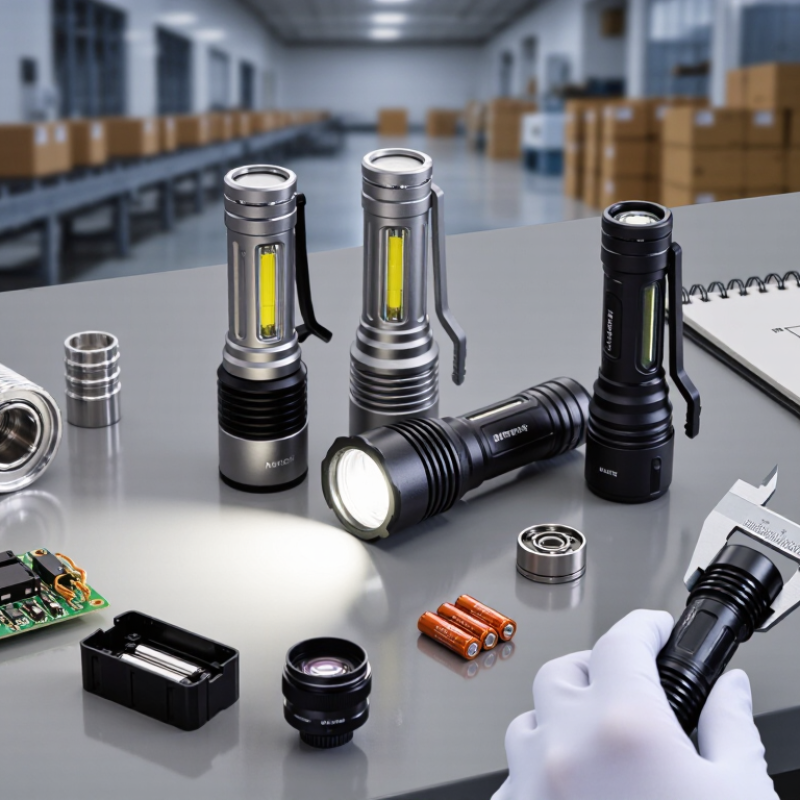
LED Torch Market Overview: 100–200 lm/W Efficacy and Global Buyer Needs
For global buyers, China’s LED torch supply chain offers broad choices in compact lighting. Current products often claim 100–200 lm/W efficacy under controlled laboratory conditions. That figure describes light output per watt, not total beam performance. Real use depends on optics, heat control, battery quality, and driver efficiency. A bright first impression can fade.
In procurement work, I would request test data, operating temperature, runtime curves, and lumen maintenance results. Ask whether measurements follow recognized photometric methods and identify the testing conditions. A torch rated at 1,000 lumens may deliver less after sustained use. Thermal throttling is common. Buyers should compare beam distance, spill width, switch durability, charging design, and repair access. These details matter to outdoor users, industrial teams, and distributors managing varied climates.
Global buyers also need stable documentation, traceable batches, clear packaging, and responsive technical communication. Before a large order, sample several units from different production batches. Check water resistance claims with practical inspections, not only a printed rating. Confirm battery transport documents and market-specific electrical requirements through qualified compliance professionals. Supplier audits can reveal assembly consistency, soldering quality, and final inspection discipline. No factory is perfect. A transparent supplier admits limits and corrects them quickly.
LED Torch Market Overview: Efficacy Benchmarks and Global Buyer Needs
LED torch products are commonly evaluated by luminous efficacy, measured in lumens per watt (lm/W). A benchmark range of 100–200 lm/W represents the progression from standard efficiency to high-efficiency designs, while global buyers also compare brightness, battery runtime, durability, safety certification, and total cost.
Torch Performance Comparison: Lumens, Candela, Runtime, and IP Ratings
Choosing a China-based LED torch supplier requires more than comparing advertised brightness. Global buyers should examine lumens, candela, runtime, and IP ratings under consistent test conditions. Lumens show total light output, while candela indicates beam intensity. A 1,000-lumen torch may flood a wide area, but a lower-lumen model can reach farther with stronger candela.
Test the torch in a dark room and outdoors. Mark a wall at measured distances. This reveals beam reach, hotspot control, and uncomfortable glare. Runtime also needs careful checking. Measure output at five-minute intervals, using the intended battery and operating mode. A torch claiming ten hours may provide only useful brightness for part of that period. Heat matters too. High output can cause rapid temperature rise.
IP ratings provide practical protection information. IPX4 usually handles splashing, while IP67 offers stronger resistance to dust and temporary water immersion. However, damaged seals, loose covers, or repeated charging can reduce protection. Inspect the charging port and tail switch regularly. Supplier test reports are useful, but independent sample testing is more reliable. One overlooked detail is battery consistency. Different cells can change brightness and runtime significantly. My own comparison method is not perfect, especially in changing outdoor temperatures, so results should be treated as guidance rather than absolute proof. A dependable supplier should disclose test methods, battery specifications, beam measurements, and warranty terms clearly.
Final Supplier Selection: Compliance, Warranty, Quality, and Total Cost of Ownership
China Best LED Torch Supplier for Global Buyers?
Final supplier selection should begin with compliance, not catalogue brightness.
Ask for test reports covering IEC 60598, IEC 62471, and IEC 60529 where applicable. Battery models also need documented transport and safety testing. A supplier should identify the factory, production batch, and responsible testing laboratory. Certificates without traceable product numbers deserve caution. Ask for evidence.
Warranty terms must match real usage. A credible supplier should state coverage length, exclusions, repair procedures, and replacement timelines. Request sample units before a large order. Test switch durability, beam stability, charging temperature, sealing, and drop resistance. Keep photographs and test logs. This creates useful evidence when a dispute appears. It also reveals weaknesses that polished samples may hide.
Quality affects total cost of ownership more than the purchase price. The U.S. Department of Energy reports that LED lighting can use up to 75% less energy and last up to 25 times longer than incandescent lighting. However, torch performance depends on batteries, drivers, charging circuits, and thermal design. The IEA 4E Solid State Lighting Annex also emphasizes system efficiency and reliability, rather than LED efficiency alone. Calculate purchase cost, spare batteries, charging losses, failures, freight, and warranty handling. A cheaper torch may become expensive after repeated replacements. Numbers can mislead. Test the complete system under normal field conditions.
